Question
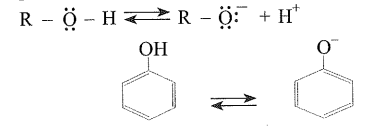
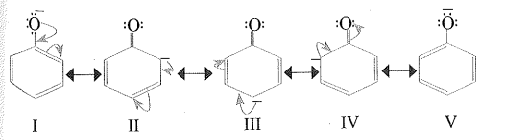
Why a compound in which hydroxyl group attached to an aromatic ring is more acidic than the one in which hydroxyl group attached to an alkyl group?
Generate a complete, print-ready paper with questions like this in minutes — across 16+ boards, with answer keys.
| Experiment | $[A]/mol L^{-1}$ | $[B]/mol L^{-1}$ | Initial rate of formation of $D/mol L^{-1} \min^{-1}$ |
| $I$ | $0.1$ | $0.1$ | $6.0 x 10^{-3}$ |
| $II$ | $0.3$ | $0.2$ | $7.2 x 10^{-2}$ |
| $III$ | $0.3$ | $0.4$ | $2.88 \times 10^{-1}$ |
| $IV$ | $0.4$ | $0.1$ | $2.40 x 10^{-2}$ |
|
Column $I$
|
|
Column $II$
|
|
| $(i)$ |
Methanol
|
$(a)$ |
Conversion of phenol to $o-$hydroxysalicylic acid
|
| $(ii)$ |
Kolbe’s reaction
|
$(b)$ |
Ethyl alcohol
|
| $(iii)$ |
Williamson’s synthesis
|
$(c)$ | Conversion of phenol to salicylaldehyde |
| $(iv)$ | Conversion of $2^\circ$ alcohol to ketone | $(d)$ | Wood spirit |
| $(v)$ | Reimer$-$Tiemann reaction | $(e)$ | Heated copper at $573K$ |
| $(vi)$ | Fermentation | $(f)$ | Reaction of alkyl halide with sodium alkoxide |