Question
Why are some accounting systems called double accounting systems?
Generate a complete, print-ready paper with questions like this in minutes — across 16+ boards, with answer keys.
|
2017
|
|
|
Nov. 3
|
Purchased goods from Sachdeva Furniture Store, New Delhi :
|
|
50 Chairs @ ₹ 2,000 each
|
|
|
5 Tables @ ₹ 10,000 each
|
|
|
Nov. 10
|
Purchased furniture from Mahadeva & Co., Jaipur (Rajasthan) valued ₹ 2,00,000, less $12\frac{1}{2}\%$ Trade Discount
|
|
Nov. 18
|
Purchased furniture from Fashion Furniture House, Chandigarh of the list price of ₹ 2,50,000, less 15%
|
|
Nov. 20
|
Purchased from India Furniture House, New Delhi:
|
|
100 Chairs @ ₹ 1,800 each
|
|
|
Nov. 25
|
Purchased from Mohan Lal & Sons furniture of the value of ₹ 20,000 for cash
|
|
May 1
|
Balance of Cash in Hand ₹ 12,400; Bank Overdraft ₹ 36,000
|
|
May 3
|
Direct deposit by Mr. Ganesh in our bank account ₹ 10,000. Discount allowed ₹ 200
|
|
May 5
|
Issued a cheque of ₹ 7,700 to Mr. Suresh in full settlement of his account of ₹ 8,000
|
|
May 6
|
Received a cheque from X for ₹ 12,000. Discount allowed ₹ 500. This cheque was deposited into bank on 7th May
|
|
May 8
|
Received Cash ₹ 22,000 and cheque of ₹ 8,000 for cash sale
|
|
May 12
|
Cash sale ₹ 70,000 of which ₹ 55,000 banked
|
|
May 15
|
Cheque received on 8th May endorsed to Mr. Sunil. Discount received ₹ 150
|
|
May 20
|
Discounted a B/R of ₹ 10,000 at 1% through bank
|
|
May 24
|
Cheque received from X dishonoured, Bank debits ₹ 20 in respect of bank charges
|
|
May 25
|
Purchased goods for ₹ 50,000 at a trade discount of 10%. Payment was made in cash
|
|
May 26
|
Withdrew from bank ₹ 10,000 for office use and ₹ 2,000 for personal use
|
|
May 31
|
Interest debited by Bank ₹ 4,500
|
| (₹) | ||
| a. | Sold goods to Shankar on Credit | 50,000 |
| b. | Sold goods to Ghanshyam for Cash | 30,000 |
| c. | Purchased goods from Mohan on Credit | 25,000 |
| d. | Received from Shankar | 29,000 |
| e. | Shankar returned goods | 1,000 |
| f. | Sold goods to Shankar for Cash | 5,000 |
| g. | Returned goods to Mohan | 2,000 |
| h. | Paid Rent | 4,000 |
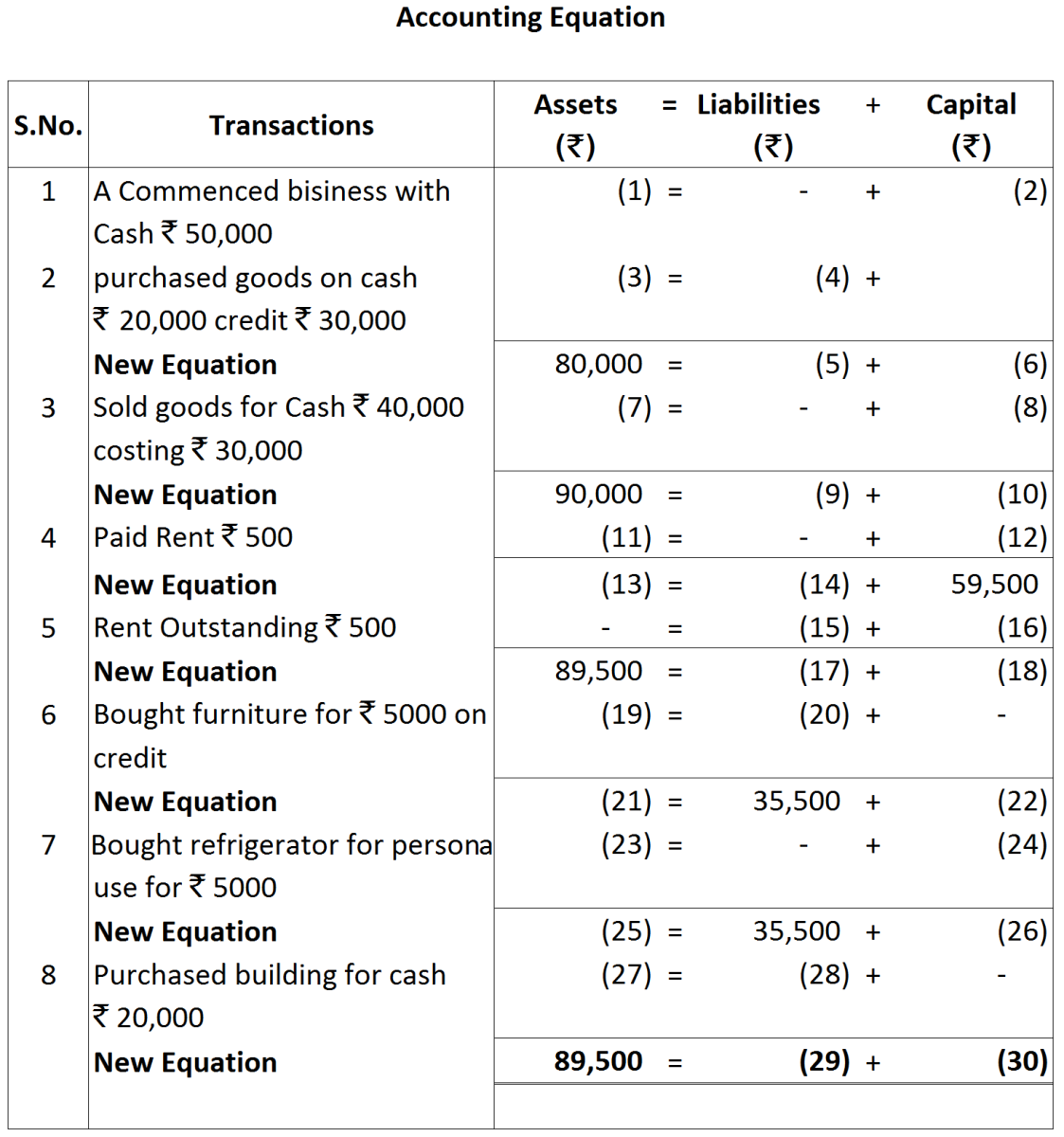
|
2019
|
|
₹
|
|
March 1
|
Started business with cash
|
2,00,000
|
|
March 2
|
Opened bank account with SBI
|
80,000
|
|
March 4
|
Goods purchased from Raj, Jaipur (Rajasthan)
|
22,000
|
|
March 5
|
Goods purchased for cash
|
30,000
|
|
March 8
|
Goods sold to Naman, Delhi
|
12,000
|
|
March 10
|
Cash paid to Raj
|
22,000
|
|
March 15
|
Cash received from Naman
|
11,700
|
|
Discount allowed
|
300
|
|
|
March 16
|
Paid wages
|
200
|
|
March 18
|
Furniture purchased for office use
|
5,000
|
|
March 20
|
Withdrawn from bank for personal use
|
4,000
|
|
March 22
|
Issued cheque for rent
|
3,000
|
|
March 23
|
Goods taken for household purpose. These goods were purchased from Raj
|
2,000
|
|
March 24
|
Drawn cash from bank for office use
|
6,000
|
|
March 26
|
Commission received
|
1,000
|
|
March 27
|
Bank charges
|
300
|
|
March 28
|
Cheque issued for life insurance premium of Proprietor
|
3,000
|
|
March 29
|
Paid salary
|
10,000
|
|
March 30
|
Cash sales
|
20,000
|