Question
Why do elements in the same group have similar physical and chemical properties?

Answer

The physical and chemical properties of elements depend on the number of valence electrons. Elements present in the same group have the same number of valence electrons. Therefore, elements present in the same group have similar physical and chemical properties.

Need a full question paper?

Generate a complete, print-ready paper with questions like this in minutes — across 16+ boards, with answer keys.
Start Generating Free

Similar questions

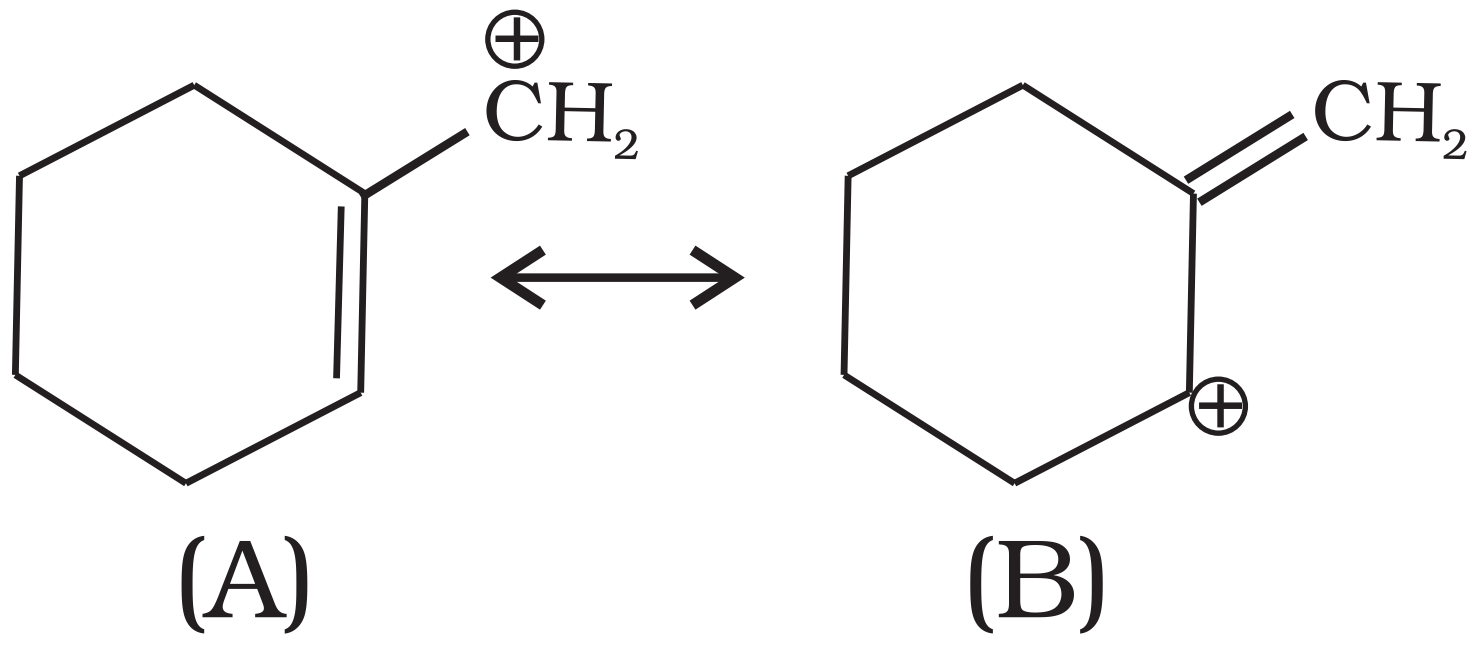
“Stability of carbocations depends upon the electron releasing inductive effect of groups adjacent to positively charged carbon atom involvement of neighbouring groups in hyperconjugation and resonance.”
Which of the following ions is more stable? Use resonance to explain your answer.
In three moles of ethane ($\mathrm{C}_2 \mathrm{H}_6$), calculate the following:
Number of moles of carbon atoms.
Calculate the percentage of nitrogen in $\mathrm{NH}_3$. (Atomic mass of $\mathrm{N}=14, \mathrm{H}=1 \mathrm{amu}$ )
Calculate the wavelength of one photon whose energy is 1 eV .
Give the product when 1-methyl cyclohexene reacts with
(i) aq. acidified $\mathrm{KMnO}_4$
(ii) $\mathrm{O}_3$ followed by $\mathrm{Zn} / \mathrm{CH}_3 \mathrm{COOH}$
For a hydrogen like particle, derive the expression,
$\text{v}_\text{n}=\Big(\frac{\text{Ze}^2}{\text{mr}_\text{n}}\Big)^\frac{1}{2}$
Where vn is the velocity of the electron at distance rn from the nucleus, Z is the atomic number of the H-like particle, e and m are the charge and mass of the electron.
$\text{A}+\text{B}\rightleftharpoons\text{AB};\text{K}=1\times10^2$
$\text{E}+\text{F}\rightleftharpoons\text{EF};\text{K}=1\times10^{-3}$
Out of AB and EF, which one is more stable AB or EF?
Write structural formulae of the following compounds.
1. 3, 4, 4, 5-tetramethylheptane
2. 2, 5-dimethylhexane
  1. Write the functions of salt bridge in electro chemical cell.
  2. Give one decomposition reaction which is redox reaction and one which is a redox reaction.
The $\mathrm{K}_{\mathrm{sp}}$ of $\mathrm{Ag}_2 \mathrm{CrO}_4 \mathrm{~AgCl}, \mathrm{AgBr}$ and Agl are respectively, $1.1 \times 10^{-12}, 1.8 \times 10^{-10}, 5.0 \times 10^{-13}, 8.3 \times 10^{-17}$, which one of the following salts will precipitate first $\mathrm{AgNO}_3$ solution is adding to a solution containing equal mole of $\mathrm{NaCl}, \mathrm{NaBs}$, NaI and $\mathrm{Na}_2 \mathrm{CrO}_4$.