Question
Why do noble gases have comparatively large atomic sizes?

Answer

The atomic radii of noble gases are by far the largest in their respective periods. This is due to the reason that noble gases (because they do not form molecules) have only vander Waals radii while others have covalent radii. As we move down the group at the atomic radii further increase is primarily due to increase in the number of shells.

Need a full question paper?

Generate a complete, print-ready paper with questions like this in minutes — across 16+ boards, with answer keys.

Start Generating Free

Similar questions

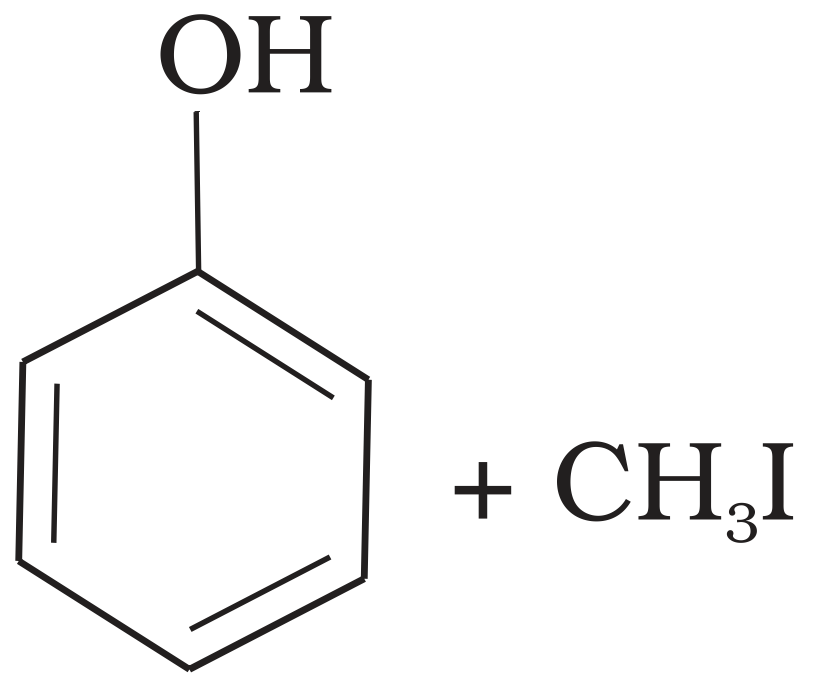
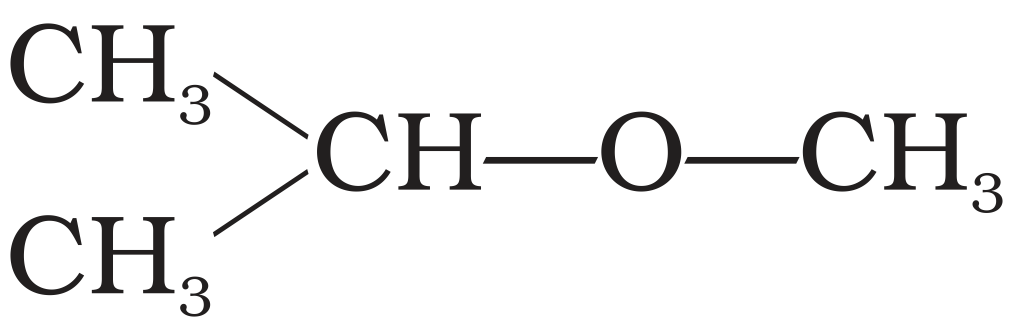
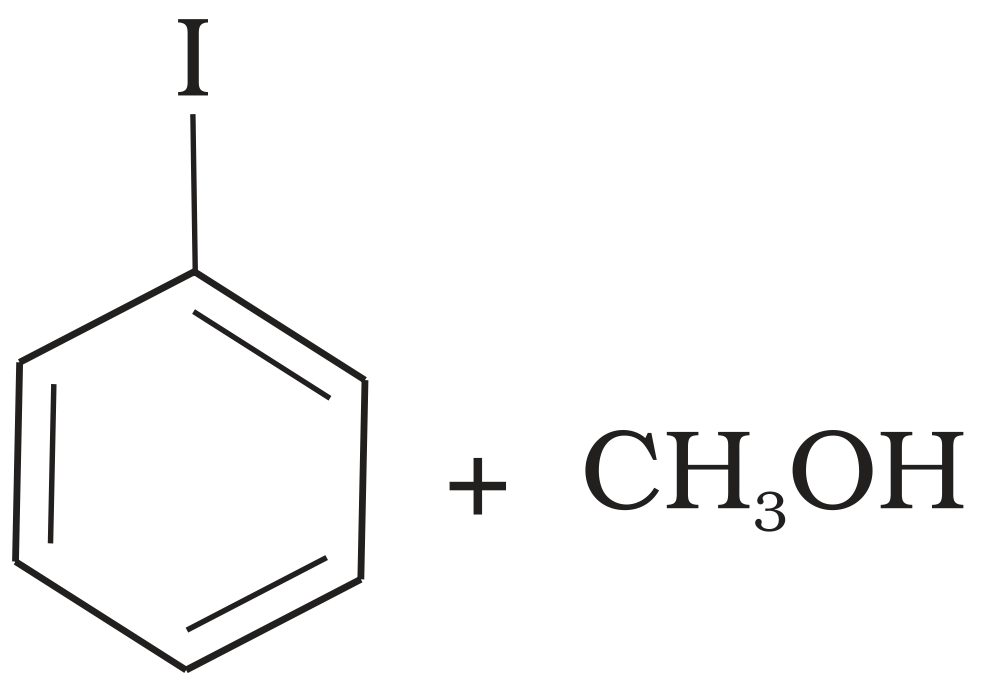
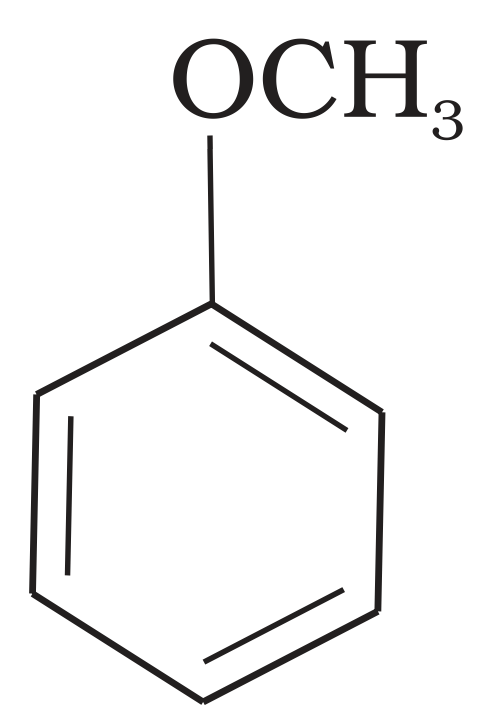
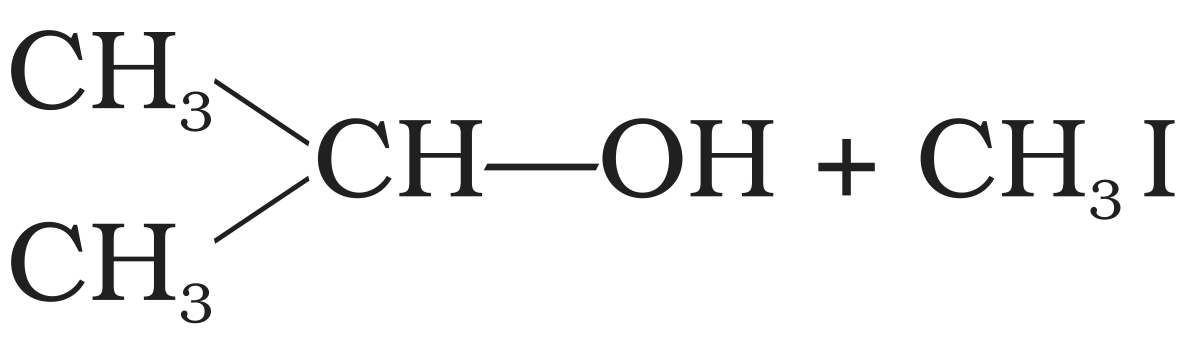
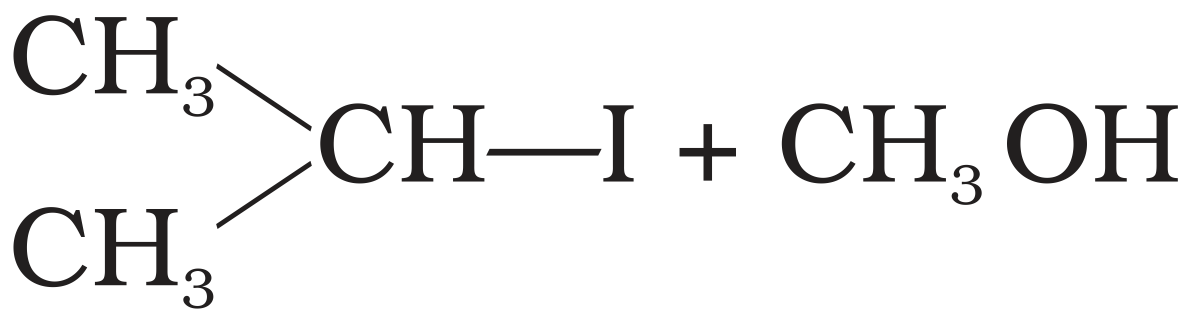
Match the starting materials given in Column $I$ with the products formed by these $($Column $II)$ in the reaction with $II.$
 
Column $I$
 
Column $II$
$(i)$ $CH_3-o-CH_3$ $(a)$
$(ii)$
$(b)$
$\ \ \ \ \ \ \ \ \ \ \ \ \ \text{CH}_3 \\ \ \ \ \ \ \ \ \ \ \ \ \ \ \ | \\ \text{CH}_3-\text{C}-\text{I}+\text{CH}_3\text{OH} \\ \ \ \ \ \ \ \ \ \ \ \ \ \ \ | \\ \ \ \ \ \ \ \ \ \ \ \ \ \ \text{CH}_3$
$(iii)$
$\ \ \ \ \ \ \ \ \ \ \ \ \ \text{CH}_3 \\ \ \ \ \ \ \ \ \ \ \ \ \ \ \ | \\ \text{H}_3\text{C}-\text{C}-\text{O}-\text{CH}_3 \\ \ \ \ \ \ \ \ \ \ \ \ \ \ \ | \\ \ \ \ \ \ \ \ \ \ \ \ \ \ \text{CH}_3$
$(c)$
$(iv)$
$(d)$ $CH_3-OH + CH_3-I$
 
 
$(e)$
 
 
$(f)$
 
 
$(g)$
$\ \ \ \ \ \ \ \ \ \ \ \ \ \text{CH}_3 \\ \ \ \ \ \ \ \ \ \ \ \ \ \ \ | \\ \text{CH}_3-\text{C}-\text{OH}+\text{CH}_3\text{I} \\ \ \ \ \ \ \ \ \ \ \ \ \ \ \ | \\ \ \ \ \ \ \ \ \ \ \ \ \ \ \text{CH}_3$
What is the basic structural difference between starch and cellulose?
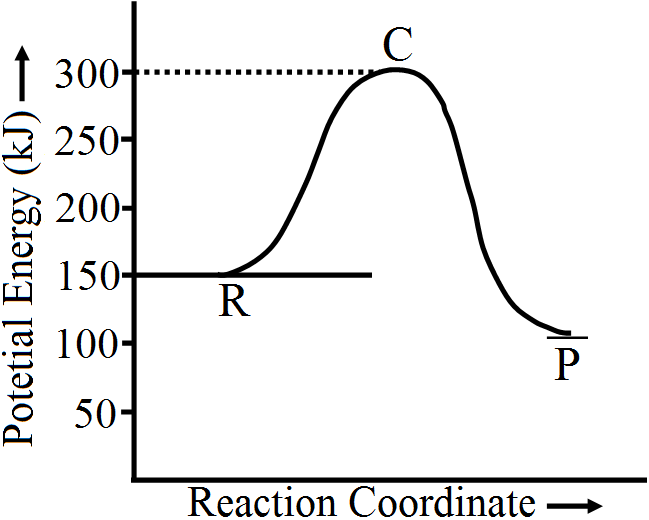
Answer the following questions on the basis of the given plot of potential energy vs reaction coordinate:
  1. What is the threshold energy for the reaction?
  2. What is the activation energy for forward reaction?
  3. What is the activation energy for backward reaction?
  4. What is enthalpy change for the forward reaction?
Differentiate between globular and fibrous proteins.
The following data were obtained during the first order thermal decomposition of $\ce{N2O5(g)}$ at a constant volume:
$\ce{2N2O5(g) \rightarrow 2N2O4(g) + O2(g)}$
S. No. $\text{Time/s}$ $\text{Total pressure/atm}$
$1.$ $0$ $0.5$
$2.$ $100$ $0.512$
Calculate the rate constant.
Can aqueous solution of copper sulphate $\left( CuSO _4\right)$ be kept in iron vessel or not?
Give examples and suggest reasons for the following features of the transition metal chemistry The lowest oxide of transition metal is basic, the highest is amphoteric$/$acidic.
How are vitamins classified? Name the vitamin responsible for the coagulation of blood.
An aromatic compound $'A\ ’$ on treatment with aqueous ammonia and heating forms compound $'B\ ’$ which on heating with $\ce{Br_2}$ and $\ce{KOH}$ forms a compound $'C\ ’$ of molecular formula $\ce{C_6H_7N}.$ Write the structures and $\ce{IUPAC}$ names of compounds $A, B, C.$
A reaction is first order in A and second order in B.
  1. Write the differential rate equation.
  2. How is the rate affected on increasing the concentration of B three times?
  3. How is the rate affected when the concentrations of both A and B are doubled?