Question
Why does carbon form largest number of compounds? Give two reasons.

Answer

Catenation: The property of carbon element due to which its atoms can join one another to form long carbon chains is called catenation.

Tetravalency: Carbon has a valency of four. So, it is capable of bonding with four other atoms of carbon or atoms of some other mono-valent element.Compounds of carbon are formed with oxygen, nitrogen, hydrogen, sulphur, chlorine and many other elements, giving rise to compounds with specific properties which depend on the elements other than the carbon present in the molecule.

Need a full question paper?

Generate a complete, print-ready paper with questions like this in minutes — across 16+ boards, with answer keys.

Start Generating Free

Similar questions

Explain why, methanol is much more dangerous to drink than ethanol.

Write the names of the following functional groups:
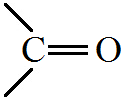
  1. $-\text{CHO}$
  2. $-\text{OH}$
  3. $-\text{COOH}$
  4.  

  1. $-\text{X}$
An element E forms an oxide E2O. An aqueous solution of E2O turns red litmus paper blue.
  1. What is the nature of the oxide E2O?
  2. State whether element E is a metal or a non-metal.
  3. Give one example of an element like E.
What is electroplating?
A substance X, which is an oxide of a group 2 element, is used intensively in the cement industry. This element is present in bones also. On treatment with water it forms a solution which turns red litmus blue. Identify X and also write the chemical reactions involved.
Zinc oxide reacts with carbon, on heating to form zinc metal and carbon monoxide. Write a balanced chemical equation for this reaction. Name
  1. Oxidising agent.
  2. The reducing agent in this reaction.
State the meaning of functional group in a carbon compound. Write the functional group present in (i) ethanol and (ii) ethanol acid and also draw their structures.
State which of the following reactions will take place or which will not, giving a suitable reason for each?

$\text{Zn(s)}+\text{CuSO}_4(\text{aq})\rightarrow\text{ZnSO}_4(\text{aq})+\text{Cu(s)}$

$\text{Fe(s)}+\text{ZnSO}_4(\text{aq})\rightarrow\text{FeSO}_4(\text{aq})+\text{Zn(s)}$

Metallic oxides of zinc, magnesium and copper were heated with the following metals.
MetalZincMagnesiumCopper
Zinc oxide------------
Magnesium oxide------------
Copper oxide------------
In which cases will you find displacement reactions taking place?
What is Debereiner’s law of triads? Explain with the help of one example of a Dobereiner’s triad.