Question
Why is the decade of sixties labelled as a ‘dangerous’ decade?

Answer

  • Doubts about democratic succession after Nehru’s death, -Lal Bahadur Shastri’s era.
  • Economic implications of war with China.
  • Failed monsoons, drought and serious food crisis.
  • War with Pakistan in 1965.
  • Death of Lal Bahadur Shastri.
  • Crisis of leadership-peaceful transition of power–Indra Gandhi’s era-conflict with Syndicate.
  • Decline in agricultural production, serious food shortage, depletion of foreign exchange, drop in industrial production, devaluation, price rise, unemployment.
  • Bandhs and strikes.

Need a full question paper?

Generate a complete, print-ready paper with questions like this in minutes — across 16+ boards, with answer keys.
Start Generating Free

Similar questions

Assess any three challenges that the Congress Party had to face during the period from 1964 to 1971.
Examine the factors responsible for the U.S. hegemony in the world politics.
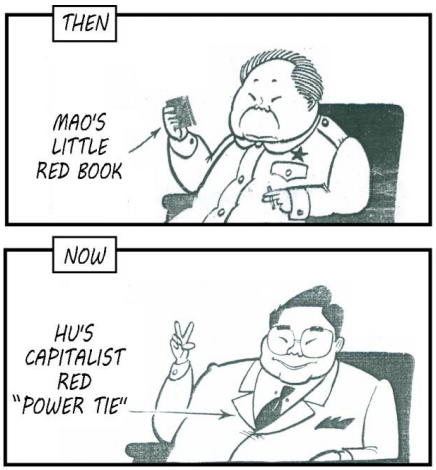
Study the cartoon given below carefully and answer the following questions:
  1. Which country does this cartoon refer to?
  2. Evaluate any two changes in the economic policies of this country from ‘then’ to ‘now’.
  3. Assess any two outcomes of the latest changes that took place in this country.
Explain India's stand on environmental issues.
Read the passage given below carefully and answer the following questions:
The interim government took a firm stance against the possible division of India into smaller principalities of different sizes. The Muslim League opposed the Indian National Congress and took the view that the States should be free to adopt any course they liked. Sardar Patel, India's Deputy Prime Minister and the Home Minister during the crucial period, immediately after Independence, played a historic role in negotiating with the rulers of Princely States in bringing most of them into the Indian Union.
  1. Which government has been referred to as the interim government?
  2. Why did the Muslim League oppose the Indian National Congress?
  3. What makes the role of Sardar Patel a historic one? Explain.
‘Coalition Governments proved to be a boon for democracy in India.’ Support this statement with any two suitable arguments.
Who are indigenous people? Describe any four problems of the indigenous people.
How should a political party resolve its internal differences? Here are some suggestions. Think of each and list out their advantages and shortcomings.
  1. Follow the footsteps of the party president.
  2. Listen to the majority group.
  3. Secret ballot voting on every issue.
  4. Consult the senior and experienced leaders of the party.
State which of these were reasons for the defeat of the Congress in 1967. Give reasons for your answer.
  1. The absence of a charismatic leader in the Congress party.
  2. Split within the Congress party.
  3. Increased mobilisation of regional, ethnic and communal groups.
  4. Increasing unity among non-Congress parties.
  5. Internal differences within the Congress party.
State any four criteria that have been proposed in the recent years for new permanent and non-permanent members of the U.N. Security Council.