Question
Why is the luminous efficiency small for a filament bulb as compared to a mercury vapour lamp?

Answer

In a filament bulb, heat energy is converted into light energy. Most of the electrical energy supplied to the bulb is radiated as heat and only a small percentage is radiated as visible light. Since heat waves are not visible, they don't contribute to visibility. Thus, its luminous flux is lesser than the total radiant flux; hence, its luminous efficiency is low.
In a mercury vapour lamp, a greater amount of electrical energy supplied is converted into visible radiation. Thus, its luminous flux is relatively higher than incandescent lamps.
Need a full question paper?

Generate a complete, print-ready paper with questions like this in minutes — across 16+ boards, with answer keys.

Start Generating Free

Similar questions

Write and explain Kirchhoff's junction rule.
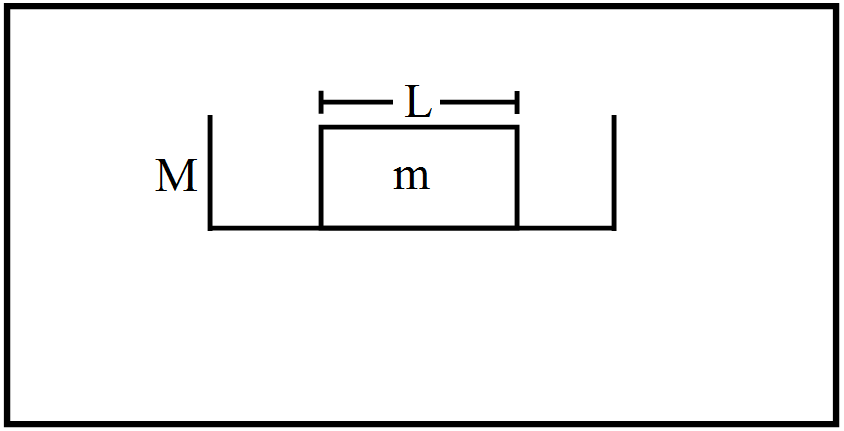
Consider a gravity-free hall in which a tray of mass M, carrying a cubical block of ice of mass m and edge L, is at rest in the middle. If the ice melts, by what distance does the centre of mass of "the tray plus the ice" system descend?
A capacitor of capacitance C is given a charge Q. At t = 0, it is connected to an ideal battery of emf $\in$ through a resistance R. Find the charge on the capacitor at time t.
Two wires A and B are made up of same material. Their areas of cross-section is same and ratio of their lengths is $2: 1$. If same potential difference is applied across the ends of lengths of each wire, then what will be the ratio of current flowing in the two wires?
A sample of 0.177g of an ideal gas occupies $1000cm^3$ at STP. Calculate the rms speed of the gas molecules.
What should be the radius ‘r’ of nearest possible orbits of satellite of mass ‘m’ revolving around the planet of mass ‘M’ as per Bohr Postulates in terms of m, M, G, h where G is Gravitational constant and h is plank’s constant.
Write the shortcomings of Rutherford atomic model. Explain how these were overcome by the postulates of Bohr's atomic model.
A long narrow horizontal slit is placed 1mm above a horizontal plane mirror. The interference between the light coming directly from the slit and that after reflection is seen on a screen 1.0m away from the slit. Find the fringe-width if the light used has a wavelength of 700nm.
A conducting loop of face-area A and resistance R is placed perpendicular to a magnetic field B. The loop is withdrawn completely from the field. Find the charge which flows through any cross-section of the wire in the process. Note that it is independent of the shape of the loop as well as the way it is withdrawn.
Which one of the following will describe the smallest circle when projected with the same velocity $v$ perpendicular to the magnetic field $B: (i)\ \alpha-$particle, and $(ii)\ \beta-$particle?