Question
Why the soaps do not work in hard water?

Answer

(i) When soap is used for washing clothes with hard water a large amount of soap is wasted in reacting with the calcium and magnesium ions present in hard water to form a scum, before it can be used for the real purpose of washing.
$\underset{\text { Soap (in hard water) }}{ C _{17} H _{25} COONa + CaCl _2} \longrightarrow 2 NaCl +\underset{\text { Insoluble calcium stearate (Soap) }}{\left( C _{17} H _{35} COO \right)_2 Ca }$
(ii) The scum formed by the action of hard water on soap sticks to the clothes being washed and interferes with the cleaning ability of the additional soap. Thus soaps do not work in hard water.

Need a full question paper?

Generate a complete, print-ready paper with questions like this in minutes — across 16+ boards, with answer keys.
Start Generating Free

Similar questions

Draw figure to show the splitting of d orbitals in an octahedral crystal field.
Describe the following:
i. Acetylation
ii. Cannizzaro reaction
iii. Cross aldol condensation
iv. Decarboxylation
$Pt ( IV ), NH _3, Cl ^{-}$and $Na ^{+}$combine with each other to form seven types of complex compounds.
The following is :
$
\left[Pt\left(NH_3\right)_6\right] Cl_4
$
(i) Write the formulas of other six complex compounds.
(ii) Write the IUPAC names of these complex compounds.
(iii) Which of these complex aqueous solutions will have the highest conductivity?
(iv) Which of these complexes is non-ionic?
(v) Oxidation number of Pt in these complexes and also tell the coordination number.
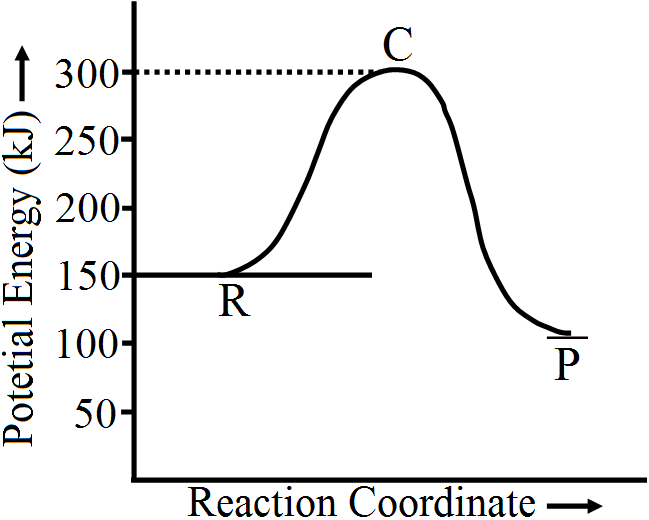
Answer the following questions on the basis of the given plot of potential energy vs reaction coordinate:

  1. What is the threshold energy for the reaction?
  2. What is the activation energy for forward reaction?
  3. What is the activation energy for backward reaction?
  4. What is enthalpy change for the forward reaction?

What is weak electrolyte? Explain relation between concentration of weak electrolyte and molar conductivity.
  1. Why is the vapour pressure of a solution of glucose in water lower than that of water?
  2. A 6.90 M solution of KOH in water contains 30% by mass of KOH. Calculate the density of the KOH solution.

[Molar mass of KOH=56 g mol-1].

Zinc rod is dipped in 0.1 M solution of $ZnSO _4$
The salt is $95 \%$ dissociated at is dilution at 298 K . Calculate the electrode potential. Given
$E ^0\left( Zn ^{2+} / Zn \right)=-0.76$
How would you account for the following:
Cr2+ is reducing in nature while with the same d-orbital configuration (d4) Mn3+ is an oxidising agent.
How much electricity in terms of Faraday is required to produce?
(i) 20.0 g of Ca from molten CaCl2?
(ii) 40.0 g of Al from molten Al2O3?
3.9 g of benzoic acid dissolved in 49 g of benzene shows a depression in freezing point of 1.62 K. Calculate the van't Hoff factor and predict the nature of solute (associated or dissociated).
(Given: Molar mass of benzoic acid = 122 g mol-1, Kf for benzene = 4.9 K kg mol-1)