Question
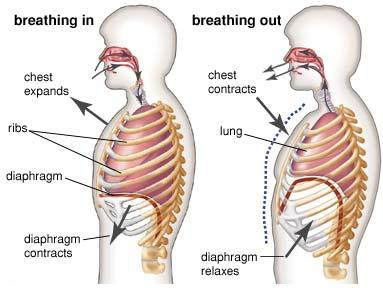
With a schematic diagram, explain the overall process of respiration.

Answer

The primary organs of therespiratory system are the lungs, which function to take in oxygen and expel carbon dioxide as we breathe. The gas exchangeprocess is performed by the lungs and respiratory system. Air, a mix of oxygen and other gases, is inhaled.

Need a full question paper?

Generate a complete, print-ready paper with questions like this in minutes — across 16+ boards, with answer keys.
Start Generating Free

Similar questions

Derive the expression for the heat produced due to a current 'l' flowing for a time interval 't' through a resistor 'R' having a potential difference 'V' across its ends. With which name is the
relation known? How much heat will an instrument of 12W produce in one minute if it is connected to a battery of 12V?
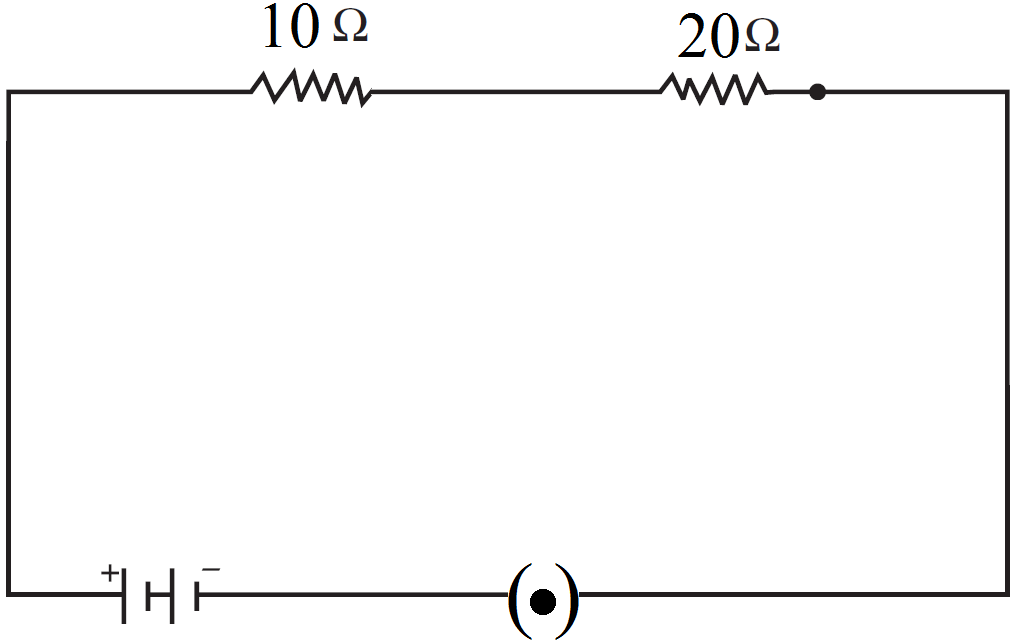
Study the following electric circuit and find.
  1. The current flowing in the circuit and
  2. The potential difference across $10\Omega$ resistor.
How does phototropism occur in a plant stem (or shoot)? Explain with the help of labelled diagrams.
Describe the working of an AC generator with the help of a labeled circuit diagram. What changes must be made in the arrangement to convert it to a DC generator?
Two metals X and Y form the salts $XSO _4$ and $Y _2 SO _4$, respectively. The solution of salt $XSO _4$ is blue in colour whereas that of $Y _2 SO _4$ is colourless. When barium chloride solution is added to $XSO _4$ solution, then a white precipitate Z is formed alongwith a salt which turns the solution green. And when barium chloride solution is added to $Y _2 SO _4$ solution, then the same white precipitate Z is formed alongwith colourless common salt solution.
a. What could the metals $X$ and $Y$ be?
b. Write the name and formula of salt $XSO _4$.
c. Write the name and formula of salt $Y _2 SO _4$.
d. What is the name and formula of white precipitate Z ?
e. Write the name and formula of the salt which turns the solution green in the first case.
  1. Explain the following terms related to spherical lenses:
  1. Optical centre.
  2. Centres of curvature.
  3. Principal axis.
  4. Aperture.
  5. Principal focus.
  6. Focal length.
  1. A converging lens has focal length of 12 cm. Calculate at what distance should the object be placed from the lens so that it forms an image at 48 cm on the other side of the lens.
What is electromagnetic induction? State different ways of inducing current in a coil. Suggest the most convenient situation for inducing current in a coil. State the situation in which the induced current in the coil is found to be the highest. Name and state the rule used to know the direction of the induced current.
  1. Give an example of a metal which:
  1. Is a liquid at room temperature.
  2. Is kept immersed in kerosene for storing.
  3. Is both malleable and ductile.
  4. Is the best conductor of heat.
  1. Name the process of obtaining a pure metal from an impure metal through electrolysis. Suppose you have to refine copper using this process, then explain mentioning inwith the help of a labelled diagram the process of purification, brief the materials used as (i) anode, (ii) cathode and (iii) electrolyte.
You are given samples of three metals — sodium, magnesium and copper. Suggest any two activities to arrange them in order of their decreasing reactivities.
The sea water contains water beetles, tadpole, fish and weeds.
  1. Write a food chain comprising all the given organisms?
  2. Which organisms in the food chain are (i) herbivore, and (ii) carnivores?
  3. Which organisms are (i) predators, and (ii) prey?
  4. Which organisms can trap solar energy to make food?
  5. Which organism is a secondary consumer?
Define hydrotropism. Give one example of hydrotropism. State whether this example is of positive hydrotropism or negative hydrotropism. Illustrate your answer with the help of labelled diagram.