MCQ
With the increase in principle quantum number, the energy difference between the two successive energy levels
  • A
    Increases.
  • B
    Decreases
  • Remains constant
  • D
    Sometimes increases and sometimes decreases

Answer

Correct option: C.
Remains constant
 Decreases

Need a full question paper?

Generate a complete, print-ready paper with questions like this in minutes — across 16+ boards, with answer keys.

Start Generating Free

Similar questions

The energy liberated on complete fission of $1\, kg$ of $_{92}{U^{235}}$ is (Assume $200\, MeV$ energy is liberated on fission of $1$ nucleus)
Two particles $A_1$ sand $A_2$ of masses $m_1, m_2\left(m_1>m_2\right)$ have the same de$-$Broglie wavelength. Then:
The angle of incidence of a ray of light on a transparent substance is $60^{\circ}$. The reflected ray is completely polarized. The refractive index of the material is :
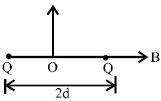
Assertion : Consider two identical charges placed distance $2d$ apart, along $x-$ axis. The equilibrium of a positive test charge placed at the point $O$ midway between them is stable for displacements along the $x-$ axis.

Reason: Force on test charge is zero

There are four light-weight-rod samples $A, B, C, D$ separately suspended by threads. A bar magnet is slowly brought near each sample and the following observations are noted

$(i)$  $A$ is feebly repelled

$(ii)$ $B$ is feebly attracted

$(iii)$ $C$ is strongly attracted

$(iv)$ $D$ remains unaffected

Which one of the following is true?

$36$ cells, each of emf $4V$ are connected in series and kept in a box. The combination shows an emf of $88V$ on the outside. Calculate the number of cells reversed.
Visible light passing through a circular hole forms a diffraction disc of radius 0.1mm on a screen. If an X-ray is passed through the same setup, the radius of the diffraction disc will be:
Missing lines in a continuous spectrum reveal
Consider a radioactive material of half-life $1.0 \, minute$. If one of the nuclei decays now, the next one will decay
For a triode $r_P=10$ kilo ohm and $g_m=3$ milli mho. If the load resistance is double of plate resistance, then the value of voltage gain will be(a) 10(b) 20(c) 15(d) 30