Question
Write a note on halide compounds of Transition elements.

Answer

$\rightarrow$ The Transition elements form Ionic halides with fluorine and co$-$valent halides with chlorine, bromine and iodine.
$\rightarrow$ The highest oxidation numbers are achieved in $TiX _{4} ($tetrahalides$), VF_5$ and $CrF_{6.}$
$\rightarrow$ Mn is not known in $+7$ oxidation state with fluorine i.e. $MnF,$ is not known. But $MnO_3F$ is known because oxygen stabilizes the compound due to its tendency to form a multiple bonds.
$\rightarrow$ The ability of fluorine to stabilise the highest oxidation state is due to either higher lattice energy as in the case of $CoF_3,$ or higher bond enthalpy terms for the higher covalent compounds, e.g., $VF_5$ and $CrF_6$
$\rightarrow$ Although $V ^{ V }$ is represented only by $VF _5$, the other halides, however, undergo hydrolysis to give oxohalides, $VOX _3$. Another feature of fluorides
$VF _5+ H _2 O $\rightarrow$ VOF _3+2 HF$
$\rightarrow$ The solution of metal halides are acidic as they produce acid on hydrolysis.
$\rightarrow$ All halides of copper such as $CuF _2, CuCl _2$ and $CuBr _2$ are known. However $CuI _2$ is not know because $Cu ^{2+}$ is good oxidising agent while $1$ is good reducing agent. So they form $Cu _2 I _2$ on reaction with each other.
$2 Cu ^{2+}+4 I ^{-}  \rightarrow  Cu _2 I _{2(s)}+ I _2$
$\rightarrow$ However, many copper $(I)$ compounds are unstable in aqueous solution and undergo disproportionation.
$2 Cu ^{+}  \rightarrow  Cu ^{2+}+ Cu$
$\rightarrow$ The stability of $Cu ^{2+} (aq)$ rather than $Cu ^{+}(aq)$ is due to the much more negative $\Delta_{\text {hyd }} H ^{\ominus}$ of $Cu ^{2+} (aq)$ than $Cu ^{+}$, which more than compensates for the second ionization enthalpy of $Cu .$
Formulas of Halides of $3d$ Metals
Oxidation Number                  
$+6$     $CrF_6$            
$+5$   $VF_5$ $CrF_5$            
$+4$ $TiX_4$ $VX_4^1$ $CrX_4$ $MnF_4$          
$+3$ $TiX_3$ $VX _3$ $CrX_3$ $MnF_3$ $FeX_3^1$ $CoF_3$   $CuX _2{ }^{11}$ $ZnX _2$
$+2$ $TiX _2{ }^{ III }$ $VX _2$ $CrX_2$ $MnF_2$ $FeX _2$ $CoX _2$ $NiX _2$ $CuX ^{111}$  
$+1$                  
$K e y: X=F  \rightarrow  I ; X^1=F  \rightarrow  B r ; X^{11}=F, C l ; X^{111}=C l  \rightarrow  I $

Need a full question paper?

Generate a complete, print-ready paper with questions like this in minutes — across 16+ boards, with answer keys.
Start Generating Free

Similar questions

The decomposition of A into product has value of k as $4.5 \times 10^3 s^{-1}$ at $10^{\circ} C$ and energy of activation $60 kJ mol ^{-1}$. At what temperature would k be $1.5 \times 10^4 s^{-1}$ ?
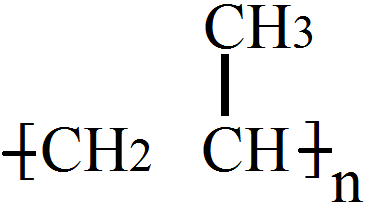
  1. Is a homopolymer or copolymer? Give reason.
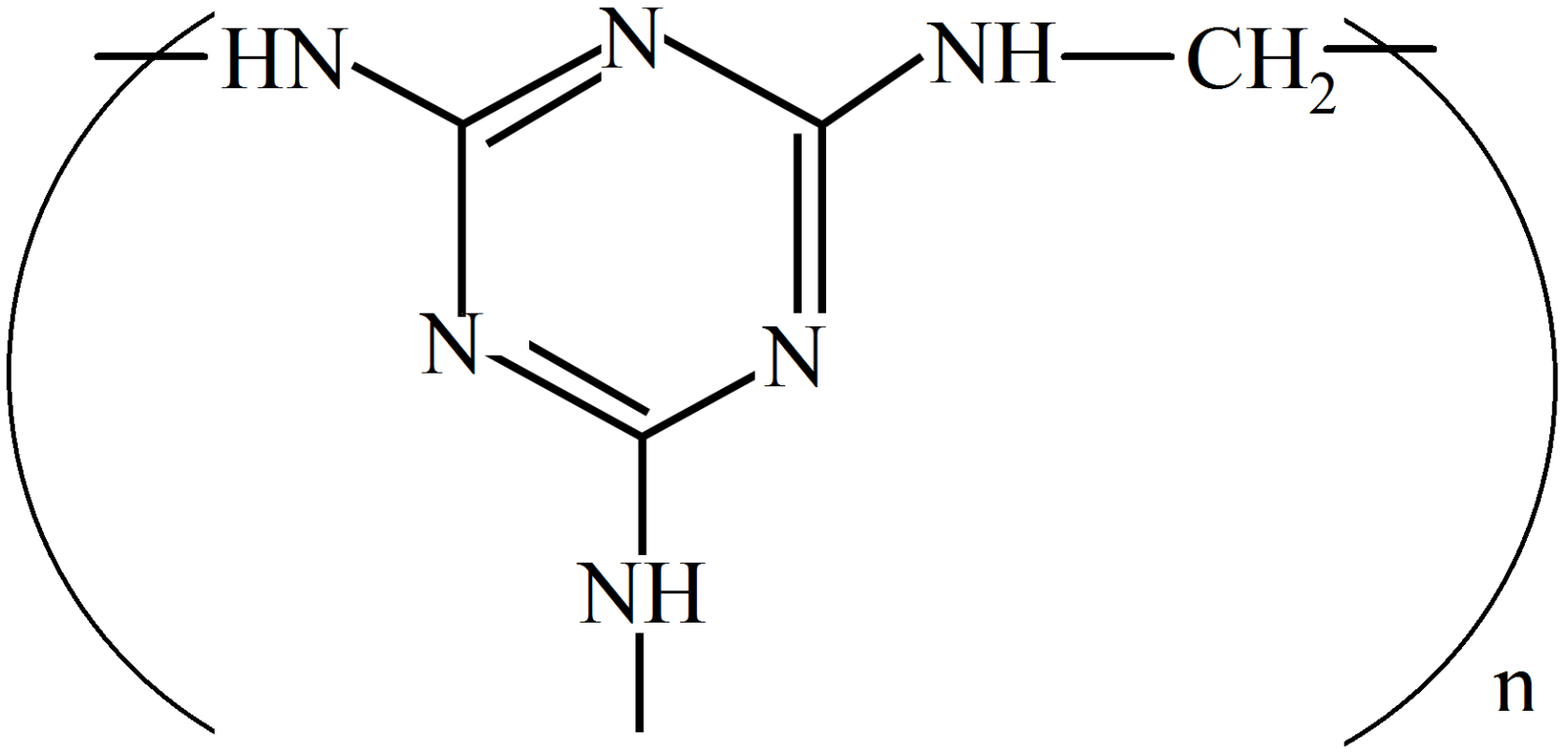
  2. Write the monomers of the following polymer:
  1. What is the role of Sulphur in vulcanization of rubber?
Why vitamin D, E and K compounds are essential for us? Describe their important sources.
An element $‘X’ ($At. mass $= 40g\ mol^{-1})$ having f.c.c. structure, has unit cell edge length of $400$pm. Calculate the density of $‘X’$ and the number of unit cells in $4$g of $‘X’ (N_A = 6.022 \times 10^{23}\ mol^{-1}).$
Explain preparation of haloarene from amine compound. ### Preparation of hyloarene by sandmayer reaction.
What can be inferred from the magnetic moment values of the following complex species?
Example Magnatic Moment (BM)
$K_4[Mn(CN)_6]$ $2.2$
$[Fe(H_2O)_6]^{2+}$ $5.3$
$K_2[MnCl_4]$ $5.9$
What happens when bromine reacts with $\text{CH}_3-\text{C}\equiv\text{CH}?$ How would you justify this reaction?
Explain mechanism of nucleophilic addition reaction of aldehydes and ketones with figure.
The rate constant for the decomposition of hydrocarbons is $2.418 \times 10^{–5}s^{–1}$ at $546 K$. If the energy of activation is $179.9 kJ/mol$, what will be the value of pre-exponential factor.
Complete the following reactions :
  1. $\text{C}_6\text{H}_5-\text{COO}^-\text{NH}^+_4\xrightarrow{\text{ }\text{ }\text{ }\text{ }\text{ }\text{ }\text{ }\text{ }\triangle\text{ }\text{ }\text{ }\text{ }\text{ }\text{ }\text{ }\text{ }\text{ }}\text{A}\xrightarrow{\text{ }\text{ }\text{ }\text{ }\text{Br}_2/\text{KOH}\text{ }\text{ }\text{ }\text{ }}\text{B}\xrightarrow{\text{ }\text{ }\text{ }\text{ }\text{CH}_3\text{COC}l_3/\text{pyridine}\text{ }\text{ }\text{ }\text{ }}\text{C}$
  2. $\text{C}_6\text{H}_5\text{N}^+_2\text{BF}^-_4\xrightarrow[\triangle]{\text{ }\text{ }\text{ }\text{ }\text{ }\text{ }\text{ }\text{ }\text{NaNO}_2/\text{Cu}\text{ }\text{ }\text{ }\text{ }\text{ }\text{ }\text{ }\text{ }\text{ }}\text{A}\xrightarrow{\text{ }\text{ }\text{ }\text{ }\text{Sn}/\text{HC}l\text{ }\text{ }\text{ }\text{ }}\text{B}\xrightarrow[\triangle]{\text{ }\text{ }\text{ }\text{ }\text{CHC}l_3+\text{alc. KOH}\text{ }\text{ }\text{ }\text{ }}\text{C}$