Question
Write a short note on endosperm development.

Answer

→ Endosperm development precedes embryo development.
→ The primary endosperm cell divides repeatedly and forms a triploid endosperm tissue.
→ The cells of this tissue are filled with reserve food materials and are used for the nutrition of the developing embryo.
→ In the most common type of endosperm development, the PEN undergoes successive nuclear divisions to give rise to free nuclei. This stage of endosperm development is called free-nuclear endosperm.
→ Subsequently cell wall formation occurs and the endosperm becomes cellular.
→ The number of free nuclei formed before cellularisation varies greatly.
→ The coconut water from tender coconut that you are familiar with, is nothing but free- nuclear endosperm (made up of thousands of nuclei) and the surrounding white kernel is the cellular endosperm.
→ Endosperm may either be completely consumed by the developing embryo (e.g., pea, groundnut, beans) before seed maturation or it may persist in the mature seed (e.g. castor and coconut) and be used up during seed germination.

Need a full question paper?

Generate a complete, print-ready paper with questions like this in minutes — across 16+ boards, with answer keys.

Start Generating Free

Similar questions

Match the terms in Column I with those in Column II.
S. No Column I S. No Column II
(i) Gene therapy 1. Human insulin.
(ii) Cotton bollworm 2. Biopiracy.
(iii) Eli Lilly 3. Emphysema.
(iv) Basmati Rice 4. ADA deficiency.
(v) $\alpha-1\text{ antitrypsin}$ 5. Lepidopteran.
Read the following and answer any four questions from (i) to (v) given below:

The process of translation requires transfer of genetic information from a polymer of nucleotides to synthesise a polymer of amino acids. The relationship between the sequence of amino acids in a polypeptide and nucleotide sequence of DNA or mRNA is called genetic code. George Gamow suggested that in order to code for all the 20 amino acids, code should be made up of three nucleotides.

  1. What is a codon?
  1. A length of DNA which codes for a particular protein.
  2. A part of the tRNA molecule to which a specific amino acid is attached.
  3. A part of the tRNA molecule which recognises the triplet code on the messenger RNA.
  4. A part of the messenger RNA molecule that has a sequence of bases coding for an amino acid.
  1. Three consecutive bases in the DNA molecule provide the code for each amino acid in a protein molecule. What is the maximum number of different triplets that could occurs?
  1. 16
  2. 20
  3. 24
  4. 64
  1. Listed below are some amino acids and their corresponding mRNA triplets.
Amino acid
mRNA triplet
Phenylalanine
UUU
Lysine
AAG
Arginine
CGA
Alanine
GCA
Which DNA sequence would be needed to produce the following polypeptide sequence? Alanine-Arginine-Lysine-Phenylalanine

  1. $\text{CGT}\ \ \ \text{GCT}\ \ \ \text{TTC}\ \ \ \text{AAA}$

  2. $\text{CGT}\ \ \ \text{GCT}\ \ \ \text{TTC}\ \ \ \text{TTT}$

  3. $\text{CGU}\ \ \ \text{GCU}\ \ \ \text{UUC}\ \ \ \text{AAA}$

  4. $\text{CGU}\ \ \ \text{GCU}\ \ \ \text{UUC}\ \ \ \text{TTT}$

  1. Identify the non-sense codons among the following.
  1. AUG
  2. GUG
  3. UAA
  4. UGG
  1. A polypeptide is made using synthetic mRNA molecules as shown.
Synthetic mRNA used
Polypeptide produced
UUUAAAUUUAAA
Phenylalanine-Iysine-phenylalanine-Iysine

What are the DNA codes for the amino acids phenylalanine and lysine?

S.no
Phenylalanine
Lysine
(a)
AAA
TTT
(b)
AAA
UUU
(c)
GGG
CCC
(d)
TTT
GGG
Read the following and answer any four questions from (i) to (v) given below:

Ginkgo tree has been saved from extinction by selective breeding followed by channeling into trade of nature lovers. This is an ex-situ conservation, where endangered species are protected from all adverse factors. Offspring produced in captive breeding are released in natural habitat for acclimatisation.

  1. What is the significance of offsite collections?
  1. Restock depleted populations.
  2. Protection of endangered species.
  3. Reintroduce species in wild.
  4. All of these.
  1. Which of the following is not an ex-situ conservation?
  1. Wetlands
  2. Orchards
  3. Aquaria
  4. Botanical gardens.
  1. Select the incorrect statements for ex-situ conservation.
  1. It is conservation of species outside their natural habitats.
  2. Endangered species are kept under human supervision and provided all the essentials.
  3. The species population recovers in natural environment.
  4. Both (b) and (c).
  1. Conditions maintained in seed banks for orthodox seeds are:
  1. Low moisture content.
  2. Anaerobic conditions.
  3. Low temperature.
  4. All of these.
  1. Assertion: Animal species which have become extinct in wild continue to be maintained in zoological parks.

Reason: Captive breeding is the conservation of those cases where these is no realistic chance of in-situ survival.

  1. Both assertion and reason are true and reason is the correct explanation of assertion.
  2. Both assertion and reason are true but reason is not the correct explanation of assertion.
  3. Assertion is true but reason is false.
  4. Both assertion and reason are false.
Polymerase chain reaction:
  1. Is a method of synthesising human protein from human DNA
  2. Uses restriction enzymes
  3. Can produce billions of copies of a DNA fragment
  4. Takes place naturally in bacteria
Read the following and answer any four questions from (i) to (v) given below:
The foundations of recombinant DNA (rDNA) were laid by the discovery of restriction enzymes. These enzymes are present in many bacterias where they function as a part of their defense mechanism called the Restriction Modification system (RM system). Molecular basis of this system was explained first by Werner Arber in 1962. The Restriction Modification system consists of two components:
  • A restriction enzyme (called restriction endonuclease) identifies the introduced foreign DNA and cuts it into pieces.
  • The second component is a modification enzyme (methylase) that adds a methyl group to DNA at specific site to protect it from the restriction enzyme cleavage.
  1. Restriction endonucleases are enzymes present in ________ where they function as a part of _______ mechanism.
  1. (i) bacteria (ii) digestive
  2. (i) protists (ii) transcription
  3. (i) plant cells (ii) replication
  4. (i) prokaryotes (ii) defence
  1. Which of the following statements regarding modification enzyme is correct?
  1. It adds methyl group to one or two bases usually within the host DNA sequence to protect it from the restriction enzyme.
  2. It adds ethyl group to one or two bases usually within the sequence recognised by the restriction enzymes.
  3. It adds methyl group to only one of bases within the foreign DNA sequence that is recognised by the restriction enzymes.
  4. None of these.
  1. Which of the following is a type II restriction enzyme?
  1. Alu I
  2. EcoR I
  3. BamH I
  4. All of these.
  1. Which of the following is the first discovered restriction endonuclease?
  1. Sal I
  2. EcoR I
  3. Hind II
  4. EcoR II
  1. Components of Restriction Modification System include?
  1. Restriction enzyme.
  2. Modification enzyme.
  3. Lysing enzyme.
  4. Both (a) and (b).
Read the following and answer any four questions from (i) to (v) given below:
Disposal of untreated sewage into the river or freshwater pond causes huge water pollution. Four water samples from different sources (A, B, C, D) are collected and tested for BOD value in a lab to assess their quality. The BOD values are presented in the given table. Water samples are collected from primary effluent, secondary effluent, untreated sewage and river water. Study the given table and answer the following.
Sample BOD
A 20mg/ L
B 5mg/ L
C 300mg/ L
D 400mg/ L
  1. The source of sample 'C' is:
  1. River water.
  2. Primary effluent.
  3. Secondary effluent.
  4. Untreated sewage water.
  1. If sewage in untreated condition is disposed off in a freshwater body then.
  1. BOD and dissolved oxygen both will increase.
  2. BOD will increase and dissolved oxygen will decreas.
  3. BOD will decrease and dissolved oxygen will increase.
  4. BOD and dissolved oxygen both will decrease.
  1. A large number of pathogenic microbes can be present in water sample of:
  1. C
  2. A
  3. D
  4. Both (a) and (c).
  1. High value of BOD in sample O is due to:
  1. High amount of organic wastes and aerobic microbes.
  2. High amount of inorganic wastes and anaerobic microbes.
  3. High amount of organic wastes and anaerobic microbes.
  4. High amount of inorganic wastes and aerobic microbes.
  1. River water is represented by the sample.
  1. A
  2. B
  3. C
  4. D
A regulatory body working under MoEF for the release of transgenic crop is ____________:
  1. NBPGR
  2. NSC
  3. NIPGR
  4. GEAC
Read the following and answer any four questions from (i) to (v) given below:

Over population causes number of family problems. Strategies like birth control methods help to control population explosion. Natural methods of birth control do not involve medications or devices to prevent pregnancy, but rather rely on behavioural practices and/ or making observations about menstrual cycle.

  1. Which method helps in contraception by temporary absence of sex?
  1. Coitus interruptus.
  2. Withdrawal method.
  3. Rhythm method.
  4. Lactational amenorrhea method.
  1. Assertion: The effectiveness of coitus interruptus method is limited.

Reason: Some sperms may pass into vagina before ejaculation.
  1. Both assertion and reason are true, and reason is the correct explanation of assertion.
  2. Both assertion and reason are true, but reason is not the correct explanation of assertion.
  3. Assertion is true, but reason is false.
  4. Both assertion and reason are false.
  1. Why is lactational amenorrhea effective for about 4-5 months after parturition?
  1. Ovulation occurs on about the 14th day of menstruation.
  2. Ovulation does not occur during intense lactation.
  3. This method inhibits mobility of sperms.
  4. Both (b) and (c).
  1. Which fact is not the basis of periodic absence method of birth control?
  1. Ovum remains alive for about 1-2 days.
  2. Ovulation occurs on about 14th day of menstruation.
  3. Sperms survive for about 3 days.
  4. Alteration in uterine endometrium.
  1. On which days of menstrual cycle should coitus be avoided to prevent fertilisation?
  1. 10-17
  2. 6-13
  3. 1-5
  4. 15-28
Read the following text carefully and answer the questions that follow:
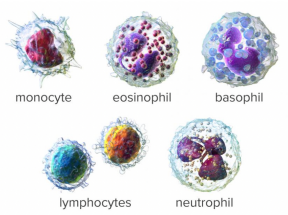
A lymphocyte isa type of white blood cell. Enlarge. Blood cells. Blood contains many types of cells: white blood cells (monocytes, lymphocytes, neutrophils, eosinophils, basophils, and macrophages), red blood cells (erythrocytes), and platelets. Blood circulates through the body in the arteries and veins.
Image
i. Why are the antigens called antibody-generating chemicals? (1)
ii. Which two types of lymphocytes are involved in immunity? (1)
iii. Give the common site of formation of two types of lymphocytes. (2)
OR
What is the site of differentiation of two types of lymphocytes? (2)
Write a self-explanatory note on biopatent.