Question
Write any four differences between afferent arteriole and efferent arteriole.

Answer

Differences between Afferent Arteriole and Efferent Arteriole:
S. No.HeadingEfferent ArterioleAfferent Arteriole
1. Nature This branch of the renal artery carries blood to Bowman's capsule. This branch of the renal artery takes blood out of Bowman's capsule.
2. Capillary bundle Their fine branches form a cluster of capillaries. Their fine branches emerge from the capillary cluster and go to the other side.
3. Diameter Their diameter is larger. Their diameter is less.
4. Blood pressure Blood pressure is high in these. Blood pressure is low in these.

Need a full question paper?

Generate a complete, print-ready paper with questions like this in minutes — across 16+ boards, with answer keys.
Start Generating Free

Similar questions

The fungi constitute a unique kingdom of heterotrophic organisms. They show a great diversity in morphology
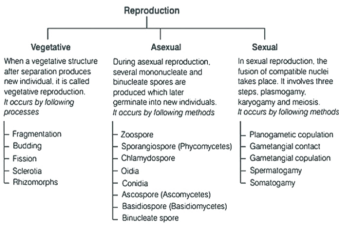
and habitat. Fungi are cosmopolitan and occur in air, water, soil, and on animals and plants. They prefer to grow in warm and humid places. Most fungi are heterotrophic and absorb soluble organic matter from dead substrates and hence are called saprophytes. When a fungus reproduces sexually, two haploid hyphae of compatible mating types come together and fuse. In some fungi, the fusion of two haploid cells immediately results in diploid cells (2n). The fungiform fruiting bodies in which reduction division occurs, leading to the formation of haploid spores. Symbionts - in association with algae as lichens and with roots of higher plants as mycorrhiza. Three types of reproduction occur in fungi

Image

i. Observe the given flow chart of reproduction and mention which steps involves in the sexual cycle of fungi.
(1)
ii. What is Rhizopus? Also, mention Rhizopus - wheat rush a correct match? (1)
iii. What is Mycorrhiza? And mention its function. (2)

OR

In which form Fungi Stores Food Material? Do fungi have food vacuoles? (2)
Try to collect all the currently accepted meanings for the word ‘species’. Discuss with your teacher the meaning of species in case of higher plants and animals on one hand, and bacteria on the other hand.
(i) There are specific names in osteology for the following parts of our body. Write each name.
(A) Kneecap
(B) Collar bone
(C) Skull
(D) Spine
(E) Coxal bone
(ii) Write down two functions of the sternum.
Could the number of eggs or young ones produced by an oviparous and viviparous mother be equal? Why?
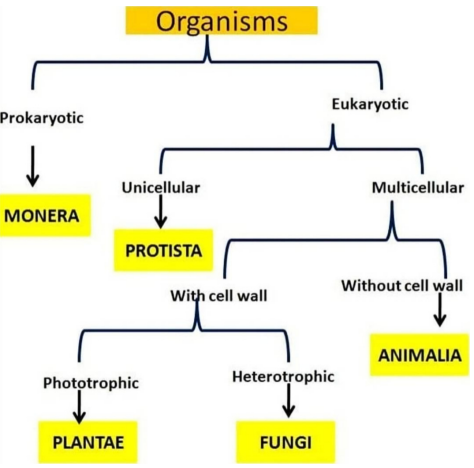
There are thousands of different eubacteria or 'true bacteria'. They are characterized by the presence of a rigid cell wall, and if motile, a flagellum. The cyanobacteria (also referred to as blue-green algae) have chlorophyll a similar to green plants and are photosynthetic autotrophs. The cyanobacteria are unicellular, colonial or filamentous, freshwater/marine or terrestrial algae. The colonies are generally surrounded by gelatinous sheath. They often form blooms in polluted water bodies. Some of these organisms can fix atmospheric nitrogen in specialized cells called heterocysts, e.g., Nostoc and Anabaena. Chemosynthetic autotrophic bacteria oxidise various inorganic substances such as nitrates, nitrites and ammonia and use the released energy for their ATP production. They play a great role in recycling nutrients like nitrogen, phosphorous. iron and Sulphur.

(1) Which of the following can be termed as 'Photosynthetic Autotrophs'
(a) All monerans (b) Chemosynthetic Bacteria (c) Cyanobacteria (d) All Eubacteria

(2) Blue green algae are characterized by :
(a) They often form blooms in polluted water bodies.
(b) Some of these organisms can fix atmospheric nitrogen
(c) Their colonies are generally surrounded by gelatinous sheath.
(d) All of these

(3) Which is incorrect about Heterocysts:
(a) These are specialized cells
(b) These are present in all Cyanobacteria.
(c) Nostoc and Anabaena have Heterocysts.
(d) Organisms having these cells can fix atmospheric nitrogen

(4) Green plants are similar to Blue green algae in having:
(a) chlorophyll a (b) Heterocysts (c) chlorophyll b (d) None of these

(5) Which of these can be described as ‘true Bacteria’.
(a) Cyanobacteria only
(b) Only Chemosynthetic autotrophic bacteria
(c) Bacteria without cell wall.
(d) Eubacteria
Write any four differences between sympathetic and parasympathetic nervous system. Make a labelled diagram showing the nerve endings and synapses.
Write any four differences in the cortex of monocotyledon and dicotyledon stem.
What is heterospory? Briefly comment on its significance. Give two examples.
Mention the ploidy of the following: protonemal cell of a moss; primary endosperm nucleus in dicot, leaf cell of a moss; prothallus cell of a ferm; gemma cell in Marchantia; meristem cell of monocot, ovum of a liverwort, and zygote of a fern.