Question
Write any four important characteristics of fungi.

Answer

The important characteristics of fungi are as follows :
(1) With the exception of yeasts which are unicellular, fungi are filamentous. Their bodies consist of long, slender thread-like structures called hyphae.
(2) Some hyphae are continuous tubes filled with multinucleated cytoplasm-these are called coenocytic hyphae.
(3) There may be holes in the septa of some fungal hyphae, through which this the cytoplasm can flow freely.
(4) The network of hyphae is known as mycelium. Their cell wall is made of chitin and polysaccharides.
(5) Mycelia may be spread at the subsurface or on the ground. So much so that they extend for many kilometres.
(6) Both asexual and sexual types of reproduction occur in fungi.
(7) Most fungi are heterotrophic and absorb soluble organic matter from dead substrates and hence are called saprophytes. Those that depends on living plants and animals are called parasites. They can also live as symbionts-in association with algae as lichens and with roots of higher plants as mycorrhiza.
Need a full question paper?

Generate a complete, print-ready paper with questions like this in minutes — across 16+ boards, with answer keys.

Start Generating Free

Similar questions

What is the difference between flora, fauna and vegetation? Eichhornia crassipes is called as an exotic species while Rauwolfia serpentina is an endemic species in India. What do these terms exotic and endemic refer to?
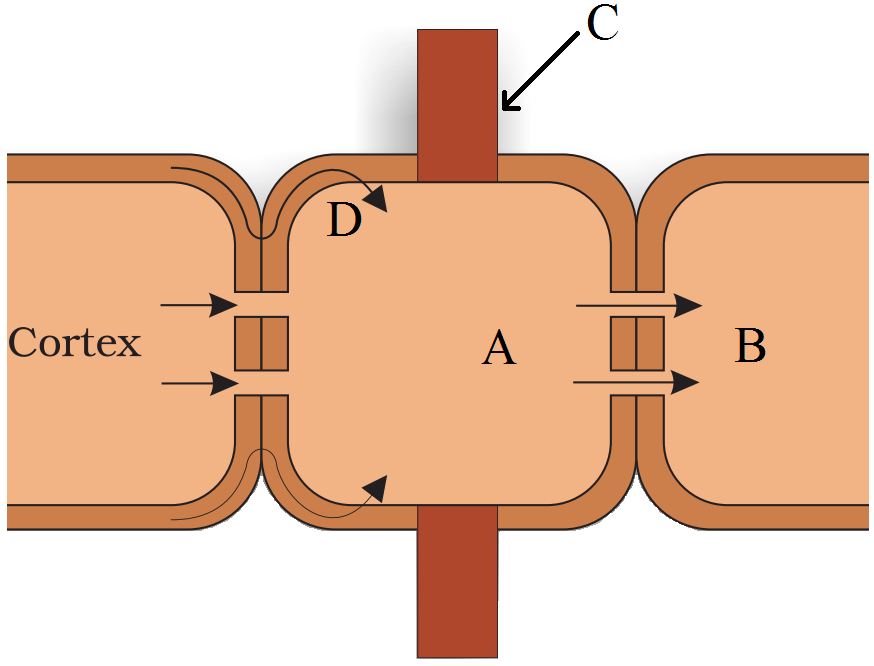
Observe the diagram given and answer the following questions:
  1. Name the cell A and B.
  2. Identify C and name the substance it is made of.
  3. Name the pathway of water movement represented as D.
Mention where the following cells are located?
  1. Neuroglial cells.
  2. Ependymal cells.
  3. Spindle cells.
Leucoplasts are colourless plastids. Name and mention the storage products of the different types of leucoplasts.
Neha planned to go the lakeside for picnic with her friends. Suddenly they noticed a man drowning in the lake. Everyone was frightened, but Neha asked them to stop panicking and take the man out of water. After the man was rescued, he was found unconscious. Neha then suggested that mouth to mouth artificial respiration should be given to save the man. One of her friend did as she guided.Finally, the man was saved. He thanked Neha and her friends for their help.
  1. Why is artificial respiration given?
  2. Can artificial respiration bring back a person to consciousness even after death?
  3. What values are shown by Neha?
Neurospora- an ascomycetes fungus has been used as a biological tool to understand the mechanism of plant genetics much in the same way as Drosophila has been used to study animal genetics. What makes Neurospora so important as a genetic tool?
Analyse the events during every stage of cell cycle and notice how the following two parameters change. Amount of DNA content (C) per cell.
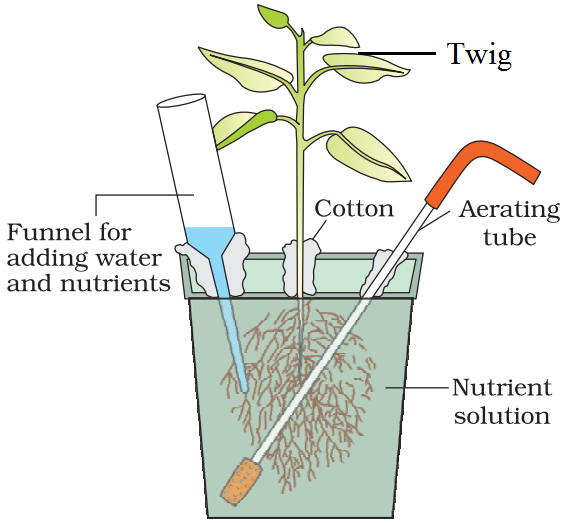
Carefully observe the following figure.
  1. Name the technique shown in the figure and the scientist who demonstrated this technique for the first time.
  2. Name at least three plants for which this technique can be employed for their commercial production.
  3. What is the significance of aerating tube and feeding funnel in this setup?
Draw a labelled diagram of human urinary system.
Suppose for some reason ATP falls deficient in nerve fibre, how will it affect the conduction of nerve impulse through it?