Question
  1. Write outer electronic configuration of Cr atom. Why are half filled orbitals more stable?
  2. An electron has a velocity of 50ms-1, accurate upto 99.99%. Calculate the uncertainty in locating its position. (Mass of electron = 9.1 × 10⁻³¹kg, h = 6.6 × 10⁻³⁴Js)
  3. Write the atomic number of the element in which filling of 3d sub-shell in the atom just starts.
Answer

  1. Cr(24): 1s2 2s2 2p6 3s2 3p6 4s1 3d5

Half filled orbitals are more stable because of symmetrical distribution of electrons and exchange energy is maximum.

  1. $\Delta\text{V}=50\times\big[(100-99.99)\%\big]$

$=50\times\frac{0.01}{100}=50\times10^{-4}$

$=5\times10^{-3}\text{ms}^{-1}$

$\Delta\text{x}.\Delta\text{V}=\frac{\text{h}}{4\pi\text{m}}$

$\Delta\text{x}\times5\times10^{-3}\text{ms}^{-1}=\frac{6.6\times10^{-34}\text{Js}}{4\times3.142\times9\times10^{-31}\text{kg}}$

$\Rightarrow\Delta\text{x}=\frac{6.6\times10^{-34}\text{Js}}{4\times3.142\times9.1\times10^{-31}\text{kg}\times5\times10^{-3}\text{ms}^{-1}}$

$=1.154\times10^{-2}\text{m}$

  1. Scandium (Atomic number 21) is the element in which filling of 3d orbitals starts.

Need a full question paper?

Generate a complete, print-ready paper with questions like this in minutes — across 16+ boards, with answer keys.

Start Generating Free

Similar questions

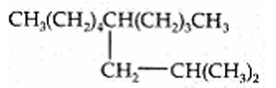
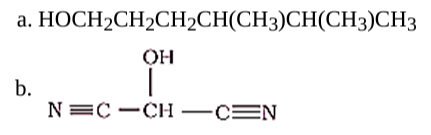
1. For each of the following compounds, write a condensed formula and also their bond-line formula.
Image
2. How does
i. an electron withdrawing group (EWG) and
ii. an electron donating group (EDG) influence the acid strength of carboxylic end?
Describe the linear combination of atomic orbitals in the formation of molecular orbitals.
A sample of 0.50g of an organic compound was treated according to Kjeldahl’s method. The ammonia evolved was absorbed in 50ml of 0.5M H2SO4. The residual acid required 60mL of 0.5M solution of NaOH for neutralisation. Find the percentage composition of nitrogen in the compound.
Define the following:
(i) Isothermal process (ii) Enclosed thermal process (iii) Isobaric process (iv) Isovolumetric process
Explain why cation are smaller and anions larger in radii than their parent atoms?
Attempt any five of the following:
1. What is electrophile in sulphonation?
2. Write IUPAC name of following:
Image
3. Write IUPAC name: $CH _3 CH - C \left( CH _3\right)_2$
4. Methane does not react with chlorine in dark. Why?
5. How would you convert ethene to ethane molecule?
6. What is Huckel rule?
7. What is decarboxylation? Give an example.
Write the structure of important functional group and make a table of their prefixes and suffixes according to IUPAC.
Balance the following equations in basic medium by ion-electron method and oxidation number methods and identify the oxidising agent and the reducing agent.

$\text{P}_4(\text{s})+\text{OH}^{-}(\text{aq})\rightarrow\text{PH}_3(\text{g})+\text{HPO}_2^-(\text{aq})$

What is the concentration of sugar (C12H22O11) in mol L–1 if its 20g are dissolved in enough water to make a final volume up to 2L?
What is resonance effect and it is of how many types? Explain with examples.