Question
Write short note on tetra chloromethane (CCL4) ### Write short note on Carbon tetra chloride.

Answer

→ It is produced in large quantities for use in the manufacture of refrigerants and propellants for aerosol cans.
→ It is also used as feedstock in the synthesis of chlorofluorocarbons and other chemicals, pharmaceutical manufacturing, and general solvent use.
→ Until the mid 1960s, it was also widely used as a cleaning fluid, both in industry, as a degreasing agent, and in the home, as a spot remover and as fire extinguisher.
→ There is some evidence that exposure to carbon tetrachloride causes liver cancer in humans.
→ The most common effects are dizziness, light headedness, nausea and vomiting, which can cause permanent damage to nerve cells.
→ In severe cases, these effects can lead rapidly to stupor, coma, unconsciousness or death.
→ Exposure to CCl4 can make the heart beat 4 irregularly or stop. The chemical may irritate the eyes on contact.
→ When carbon tetrachloride is released into the air, it rises to the atmosphere and depletes the ozone layer.
→ Depletion of the ozone layer is believed to increase human exposure to Depletion of the ultraviolet rays, leading to increased skin cancer, eye diseases and disorders, and possible disruption of the immune system.
Need a full question paper?

Generate a complete, print-ready paper with questions like this in minutes — across 16+ boards, with answer keys.

Start Generating Free

Similar questions

Answer the following questions:
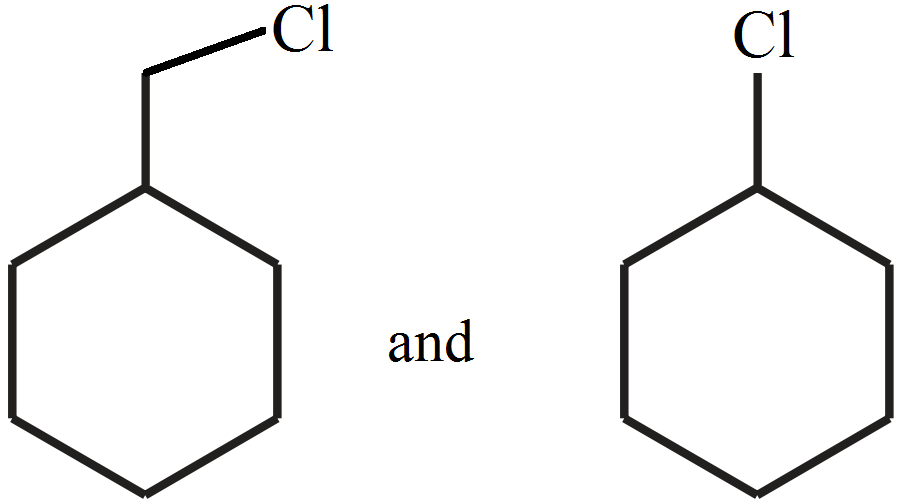
In the following pairs of halogen compounds, which would undergo SN1 reaction faster? Explain.

(A), (B) and (C) are three non-cyclic functional isomers of a carbonyl compound with molecular formula C4H8O. Isomers (A) and (C) give positive Tollens’ test whereas isomer (B) does not give Tollens’ test but gives positive Iodoform test. Isomers (A) and (B) on reduction with Zn(Hg)/ conc. HCl give the same product (D).
  1. Write the structures of (A), (B), (C) and (D).
  2. Out of (A), (B) and (C) isomers, which one is least reactive towards addition of HCN?
What happens when D-glucose is treated with the following reagents?
  1. HI.
  2. Bromine water.
  3. HNO3.
Although +3 oxidation states is the characteristic oxidation state of lanthanoids but cerium shows +4 oxidation state also. Why?
In a reaction between A and B, the initial rate of reaction (r0) was measured for different initial concentrations of A and B as given below:
A/mol L-1 0.20 0.20 0.40
B/mol L-1 0.30 0.10 0.05
r0/mol L-1 s-1 5.07 × 10-5 5.07 × 10-5 1.43 × 10-4
What is the order of the reaction with respect to A and B?
The $\pi$-complexes are known for transition metals only. Why?
  1. Calculate $\Delta$rGfor the reaction:

Mg (s) + Cu2+ (aq) $\rightarrow$ Mg2+ (aq) + Cu (s)
Given: Eocell = + 2.71 V, 1 F = 96500 C mol–1

  1. Name the type of cell which was used in Apollo space programme for providing electrical power.
A current of 5 ampere is flowing though a wire for 193 seconds. Calculate the number of electrons flowing through the cross section of wire for 193 seconds.
For the reaction
2NO(g) + Cl2(g) → 2 NOCl(g)
The following data were collected. All the measurements were taken at 263K:

Experiment. No. Initial [NO] (M) Initial [Cl2] (M)

Initial rate of disappearance of Cl2 (M/min)

1 0.15 0.15 0.60
2 0.15 0.30 1.20
3 0.30 0.15 2.40
4 0.25 0.25 ?
  1. Write the expression for rate law.
  2. Calculate the value of rate constant and specify its units.
  3. What is the initial rate of disappearance of Cl2 in exp. 4?
Draw the structures of the following derivatives:
  1. The 2,4-Dinitrophenylhydrazone of benzaldehyde.
  2. Acetaldehyde dimethyl acetal.
  3. Cyclopropanone oxime.