Question
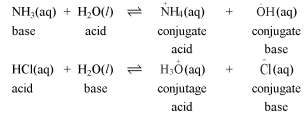
Write the equations which shows the amphoteric nature of water.

Need a full question paper?

Generate a complete, print-ready paper with questions like this in minutes — across 16+ boards, with answer keys.
Start Generating Free

Similar questions

A sparingly soluble salt having general formula $\text{A}^{\text{p+}}_{\text{x}}\text{B}^{\text{q-}}_{\text{y}}$ and molar solubility S is in equilibrium with its saturated solution. Derive a relationship between the solubility and solubility product for such salt.
Identify the compounds A, X and Z in the following reactions:
$\text{A}+2\text{HCl}+5\text{H}_2\text{O}\rightarrow2\text{NaCl}+\text{X}$
$\text{X}\frac{\triangle}{370\text{K}}\text{HBO}_2\frac{\triangle}{>370\text{K}}\text{Z}$
Two half cells are $\mathrm{Al}^{3+}(\mathrm{aq}) / \mathrm{Al}$ and $\mathrm{Mg}^{+}(\mathrm{aq}) / \mathrm{Mg}$. The reduction potentials of these half cells are -1.66 V and -2.36 V respectively. Calculate the cell potential. Write the cell reaction also.
Photochemical smog occurs in warm, dry and sunny climate. Among $\mathrm{SO}_2$, $\mathrm{NO}_2$, $\mathrm{O}_3$ and hydrocarbons which one is not amongst the components of photochemical smog and why?
Out of Zn and Cu vessel which one will be more suitable to store 1M HCl?
$\text{E}^\circ_\frac{\text{Zn}^{2+}}{\text{Zn}}=-0.76\text{V}$
$\text{E}^\circ_\frac{\text{Cu}^{2+}}{\text{Cu}}=+0.34\text{V}$
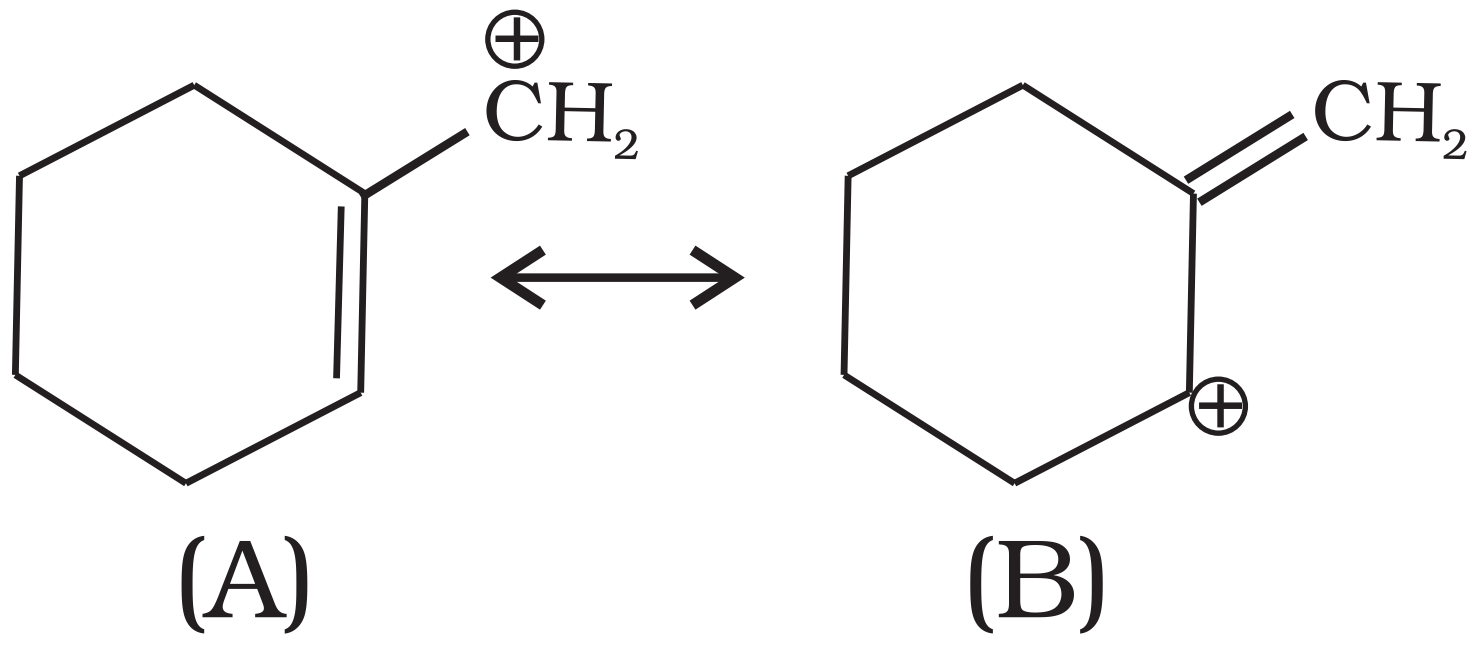
“Stability of carbocations depends upon the electron releasing inductive effect of groups adjacent to positively charged carbon atom involvement of neighbouring groups in hyperconjugation and resonance.”
Which of the following ions is more stable? Use resonance to explain your answer.
The electronic configuration of some elements are as :
(i) $1 s^2 2 s^2 2 p^5$
(ii) $1 s^2 2 s^2 2 p^6 3 s^2 3 p^2$
(iii) $1 s^2 2 s^2 2 p^6 3 s^2 3 p^6 3 d^2 4 s^2$
Find out the halogen, transition element and carbon family element from them.
How many seconds are there in 2 days?
A position filled with one of mole ideal gas of 25°C undergoes free expansion free a volume of 10.0ml to 100ml. It 150J of heat is absorbed doing the process. What will be changes in $\Delta\text{U}$ and $\Delta\text{H}.$
How does a catalyst affect the equilibrium constant? Explain.