Question
Write the first five terms of the following sequences whose $n^{th}$ terms are:
$\text{a}_\text{n}=\frac{3\text{n}-2}{5}$

Answer

$\text{a}_\text{n}=\frac{3\text{n}-2}{5}$
Let $n = 1, 2, 3, 4, 5,$ then
$\text{a}_1=\frac{3\times1-2}{5}=\frac{3-2}{5}=\frac{1}{5}$
$\text{a}_2=\frac{3\times2-2}{5}=\frac{6-2}{5}=\frac{4}{5}$
$\text{a}_3=\frac{3\times3-2}{5}=\frac{9-2}{5}=\frac{7}{5}$
$\text{a}_4=\frac{3\times4-2}{5}=\frac{12-2}{5}=\frac{10}{5}=2$
$\text{a}_5=\frac{3\times5-2}{5}=\frac{15-2}{5}=\frac{13}{5}$

Need a full question paper?

Generate a complete, print-ready paper with questions like this in minutes — across 16+ boards, with answer keys.
Start Generating Free

Similar questions

Evaluate the following:
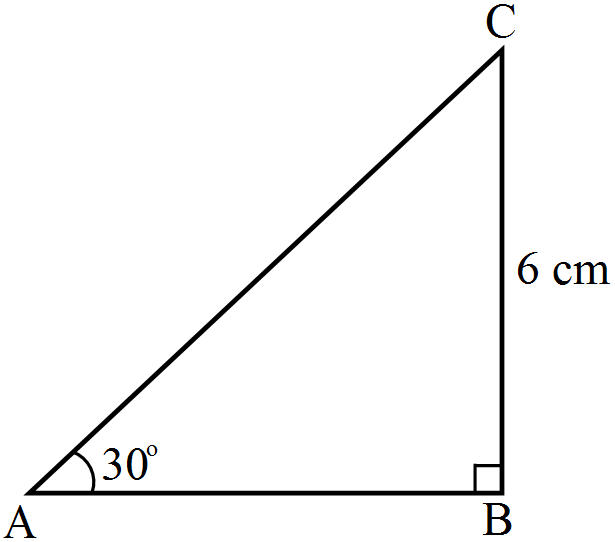
In the adjoining figure, $\triangle\text{ABC}$ is a right-angled at $B$ and $\angle\text{A}=30^\circ,$ If $BC = 6\  cm$.
Find:
  1. $AB$
  2. $AC.$
If the sum of the first $n$ terms of an $A.P.$ is $4 n-n^2$, what is the first term$?$ What is the sum of first two terms$?$ What is the second term$?$ Similarly, find the third, the tenth and the nth term.
Determine the values of p for which the quadratic equation $2 x^2+p x+8=0$ has real roots.
In which of the following situations, the sequence of numbers formed will form an A.P.?
The amount of air present in the cylinder when a vacuum pump removes each time $\frac{1}{4}$ of the remaining in the cylinder.
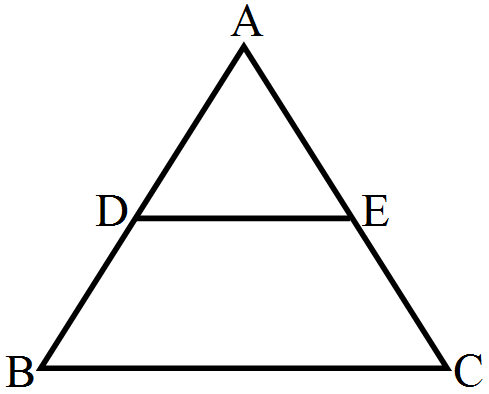
$D$ and $E$ are points on the sides $AB$ and $AC$ respectively of a $\triangle\text{ABC}.$ In the following cases, determine whether $DE || BC$ or not.
$AD = 5.7\ cm, DB = 9.5\ cm, AE = 4.8\ cm$ and $EC = 8\ cm.$
A bag contains cards which are numbered form $2$ to $90$. A card is drawn at random from the bag. Find the probability that it bears:
  1. A two digit number.
  2. A number which is a perfect square.
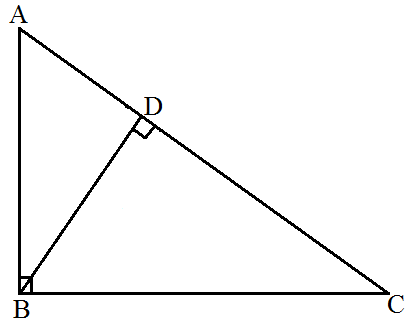
In the given figure, $\angle\text{ABC}=90^\circ$ and $\text{BD} \perp\text{AC.}$ If $AB = 5.7\ cm, BD = 3.8\ cm$ and $CD = 5.4\ cm,$ find $BC.$
Find the value of k for which the following equations have real and equal roots:
$(k+1) x^2-2(k-1) x+1=0$
If $\alpha$ and $\beta$ are the zeroes of the quadratic polynomial $f(x) = x^2- x - 2,$ find the value of $\frac{1}{\alpha}-\frac{1}{\beta}$
Find the value of $k$ if points $A(k, 3), B(6, -2)$ and $C(-3, 4)$ are collinear.