Question

Write the names of the following functional groups:
  1. $-\text{CHO}$
  2. $-\text{OH}$
  3. $-\text{COOH}$
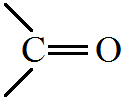
  4.  
  1. $-\text{X}$

Answer

  1. Aldehyde group.
  2. Alcohol group.
  3. Carboxylic acid group.
  4. Ketone group.
  5. Halo group.

Need a full question paper?

Generate a complete, print-ready paper with questions like this in minutes — across 16+ boards, with answer keys.

Start Generating Free

Similar questions

A dry pellet of a common base B, when kept in open absorbs moisture and turns sticky. The compound is also a by–product of chloralkali process. Identify B. What type of reaction occurs when B is treated with an acidic oxide? Write a balanced chemical equation for one such solution.
The atomic number of an element ‘X’ is 19.
  1. Write its electronic configuration.
  2. To which period of the Modern Periodic Table does it belong and what is its valency?
  3. If ‘X’ burns in oxygen to form its oxide, what will be its nature – acidic, basic or neutral?
  4. Write balanced chemical equation for the reaction when this oxide is dissolved in water.
Identify the type of reaction: $\text{MnO}_2+4\text{HCl}\rightarrow\text{MnCl}_2+2\text{H}_2\text{O}+\text{Cl}_2$
What is the nuclear fuel in the sun? Describe the process by which energy is released in the sun. Write the equation of the nuclear reaction involved.
A concave mirror has a focal length of 4cm and an object 2cm tall is placed 9cm away from it. Find the nature, position and size of the image formed.
Give reasons:
Use of a mild base like baking soda provides relief on the area stung by honeybee.
When a piece of limestone reacts with dilute HCl, a gas X is produced. When gas X is passed through lime water then a white precipitate Y is formed. On passing excess of gas X, the white precipitate dissolves forming a soluble compound Z.
  1. What are X, Y and Z?
  2. Write equations for the reactions which take place:
  1. When limestone reacts with dilute HCl.
  2. When gas X reacts with lime water to form white precipitate Y.
  3. When excess of gas X dissolves white precipitate Y to form a soluble compound Z.
A bright object 50mm high stands on the axis of a concave mirror of focal length 100mm and at a distance of 300mm from the concave mirror. How big will the image be?
A converging lens of focal length 5cm is placed at a distance of 20cm from a screen. How far from the lens should an object be placed so as to form its real image on the screen?
In a monohybrid cross between tall pea plants (TT) and short pea plants ( tt ) a scientist obtained only tall pea plants ( Tt ) in the $F _1$ generation. However, on selfing the $F_1$ generation pea plants, he obtained both tall and short plants in $F_2$ generation. On the basis of above observations with other angiosperms also, can the scientist arrive at a law? If yes, explain the law. If not, give justification for your answer.