Question
Write the S.I. unit and dimensional formula for the permittivity of free space ?

Answer

The basic formula that relates permittivity of free space with the electrical force between two charges is :
$F=(1/4~\pi\in_{0}).q_{1}.q_{2}/r^{2}$
Where F is the electric force between two charges, $q_{1}$, $q_{2}$ are the charges and r is the distance between the charges.
$\in_{0}$ is the permittivity of free space.
$Unit=C^{2}/Nm^{2}$
The dimensional formula of force is [MLT-2].
The dimensional formula of charge (q) is [AT].
The dimensional formula of distance (r) is [L].
Assembling all the formulas, we get the dimensional formula of $\in_{0}$ is $[m^{-1}L^{-3}T^{4}A^{2}]$

Need a full question paper?

Generate a complete, print-ready paper with questions like this in minutes — across 16+ boards, with answer keys.
Start Generating Free

Similar questions

Two identical coherent waves, each of intensity I, are producing an interference pattern. Find the value of the resultant intensity at a point of:
  1. Constructive interference.
  2. Destructive interference.
Explain that Kirchhoff's second law is law of conservation of energy.
$a.$ Using the Bohr's model, calculate the speed of the electron in a hydrogen atom in the $n = 1, 2$ and $3$ levels.
$b$. Calculate the orbital period in each of these levels.
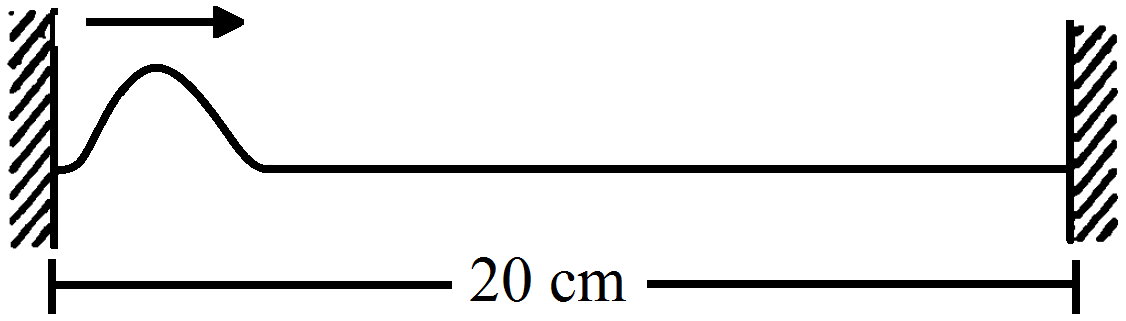
A string of length 20cm and linear mass density 0.40g/cm is fixed at both ends and is kept under a tension of 16N. A wave pulse is produced at t = 0 near an end as shown in figure, which travels towards the other end.
  1. When will the string have the shape shown in the figureagain
  2. Sketch the shape of the string at a time half of that found in part (a).
A proton is projected with a velocity of $3 \times 10^6 ms^{-1}$ perpendicular to a uniform magnetic field of $0.6T.$ Find the acceleration of the proton.
Distinguish between unpolarised and plane polarised light. An unpolarised light is incident on the boundary between two transparent media. State the condition when the reflected wave is totally plane polarised. Find out the expression for the angle of incidence in this case.
The electric field in a region is given by $\overrightarrow{\text{E}}=\frac{3}{5}\text{E}_0\overrightarrow{\text{i}}+\frac{4}{5}\text{E}_0\overrightarrow{\text{j}}$ with $\text{E}_0=2.0\times10^3\text{NC}^{-1}.$ Find the flux of this field through a rectangular surface of area $0.2m^2$ parallel to the $y-z$ plane.
A circular coil of radius $10 cm , 500$ turns and resistance $2 \Omega$ is placed with its plane perpendicular to the horizontal component of the earth's magnetic field. It is rotated about its vertical diameter through $180^{\circ}$ in $0.25 s$. Estimate the magnitudes of the emf and current induced in the coil. Horizontal component of the earth's magnetic field at the place is $3.0 \times 10^{-5} T$.
A boy is holding a smooth, hollow and non-conducting pipe vertically with charged spherical ball of mass 10 g carrying a charge of +10 mC inside it which is free to move along the axis of the pipe. The boy is moving the pipe from East to West direction in the presence of magnetic field of 2T. With what minimum velocity, should the boy move the pipe such that the ball does not move along the axis. Also determine the direction of the magnetic field.
A thin prism of crown glass $(\mu_\text{r}=1.515,\mu_\text{v}=1.525)$ and a thin prism of flint glass $(\mu_\text{r}=1.612,\mu_\text{v}=1.632)$ are placed in contact with each other. Their refracting angles are 5.0° each and are similarly directed. Calculate the angular dispersion produced by the combination.