MCQ
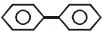
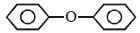
$X$ is
  • A

  • B

  • C


Answer

Correct option: D.

d

Need a full question paper?

Generate a complete, print-ready paper with questions like this in minutes — across 16+ boards, with answer keys.

Start Generating Free

Similar questions

Given below are two statements: one is labelled as Assertion $A$ and the other is labelled as Reason $R.$

Assertion $A:$ $3.1500\,g$ of hydrated oxalic acid dissolved in water to make $250.0\,mL$ solution will result in $0.1\,M$ oxalic acid solution.

Reason $R:$ Molar mass of hydrated oxalic acid is $126\,g\,mol ^{-1}$.

In the light of the above statements, chose the correct answer from the options given below:

The maximum number of hydrogen bonds formed by a water molecule in ice is
The heat of vaporisation and heat of fusion of $H_2O$ are $540\, cal/g$ and $80 \,cal/g.$ The ratio of  $\frac{{{\Delta _S{vap}}}}{{{\Delta _S{fusion}}}}$ for water is :-
Class $XII$ students were asked to prepare one litre of buffer solution of $pH\,8.26$ by their chemistry teacher. The amount of ammonium chloride to be dissolved by the student in $0.2\,M$ ammonia solution to make one litre of the buffer is $.....\,g$ (Given $pK _{ b }\left( NH _{3}\right)=4.74$; Molar mass of $NH _{3}=17\,g\,mol ^{-}$ ; Molar mass of $NH _{4} Cl =53.5\,g\,mol ^{-1}$ )
Which of following will give $N_2$ gas on treatment with nitrous acid :-
The $"O - N - O"$ bond angle is maximum in
The solubility (in $mol\,L^{-1}$ ) of $AgCl\,\,(K_{sp} = 1.0 \times 10^{-10}$ ) in a $0.1\,M\,KCl$ solution will be
Sulphurous acid $\left( H _{2} SO _{3}\right)$ has $Ka _{1}=1.7 \times 10^{-2}$ and $Ka _{2}=6.4 \times 10^{-8} .$ The $pH$ of $0.588 \,M\, H _{2} SO _{3}$ is ..... . (Round off to the Nearest Integer)
Stability order of following carbocation is :

$(i)$ $\begin{array}{*{20}{c}}
  {\begin{array}{*{20}{c}}
  {\,\,\,\,\,\,\,\,\,\,\,\,\,\,\,\,\,\,\,\,\,\,\,\,\,\,\,\,\,\,\,\,\,\,\,\,\,\,\,\,C{H_3}-CH_2} \\ 
  {\,\,\,\,\,\,\,\,\,\,\,\,\,|} 
\end{array}} \\ 
  {C{H_3} - {C^ + }} \\ 
  {\,\,\,\,\,\,\,\,\,\,\,\,\,\,|} \\ 
  {\,\,\,\,\,\,\,\,\,\,\,\,\,\,\,\,\,\,\,\,\,C{H_3}} 
\end{array}$

$(ii)$  $\begin{array}{*{20}{c}}
  {\begin{array}{*{20}{c}}
  {\,\,\,\,\,\,\,\,\,\,\,\,\,\,\,\,\,\,\,\,\,\,C{H_3}} \\ 
  {\,\,\,\,\,\,\,\,\,\,\,\,\,|} 
\end{array}} \\ 
  {C{H_3} - {C^ + }} \\ 
  {\,\,\,\,\,\,\,\,\,\,\,\,\,\,|} \\ 
  {\,\,\,\,\,\,\,\,\,\,\,\,\,\,\,\,\,\,{H}} 
\end{array}$

$(iii)$ $\begin{array}{*{20}{c}}
  {\begin{array}{*{20}{c}}
  {\,\,\,\,\,\,\,\,\,\,\,\,\,\,\,\,\,\,\,C{H_3}} \\ 
  {\,\,\,\,\,\,\,\,\,\,\,\,\,|} 
\end{array}} \\ 
  {C{H_3} - {C^ + }} \\ 
  {\,\,\,\,\,\,\,\,\,\,\,\,\,\,|} \\ 
  {\,\,\,\,\,\,\,\,\,\,\,\,\,\,\,\,\,\,\,\,\,C{H_3}} 
\end{array}$

$(iv)$ $Ph - CH ^{+}-\underline{ CH }_{3}$ 

Which of the following double salt does not exist ?