Question
X-rays are known to be electromagnetic radiations. Therefore the X-ray photon has
| (a) Electric charge |
| (b) Magnetic moment |
| (c) Both electric charge and magnetic moment |
| (d) Neither electric charge nor magnetic moment |
X-rays are known to be electromagnetic radiations. Therefore the X-ray photon has
| (a) Electric charge |
| (b) Magnetic moment |
| (c) Both electric charge and magnetic moment |
| (d) Neither electric charge nor magnetic moment |
(d) Neither electric charge nor magnetic moment
Generate a complete, print-ready paper with questions like this in minutes — across 16+ boards, with answer keys.
The distance between  and
and  ions in HCl molecule is 1.28 Å. What will be the potential due to this dipole at a distance of 12 Å on the axis of dipole
|
(a) 0.13 V |
(b) 1.3 V |
(c) 13 V |
(d) 130 V |
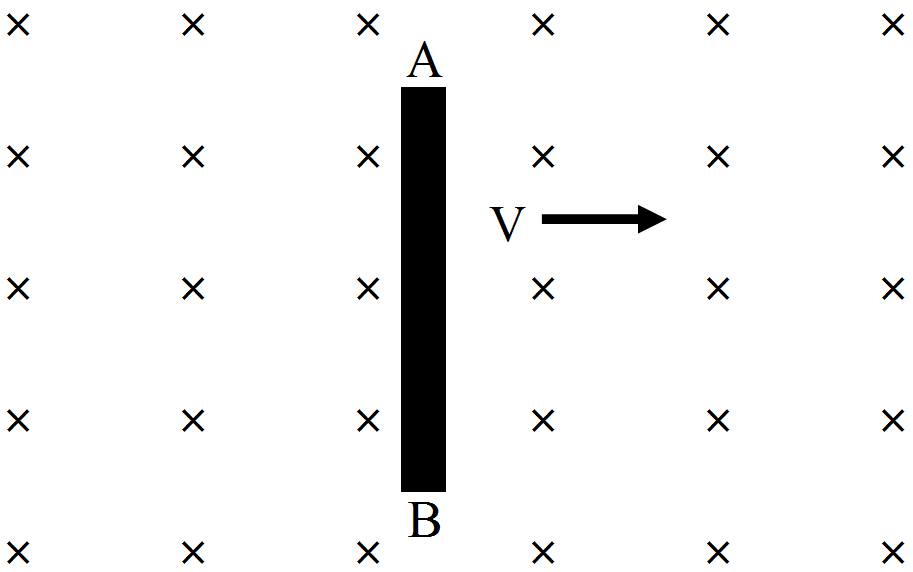
The eye can detect 5 × 10⁴ photons per square metre per sec of green light (l = 5000 Å) while the ear can detect  . The factor by which the eye is more sensitive as a power detector than the ear is close to
|
(a) 5 |
(b) 10 |
(c) 106 |
(d) 15 |
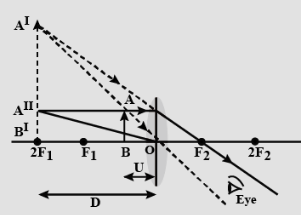
Figure shows the ray diagram of a:
$\text{v}_0=0,\ \text{a}_0=0$
$\text{v}_0=0,\ \text{a}_0\neq0$
$\text{v}_0\neq0,\ \text{a}_0=0$
$\text{v}_0\neq0,\ \text{a}_0\neq0$