MCQ
X−ray falling on a material.
- AExerts a force on it
- BTransfer energy to it
- CTransfers momentum to it
- DTransfers impules to it
Explanation:
The emitted X-rays transfer energy to the material on which it is falling.
Generate a complete, print-ready paper with questions like this in minutes — across 16+ boards, with answer keys.
In a transformer, the coefficient of mutual inductance between the primary and the secondary coil is 0.2 henry. When the current changes by 5 ampere/second in the primary, the induced e.m.f. in the secondary will be
|
(a) 5 V |
(b) 1 V |
(c) 25 V |
(d) 10 V |
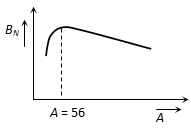
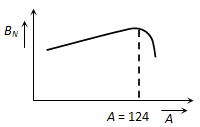
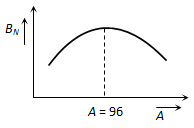
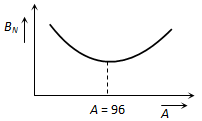
The dependence of binding energy per nucleon,  on the mass number, A, is represented by
|
(a)
|
(b)
|
(C)
|
(d)
|
The apparent wavelength of the light from a star moving away from the earth is 0.01% more than its real wavelength. Then the velocity of star is
|
(a) 60 km/sec |
(b) 15 km/sec |
(c) 150 km/sec |
(d) 30 km/sec |
Assertion : A current I flows along the length of an infinitely long straight and thin walled pipe. Then the magnetic field at any point inside the pipe is zero.
Reason : 
|
(a) If both assertion and reason are true and the reason is the correct explanation of the assertion. |
|
(b) If both assertion and reason are true but reason is not the correct explanation of the assertion. |
|
(c) If assertion is true but reason is false. |
|
(d) If the assertion and reason both are false. |
The idea of matter waves was given by
|
(a) Davisson and Germer |
(b) de-Broglie |
(c) Einstein |
(d) Planck |
A coil having N turns carry a current I as shown in the figure. The magnetic field intensity at point P is

|
(a) |
(b) |
(c) |
(d) Zero |