MCQ
Zinc does not show variable valency like $d-$ block elements because
- AIt is a soft metal
- ✓$d-$ orbital is complete
- CIt is low melting
- DTwo electrons are present in the outermost orbit
Generate a complete, print-ready paper with questions like this in minutes — across 16+ boards, with answer keys.
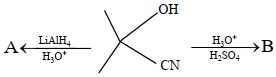
$X$ and $Y$ are
| Column $-I$ Catalyst | Column $-II$ >Product |
| $(a)$ $V_2O_5$ | $(i)$ Polyethylene |
| $(b)$ $TiCl_4/Al(Me)_3$ | $(ii)$ Ethanal |
| $(c)$ $PdCl_2$ | $(iii)$ $H_2SO_4$ |
| $(d)$ Iron oxide | $(iv)$ $NH_3$ |
$(i)$ Increase in concentration of reactant increases the rate of a zero order reaction
$(ii)$ Rate constant $k$ is equal to $'A'$ if $E_a = 0$
$(iii)$ Rate constant $k$ is equal to $'A'$ if $E_a = \infty$
$(iv)$ $log_e k$ vs $T$ is a straight line
$(v)$ $log_ek$ vs $1/T$ is straight line
Correct statement are
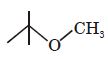
$F{e^{2 + }} + 2{e^ - } \to Fe( - 0.44\,V)$
$N{i^{2 + }} + 2{e^ - } \to Ni( - 0.25\,V)$
$S{n^{2 + }} + 2{e^ - } \to Sn( - 0.14V)$
$F{e^{3 + }} + {e^ - } \to F{e^{2 + }}( - 0.77\,V)$
$CH_3-CH=O + C_6H_5-CH=O$ $\xrightarrow[\Delta ]{{\mathop O\limits^\Theta H(aq)}}$ $\mathop X\limits_{({C_4}{H_6}O)} $ $+$ $\mathop Y\limits_{({C_9}{H_8}O)} $