Question 14 Marks
Read the following text carefully and answer the questions that follow:
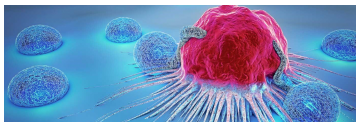
Cancer refers to any one of a large number of diseases characterized by the development of abnormal cells that divide uncontrollably and have the ability to infiltrate and destroy normal body tissue. Cancer often has the ability to spread throughout your body. Cancer is the second-leading cause of death in the world.
i. How does a cancerous cell differ from a normal cell? (1)
ii. Benign tumor is less dangerous than malignant tumor. Why? (1)
iii. Describe causes of cancer. (2)
OR
Mention two methods of treatment of the disease. (2)
Cancer refers to any one of a large number of diseases characterized by the development of abnormal cells that divide uncontrollably and have the ability to infiltrate and destroy normal body tissue. Cancer often has the ability to spread throughout your body. Cancer is the second-leading cause of death in the world.
i. How does a cancerous cell differ from a normal cell? (1)
ii. Benign tumor is less dangerous than malignant tumor. Why? (1)
iii. Describe causes of cancer. (2)
OR
Mention two methods of treatment of the disease. (2)
Answer
View full question & answer→i. In normal cells, growth and differentiation are highly controlled and regulated (contact inhibition). The cancerous cells have lost the property of contact inhibition, hence continue to divide giving rise to masses of cells (tumors).
ii. The benign tumor remains confined in the organ affected as it is enclosed in a connective tissue sheath and does not enter the
metastatic stage.
iii. Cancer may be caused due to carcinogens which are physical (X-rays, gamma rays and UV rays), chemicals (Nicotine,
Aflatoxin, Cadmium oxide, Asbestos) and biological (viral oncogenes and proto-oncogenes).
OR
Surgery, radiotherapy, Chemotherapy, immunotherapy by using biological response modifiers like a-interferons.
ii. The benign tumor remains confined in the organ affected as it is enclosed in a connective tissue sheath and does not enter the
metastatic stage.
iii. Cancer may be caused due to carcinogens which are physical (X-rays, gamma rays and UV rays), chemicals (Nicotine,
Aflatoxin, Cadmium oxide, Asbestos) and biological (viral oncogenes and proto-oncogenes).
OR
Surgery, radiotherapy, Chemotherapy, immunotherapy by using biological response modifiers like a-interferons.