Questions

3 Marks Question

🎯

Test yourself on this topic

8 questions · timed · auto-graded

Question 13 Marks
What are the consequences of loss of biodiversity in a region? Explain.
Answer
Decline in flora/fauna, Lower resistance to environmental perturbations such as drought, Increased variability in certain ecosystem
process such as plant productivity/ water use/pest/disease cycle.
View full question & answer
Question 23 Marks
List six advantages of ex-situ approach to conservation of biodiversity.
Answer
Following are the advantages of ex-situ approach to conservation of biodiversity:
i. The exploitation of endangered species by poachers can be avoided.
ii. Breeding programs can be regulated for threatened species and the gametes, as well as embryos, can be preserved in viable and fertile conditions for long term storage.
Activate Windows
iii. Seeds from different genetic strains having better characteristics can be stored for future purposes Settings to activate Windo
iv. The health of individuals can be monitored and medical assistance can be given as required.
v. Modern reproductive technology can increase the chances of reproductive success for endangered species.
vi. Research into reproductive physiology, lifestyle, and ecology of an endangered species is made easier.
View full question & answer
Question 33 Marks
Mention the chemical nature of an antibody and name the type of cells they are produced by. Write the difference between active and passive immune responses on the basis of antibodies.
Answer
The antibody is made up of proteins or peptide. Antibody is produced by B-lymphocytes or B-cells
Active immunityPassive immunity
Active immunity is due to exposure to antigens or pathogens or vaccination or immunization.Passive immunity is ready-made antibodies are directly given to protect the body of an individual against foreign agents.
It leads to production of antibodies by the individual.It provides immediate immunity.
It is slow process.It is fast process.
View full question & answer
Question 43 Marks
What are the main features of mutation theory?
Answer
This theory was given by deVries. Some of the features of this theory are as follow:
i. Mutations cause evolution and not the minor variations (heritable) as mentioned by Darwin.
ii. Large differences arise suddenly in a population.
iii. Mutations are random and directionless.
iv. The mutation causes speciation (formation of new species), also known as saltation (single step, large mutation).
v. Mutations which are inheritable in nature are the part of the evolution process.
vi. Evolution is discontinuous, not a gradual process.
View full question & answer
Question 53 Marks
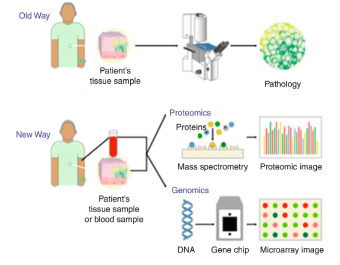
The image below describes the molecular diagnostic procedures.
Image
i. Write any two biochemical/molecular diagnostic procedures for early detection of viral infection.
ii. Explain the principle of any one of them.
Answer
→ Name of biochemical/molecular diagnostic tests for viruses:
- ELISA - Enzyme-Linked Immunosorbent Assay
- PCR - Polymerase Chain Reaction
→ Principle of ELISA - It is based on antigen-antibody interaction. Infection by a pathogen can be detected by the presence of antigens or by detecting the antibodies synthesized against the pathogen.
View full question & answer
Question 63 Marks
a. What does the equation $\frac{d N}{d t}=r N$ express in terms of population growth?
b. Write the significance of r in a population survey.
Answer
a. It indicates exponential/geometric growth
b. Assesses impact of biotic and abiotic factors on population growth, indicates intrinsic rate of natural increase.
View full question & answer
Question 73 Marks
i. Compare the mechanism of sex determination in humans with that of honey bees, with respect to chromosome number.
ii. How is the gamete formation comparable in the above two cases?
Answer
i. In honeybee union of a sperm and an egg develops as a female, and an unfertilised egg develops as a male by means of parthenogenesis. Whereas the females are diploid and having 32 chromosomes and males are haploid and they have 16 chromosomes but in humans, both the male and female individuals have 23 pair of chromosomes, that is female 44+ XX and males 44+ XY.
ii. In humans gametes are formed by the process of cell division called meiosis and in the honeybee, the process is different in case of female and male:
a. female gametes are formed by meiosis
b. male gametes are formed by mitosis
View full question & answer
Question 83 Marks
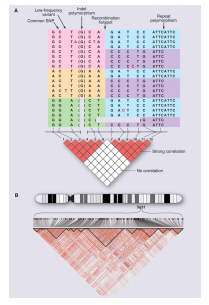
Observe the diagram for genetic mapping of human DNA and answer the following questions:
Image
i. Explain DNA polymorphism as the basis of genetic mapping of the human genome.
ii. State the role of VNTR in DNA fingerprinting.
Answer
i. Polymorphism is inherited from parents to children. So, it is useful for identification and paternity testing. It arises due to the mutations and plays an important role in speciation and evolution. Thus, DNA polymorphism exhibited by certain repetitive DNA sequences and it is the basis to construct genetic and physical maps of the genome which are used in the human genome project.
ii. Variable Number of Tandem Repeats (VNTRs) belongs to a class of satellite DNA called a minisatellite. VNTRs are used as probes in DNA fingerprinting.
View full question & answer
3 Marks Question - BIOLOGY STD 12 Science Questions - Vidyadip