- AAspartic acid
- BAlycine
- CSerine
- DTyrosine
- Aspartic acid
Explanation:
An acidic amino acid contains more −COOH groups than −NH2 groups, which is the case of Aspartic acid among the given options.
50 questions · timed · auto-graded
Explanation:
An acidic amino acid contains more −COOH groups than −NH2 groups, which is the case of Aspartic acid among the given options.
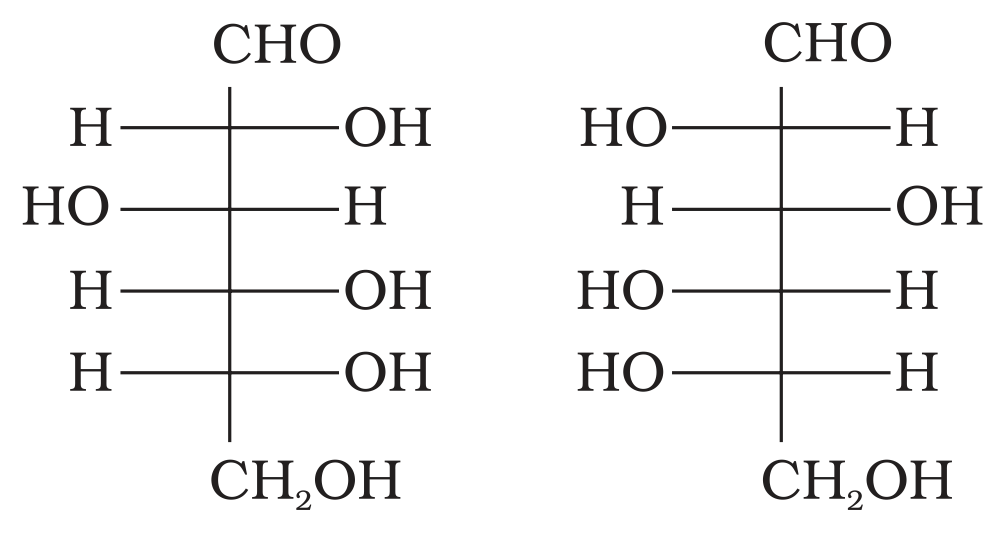
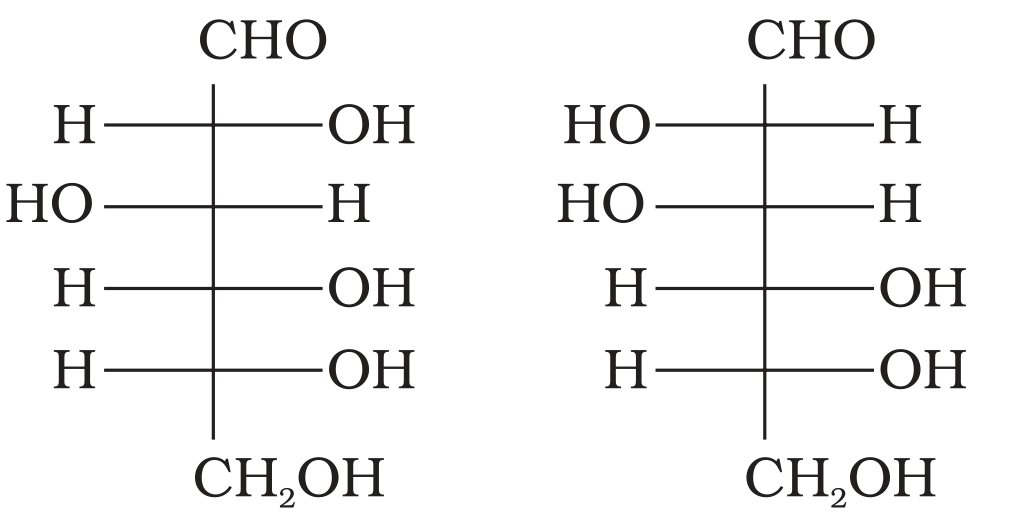
Explanation:
The -C = O link is present in guanine but is not present in adenine.
Uracil
Explanation:
Uracil is present in RNA but not in DNA.
Explanation:
Enzymes are proteinaceous in nature.
There are intra and intermolecular bonds that hold proteins in their secondary and tertiary structures.
The increase in the temperature over an optimum range leads to the disruption of bonds.
This makes the enzymes sensitive to heat.
Explanation:
A non protein part of enzyme which is necessary for activity of protein/enzyme is known as co factor.
Mostly, inorganic ions serve as cofactors. Carbonic anhydrase catalyzed hydration of carbon dioxide into bicarbonate ions and protons.
Cofactor of carbonic anhydrase is Zn2+ ions.
Explanation:
The chemical name of vitamin C is ascorbic acid. The name, ascorbic acid, is derived from a (meaning no) and scorbutus (scurvy), the disease caused by a deficiency of vitamin C.
The body requires ascorbic acid in order to form and maintain bones, blood vessels, and skin.
Explanation:
Amino acids and proteins are similar to the nucleotides and nucleic acids.
Just as proteins are made up of numbers of amino acids, similarly nucleic acids, which include DNA (deoxyribonucleic acid) and RNA (ribonucleic acid), are made from monomers known as nucleotides.
Explanation:
A coenzyme or metal ion that is very tightly or even covalently bound to the enzyme protein is called a prosthetic group.
These may be organic or inorganic in nature. For example includes flavin nucleotides and heme.
This accentuates the enzymatic activity.
Explanation:
Combination of proteins with nucleic acids gives nucleoproteins. Nucleic acids are the prosthetic group present in nucleoproteins.
Nucleoproteins are proteins of cell nuclei and are main component of chromatin.
They are present in every living cell a well as in virus and baceteria.
Example- protamines, histones.
Explanation:
Biochemically, enzymes are polymers of amino acids. They are not amino acids but are polymers of amino acids.
Most of the enzymes barring a few exceptions are proteins. Few non-proteinaceous enzymes are catalytic RNAs.
Explanation:
Starchis white-amorphous powder. It a odourless, tasteless, solid carbohydrate, (C6H10O5)n, occurring in the form of minute granules in the seeds tubers, and other parts of plants, and forming an important constituent of rice, corn, wheat, beans, potatoes and many other vegetable foods. It is used as a thickener or stabilizer.
Explanation:
Aspartic acid is vitamin C. Aspartic acid is an amino acid. Adipic acid and saccharic acid are dicarboxylic acids.
Explanation:
Glucose is a source of instant energy because it is quick to act to create energy along with oxygen so our body does not need to convert the glucose to anything else. It also can be absorbed through the lining of the stomach.


Explanation:
The twocyclichemiacetalformsofglucosediffer only inthe configuration of the hydroxyl group at Cl, called anomeric carbon (the aldehyde carbon before cyclisation). Such isomers, i.e., alpha-form and beta-form, are called anomers.
Explanation:
A cofactor is a non - protein chemical compound or metallic ion which is required for the brisk activity of the enzyme.
Vitamins acts as a precursor for many organic cofactors like vitamins B1, B2, B6, B12, niacin, folic acid) or as coenzymes themselves (e.g., vitamin C).

Explanation:
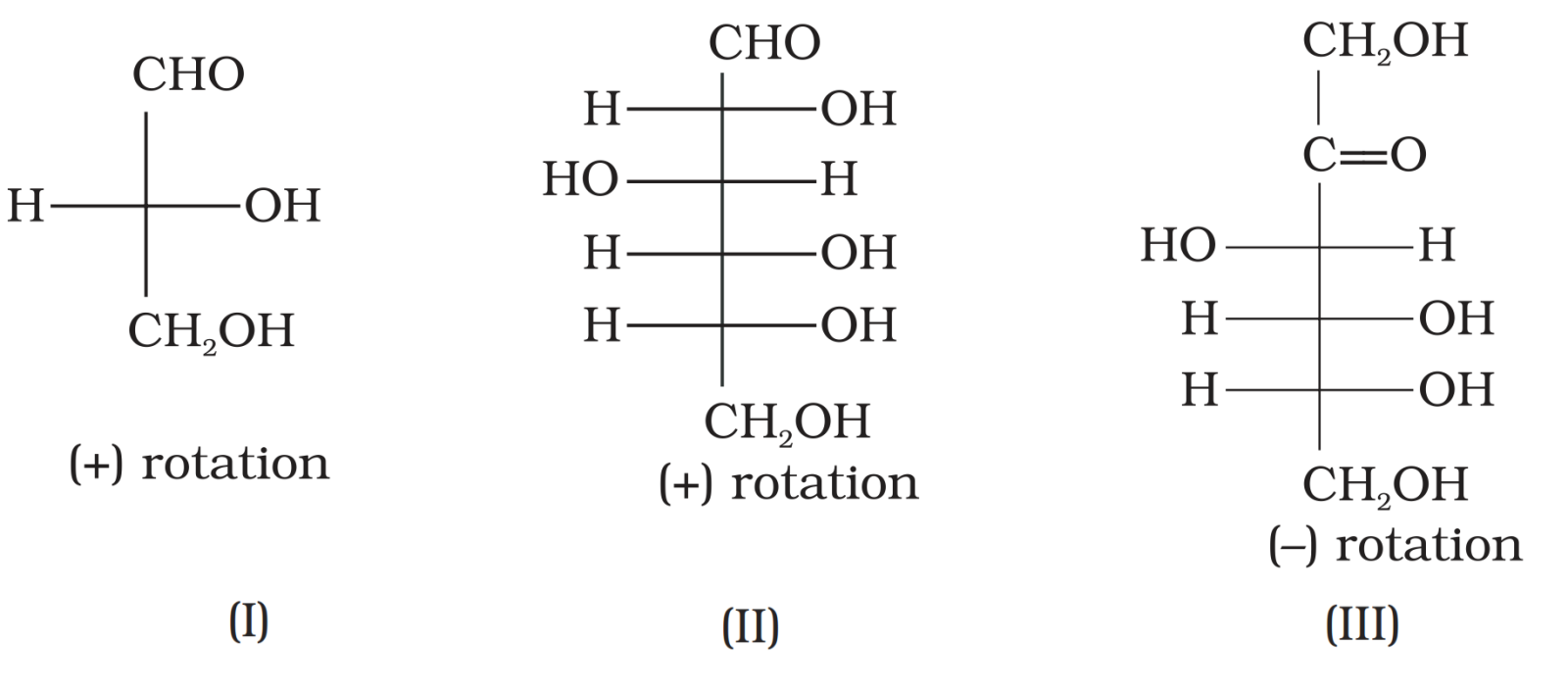
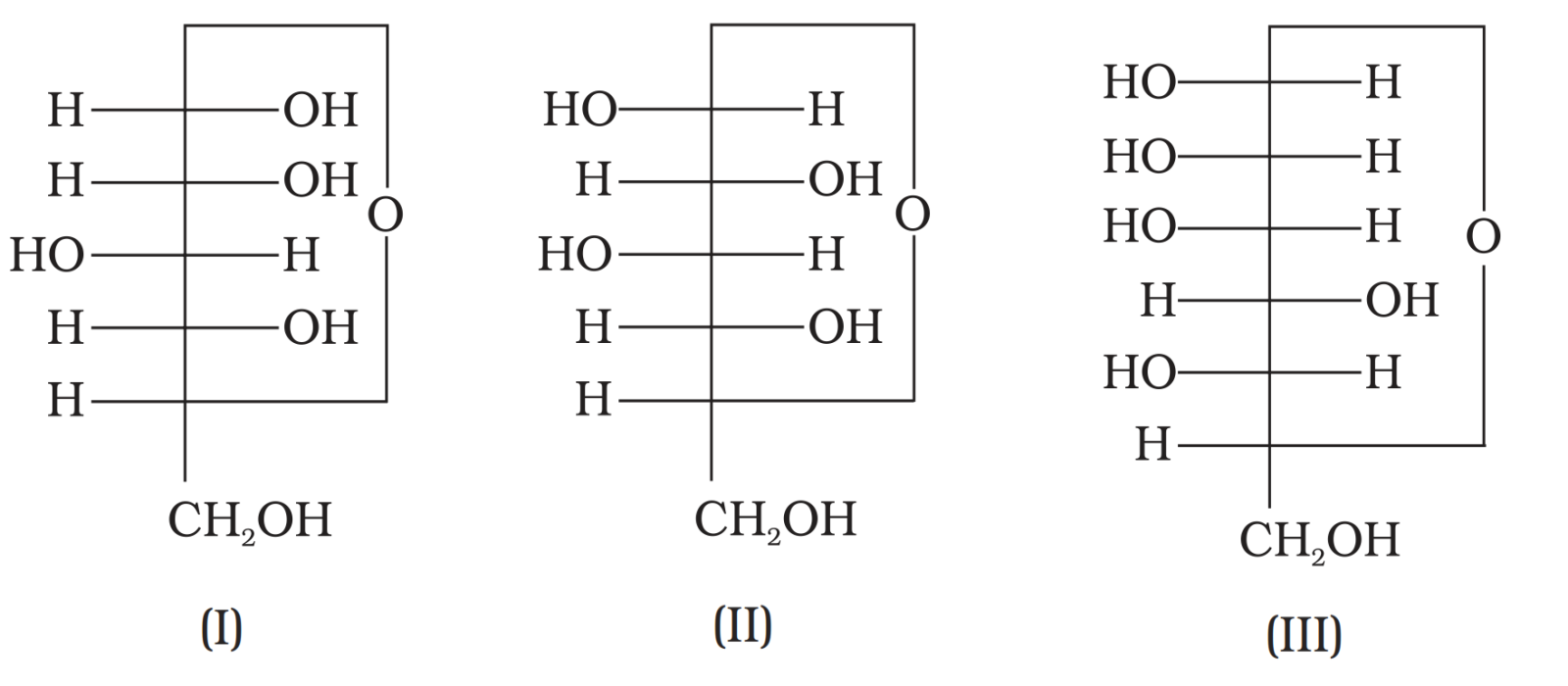
I, II and III structures have D configuration with -OH group on the lowest asymmetric carbon is on the right side which is comparable to (+) glyceraldehyde.
Explanation:
Enzymes are biocatalyst. These are proteinaceous substances that are capable of catalysing chemical reactions of biological systems without themselves undergoing any change.
They are produced in all living cells. No life process can be carried out successfully in absence of enzymes.
Explanation:
For some biochemical reactions a substance other than enzymes and substrate is required. These substances are called coenzymes (organic compounds) or cofactors (inorganic ions like zinc and copper etc.). The coenzymes usually serve as an acceptor or donor of an atom or a group.
Many coenzymes are derived from vitamins. B group of vitamins forma variety of coenzymes example Nicotinamide adenine dinucleotide (NAD) which is derived from vitamin niacin, Flavin adenine dinucleotide (FAD) which is derived from vitamin riboflavin, Coenzyme A which is derived from pantothenate, pyridoxal phosphate which is derived from pyridoxin, Thiamine pyrophosphate which is derived from thiamine etc.
Explanation:
Iodine is used in chemistry as an indicator for starch. When starch is mixed with iodine in solution, an intensely dark blue colour develops, representing a starch/iodine complex.
Starch is a substance common to most plant cells and so a weak iodine solution will stain starch present in the cells. Iodine is one component in the staining technique known as Gram staining, used in microbiology.
Explanation:
The four nitrogenous bases present in DNA are adenine (A), guanine (G), cytosine (C) and thymine (T).
Explanation:
Glycogen is stored in the liver of animals.
Explanation:
Biochemically enzymes are polymers of amino acids. Most of the enzymes, barring a few exceptions, are proteins.
Few non-proteinaceous enzymes are catalytic RNAs.
Explanation:
Each codon codes for 1 amino acids, which in turn, are made by the combination of 3 nitrogen bases.
Explanation:
Enzyme are protein molecule and are biological catalyst.
Enzymes increase the rate of the reaction but equilibrium is maintained.
Enzymes are specific, they function with only one reactant to produce specific products.
Explanation:
Bile salts act as activator of lipase as they emulsify fat globules into smaller droplet like structure called micelles thereby, increasing the surface area accessible to lipid hydrolyzing enzymes.
The bile acids also help to solubilize lipid breakdown products.
Explanation:
The term vitamin was introduced by Dr. Casimir Funk.
He named nutritional parts of food as a "vitamine" after "vita" meaning life and "amine" from compounds found in the thiamine, he isolated from rice husks.
But later it was found that vitamin are not amines. Thus vitamin was later shortened to vitamin.
Explanation:
Milk contains lactose. You must have heard of milk containing lactic acid, which is formed by the fermentation of lactose by bacteria.
Explanation:
Molecular formula of retinol is C20H29OH.
It is also called as vitamin A, and is essential for vision, particularly night vision, normal bone and tooth development, reproduction, and the health of skin and mucous membranes.
It also acts as an antioxidant.
Explanation:
Among Valine, Leucine, Isoleucine, Lysine and phenyl alanine, odd member is Valine, since others are basic as they contain more amino groups than carboxylic groups.
Explanation:
For the reduction of glucose to n-hexane, the reagent used is HI.
Glucose is heated with HI and red phosphorus, n-hexane is obtained which suggests that all the six carbons are linked in a straight chain.
Explanation:
Vitamins are essential components of our diet and are not produced by our body.
Explanation:
Vitamin A is also known as retinol.
Vitamin A is important for proper development and functioning of eyes, healthy immune system, and cell growth.
It can be found in many fruits, vegetables, eggs, milk, butter, meat, fish etc.
Explanation:
Lactose is made of 1 unit of glucose and 1 unit of galactose. So, it is a disaccharide.
Explanation:
Explanation of the correct option:
Enzymes are naturally occurring simple or conjugate proteins acting as specific catalysts in cell processes.
The enzyme facilitates a biochemical reaction by providing alternative lower activation energy pathways thereby increasing the rate of reaction.
Hence they are called biological catalysts.
Explanation:
The chemical change in DNA molecule that could lead to synthesis of protein with an altered amino acid sequence is called mutation. This may have sever biological implications.
Explanation:
Cereals are a staple food and are an important source of energy, carbohydrates, protein, and fibre.
Examples of cereals include wheat, oats, quinoa, maize, sorghum, etc.
Explanation:
Vitamin B12 can be stored in our body because it is insoluble in water.
Nucleotides
Explanation:
Nucleic acids are long chain polymers of nucleotides, so they are also called polynucleotides.
Explanation:
Inclusion complex is a host-guest addition compound.
The space available within the crystal lattice of the host molecule, i.e., amylose is in the form of tunnels and the size of the tunnels is such that it can easily accommodate guest molecules, i.e., iodine molecules to form an addition compound called the inclusion complex.
The blue colour, however, disappears on heating and reappears on cooling.

I and II
Explanation:
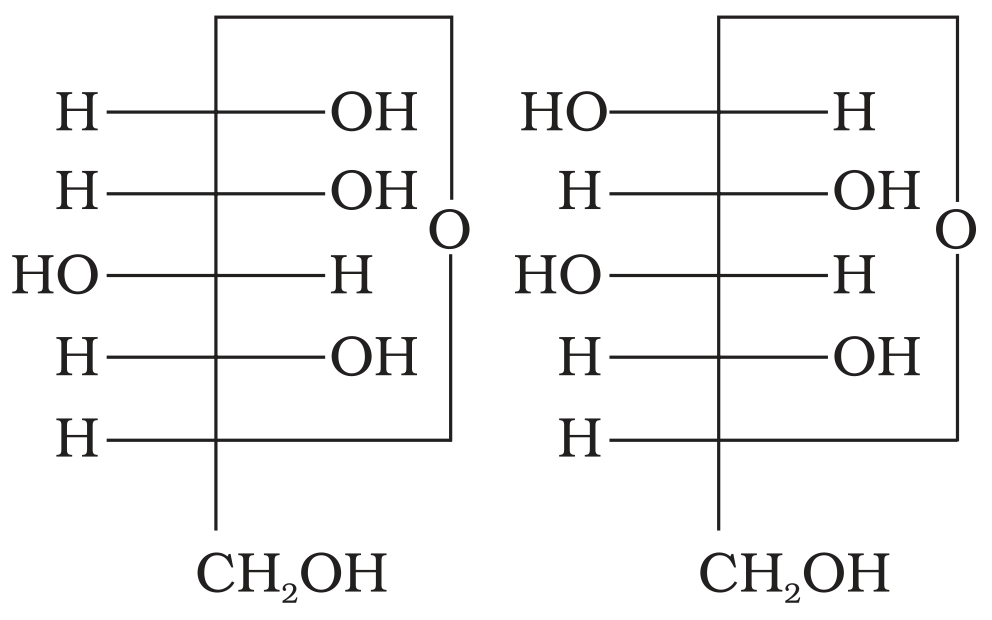
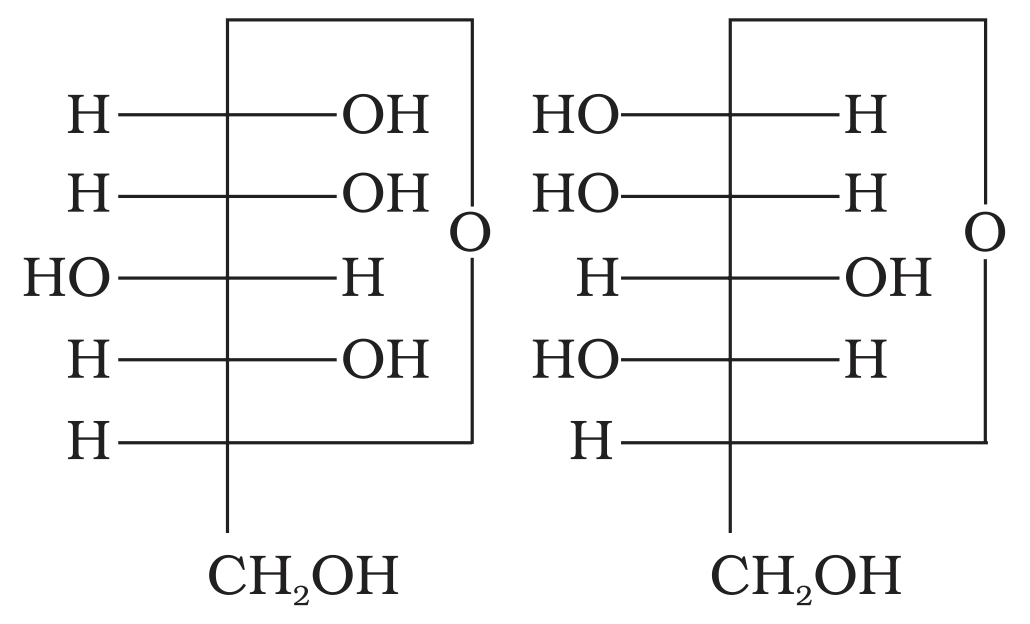
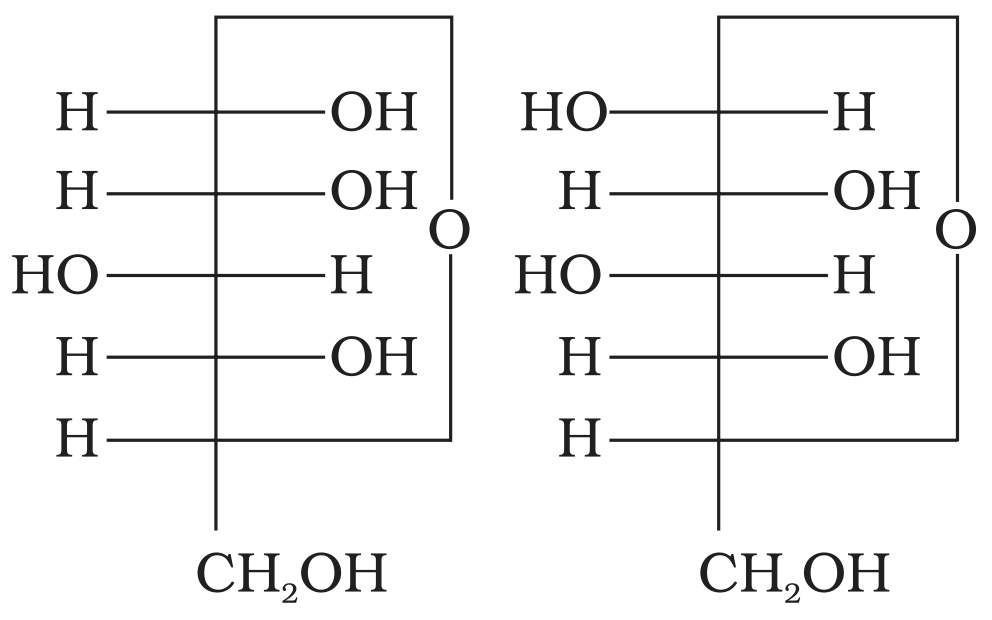
Cyclic structures of monosaccharides which differ in structure at carbon-1 are known as anomers. Here, I and II are anomer because they differ from each other at carbon-1 only.
Explanation:
Enzymes are simple if they are made up of only proteins example pepsin, amylase etc.
While conjugate enzymes have an additional non protein organic coenzyme or inorganic cofactor.
Loosely attached organic cofactors are called as coenzymes example NAD, FAD TPP etc.
Coenzymes are generally derived from vitamins like Thiamine (TPP), Riboflavin (FMN, FAD), Niacin (NAD), Pantothenate (CoA).
Explanation:
Disaccharides are the carbohydrates which on hydrolysis gives two same or different carbohydrates.
Sucrose is the most common disaccharide.
It can be found in many fruits and is naturally occuring.
It has molecular formula C12H22O11.
Explanation:
All of the given options are phytohormones (plant hormones).
Plant hormones control all the growth and development activities like cell division, enlargement, flowering, seed formation, dormancy and abscission.
The major function of the given hormones are as follows:
Disaccharide
Non-reducing sugar
Explanation:
One of the common disaccharides is sucrose which on hydrolysis gives equimolar mixture of D-(+)- glucose and D-(-) fructose. These two monosaccharides are held together by a glycosidic linkage between Cl of and C2 . Since the reducing groups of glucose and fructose are involved in glycosidic bond formation, sucrose is a non-reducing sugar.
Explanation:
Hormones are the chemical messengers that are produced by the endocrine system (composed of glands) but are transported to different parts of the body through the bloodstream.
Hormones play an important role in the control and coordination of the body.
For example, the growth of an individual is regulated by growth hormones secreted by the pituitary gland.
Explanation:
Enzymes are biological catalysts which accelerate chemical reactions in organisms.
Optimum temperature is the temperature at which enzyme activity is maximum.
In humans, this temperature is 37.5°C that is same as the normal body temperature.
A rise in temperature above 40°C results in denaturation of the proteins of enzyme.

Explanation:
During an enzymatic reaction, a substrate goes through a transition state before it becomes a product.
It is proposed that the transition state is bound more strongly than either the substrate or the product, however, the transition state is inherently unstable and are transient.
Explanation:
Ergocalciferol is name of vitamin D.
This vitamin is essential for absorption of calcium and phosporus in the body.
It is used to treat and prevent bone disorders (such as rickets, osteomalacia).
Vitamin D is made by the body when skin is exposed to sunlight.
Ergocalciferol is name given to vitamin D2.
Explanation:
The most common reagent for qualitative and quantitative analysis of amino acids is Millon's reagent.
Million's reagent is a solution that is usually made by dissolving mercury in concentrated nitric acid and diluting with water and that when heated with phenolic compounds gives a red coloration, for proteins (especially tyrosine amino acids).