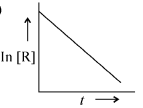
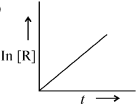
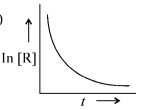
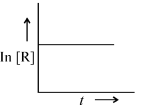
Question types

Chemical Kinetics question types

122 questions across 7 question groups — pick any mix to generate a Chemistry paper with step-by-step answer keys.

122
Questions
7
Question groups
5
Question types
Sample Questions

Chemical Kinetics questions

One sample from each question group in this chapter. Select any group above to see the full set with answer keys.

Q 1M.C.Q [1M]1 Mark
Used to express velocity at any instant of time :
  • A
    initial velocity
  • instantaneous velocity
  • C
    average velocity
  • D
    standard velocity

Answer: B.

View full solution
Q 2M.C.Q [1M]1 Mark
It is used to express rate at any instant of time $\qquad$ ?
  • A
    initial rate
  • instantaneous rate
  • C
    average rate
  • D
    standard rate

Answer: B.

View full solution
Q 5M.C.Q [1M]1 Mark
What is the order of integral rate reaction with expression $k =\frac{2.303}{t} \log \frac{[ R ]_0}{[ R ]}$ ?
  • A
    Zero order
  • First order
  • C
    Second order
  • D
    Third order

Answer: B.

View full solution
In a pseudo first order reaction in water, the following results were obtained :
t/s0306090
[A] mol L-10.550.310.170.085
Calculate the average rate of reaction between the time interval 30 to 60 seconds.
View full solution
The decomposition of dimethyl ether leads to the formation of CH4, H2 and CO and the reaction rate is given by 
Rate $= k \left[ CH _3 OCH _3\right]^{3 / 2}$ 
The rate of reaction is followed by increase in pressure in a closed vessel, so the rate can also be expressed in terms of the partial pressure of dimethyl ether, i.e.,
Rate $= k \left( p _{ CH _3 OCH _3}\right)^{3 / 2}$
If the pressure is measured in bar and time in minutes, then what are the units of rate and rate constants?
View full solution
Q 213 Marks Question3 Marks
A reaction is first order in A and second order in B.
(i) Write the differential rate equation.
(ii) How is the rate affected on increasing the concentration of B three times?
(iii) How is the rate affected when the concentration of both A and B are doubled?
View full solution
Q 223 Marks Question3 Marks
What is the effect of temperature on the rate constant of a reaction? How can this effect of temperature on rate constant be represented quantitatively?
View full solution
Q 233 Marks Question3 Marks
The rate of a reaction quadruples when the temperature changes from 293 K to 313 Κ. Calculate the energy of activation of the reaction assuming that it does not change with temperature.
View full solution
Q 243 Marks Question3 Marks
The decomposition of NH3 on platnium surface is zero order reaction. What are the rates of production of N2 and H2 if = 2.5 × 10⁻⁴ mol L-1 s-1?
View full solution
(i) Define the order of a reaction.
(ii) Explain the effect of concentration of reactant on the rate constant.
(iii) For a first order reaction, if the rate constant at 500 K and 600 K are $0.03 s^{-1}$ and $0.06 s^{-1}$ respectively, then calculate the activation energy.
$
\left[R=8.314 JK^{-1} mol^{-1}, \log 2=0.3010\right]
$
View full solution
(i) Define molecularity of a reaction.
(ii) Explain the effect of presence of catalyst on the rate of reaction.
(iii) In a first order reaction at 300 K , the initial concentration of the reactant was $1.0 \times 10^{-2} mol L ^{-1}$, which decreased to $0.5 \times 10^{-2} molL ^{-1}$ after 30 minutes at 300 K . Calculate the rate constant of the reactant at 300 K. $[\log 2=0.3010] \quad$
View full solution
The rate constant for the first order decomposition of H2O2 is given by the following euqation :
$\log k=14.34-1.25 \times 10^4 K / T$
Calculate $E_{a}$ for this reaction and at what temperature will its half-period be 256 minutes?
View full solution
The rate constant for the decompositon of N2O5 at various temperatures is given below :
$T /{ }^{\circ} C$020406080
$10^5 \times k / s ^{-1}$0.07871.7025.71782140
Draw a graph between In k and 1/T and calculate the values of A and Ea. Predict the rate constant at $30^{\circ}$ and $50^{\circ}C$.
View full solution
The decomposition of A into product has value of k as $4.5 \times 10^3 s^{-1}$ at $10^{\circ} C$ and energy of activation $60 kJ mol ^{-1}$. At what temperature would k be $1.5 \times 10^4 s^{-1} ?$
View full solution
Sucrose decomposes in acid solution into glucose and fructose according to the first order rate law, with $t_{1 / 2}$ = 3.00 hours. What fraction of sample of surcrose after 8 hours?
View full solution
The rate constant for the decomposition of hydrocarbons is 2.418 × 10⁻⁵ s-1 at 546 K. If the energy of activation is 179.9 kJ/mol. What will be the value of pre-exponential factor?
View full solution

Generate a Chemical Kinetics paper free

Pick question groups from the list above, set marks and difficulty, and export a branded PDF with step-by-step answer keys. First 3 chapters free — no signup.

Download App