Question types

MODEL PAPER 4 question types

37 questions across 6 question groups — pick any mix to generate a Chemistry paper with step-by-step answer keys.

37
Questions
6
Question groups
5
Question types
Sample Questions

MODEL PAPER 4 questions

One sample from each question group in this chapter. Select any group above to see the full set with answer keys.

Q 1M.C.Q [1M]1 Mark
Match the item given in Column I with expression given in Column II
Column IColumn II
(a) Osmotic Pressure$p = K _{ H } \cdot \chi_{ B }$
(b) Relative lowering of vapour pressure$\frac{\Delta P }{ P _A^o}=\chi_{ B }$
(c) Henry Law$\Delta T _{ b }= K _{ b } \cdot m$
(d) Elevation in boiling pointp = iCRT
  • A
    (a) (ii), (b) - (iii), (c) - (iv), (d) - (i).
  • B
    (a) (iv), (b) - (iii), (c) - (ii), (d) - (i).
  • C
    (a) - (iii), (b) - (i), (c) - (ii), (d) - (iv).
  • (a) (iv), (b) - (ii), (c) - (i), (d) - (iii).

Answer: D.

View full solution
Q 2M.C.Q [1M]1 Mark
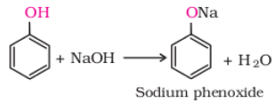
In the reaction
Image
  • A
    Phenols are acidic in nature.
  • B
    They can donate a proton to a stronger base
  • C
    Cleavage of O - H bond
  • All of these

Answer: D.

View full solution
Q 3M.C.Q [1M]1 Mark
Isomers of the compound C4H9Br are:
  • A
    1-Bromo-2-methylbutane and 2-Bromo-2- methylbutane
  • B
    1- Bromobutane and 2 - Bromobutane
  • 1 - Bromobutane, 2 - Bromobutane, 1 - bromo-2-methylpropane, and 2 - bromo-2 - methylpropane
  • D
    1-Bromo-2-methylpropane and 2 - Bromo-2-methylpropane

Answer: C.

View full solution
Assertion (A): Glucose and fructose are reducing sugars.
Reason (R): Glucose and fructose contain a free aldehydic and ketonic group adjacent to a >CHOH group respectively
  • Both A and R are true and R is the correct explanation of A.
  • B
    Both A and R are true but R is not the correct explanation of A.
  • C
    A is true but R is false.
  • D
    A is false but R is true.

Answer: A.

View full solution
Assertion (A): Aqueous solution of phenol is called as carbonic acid.
Reason (R): Increasing order of acidity of phenols is m nitrophenol >o-nitrophenol >p-nitrophenol.
  • A
    Both A and R are true and R is the correct explanation of A.
  • B
    Both A and R are true but R is not the correct explanation of A.
  • C
    A is true but R is false.
  • Both A and R are false.

Answer: D.

View full solution
Assertion (A): Isopropyl chloride is less reactive than CH3Br in SN2 reactions.
Reason (R): SN2 reactions are always accompanied by inversion of configuration.
  • A
    Both A and R are true and R is the correct explanation of A.
  • Both A and R are true but R is not the correct explanation of A.
  • C
    A is true but R is false.
  • D
    A is false but R is true.

Answer: B.

View full solution
Assertion (A): Rate of addition of HCN on carbonyl compounds increases in presence of NaCN.
Reason (R): Reaction involves the addition of Cn in rate determining step.
  • Both A and R are true and R is the correct explanation of A.
  • B
    Both A and R are true but R is not the correct explanation of A.
  • C
    A is true but R is false.
  • D
    A is false but R is true.

Answer: A.

View full solution
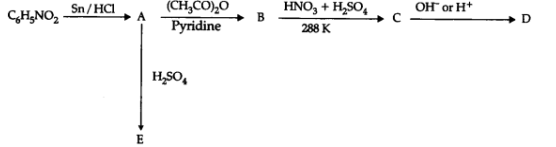
An organic compound 'A' (molecular formula C3H6O) is resistant to oxidation but forms a compound 'B' (
C3H8O) on reduction. 'B' reacts with HBr to form a bromide'C' which on treatment with alcoholic KOH forms an alkene 'D' (C3H6). Deduce the structures of A, B, C and D.
View full solution
Answer the following:
(a) a. Write the mathematical relation between rate constant and half-life of a first order reaction.
b. What is collision frequency?
(b) If the rate equation is given below:
Rate = k[A]2[B]
then what will be the unit of its rate and rate constant?
View full solution
Q 153 Marks Question3 Marks
In a reaction between A and B, the initial rate of reaction was measured for different initial concentrations of A and B as given below:
A/mol L-10.200.200.40
B/mol L-10.300.100.05
ro/mol L-1s-15.07 x 10-55.07 x 10-51.43 x 10⁻⁴

What is the order of the reaction with respect to A and B ?
View full solution
Q 163 Marks Question3 Marks
State Kohlrausch's law of independent migration of ions. How can the degree of dissociation of acetic acid in a solution be calculated from its molar conductivity data?
View full solution
Q 183 Marks Question3 Marks
Calculate the emf of the following cell:
$\begin{array}{l} Mg ( s )\left| Mg ^{2+}(0.2 M ) \| Ag ^{+}\left(1 \times 10^{-3} M \right)\right| Ag ( s ) \\ E ^0\left( Ag ^{+} / Ag \right)=0.80 V \\ E ^0\left( Mg ^{2+} / Mg \right)=-2.37 V\end{array}$
View full solution
Q 193 Marks Question3 Marks
How would you bring about the following conversions?
i. Propanal to butanone
ii. Benzaldehyde to benzophenone
iii. Benzoyl chloride to benzonitrile
View full solution
(a) Give plausible explanation for each of the following:
i. Why are amines less acidic than alcohols of comparable molecular masses?
ii. Why are primary amines highest boiling than tertiary amines?
iii. Why are aliphatic amines stronger bases than aromatic amines?
(b) Complete the following reactions:
i. $C _6 H _5 N_2 Cl + C _2 H _5 OH \rightarrow$
ii. $C _6 H _5 NH _2+\left( CH _3 CO \right)_2 O \rightarrow$
View full solution
Using crystal field theory, draw energy level diagram, write the electronic configuration of the central metal atom/ion and determine the magnetic moment value in the following:
i. $\left[ CoF _6\right]^{3-},\left[ Co \left( H _2 O \right)_6\right]^{2+},\left[ Co ( CN )_6\right]^{3-}$
ii. $\left[ FeF _6\right]^{3-},\left[ Fe \left( H _2 O \right)_6\right]^{2+},\left[ Fe ( CN )_6\right]^{4-}$
View full solution
Draw all the isomers of: (geometrical and optical)
i. $\left[ CoCl _2( en )_2\right]^{+}$
ii. $\left[ Co \left( NH _3\right) Cl ( en )^2\right]^{2+}$
iii. $\left[ Co \left( NH _3\right)_2 Cl _2( en )\right]^{+}$
View full solution
Attempt any five of the following:
(a) Define native state in reference to proteins.
(b) Define the following terms:
    a. Polysaccharides
    b. Nucleotides
(c) Deficiency of which vitamin causes scurvy?
(d) What happens when D-glucose is treated with the following? Give equations to support your answer.
    a. HI
    b. HNO3
(e) Name the disaccharide which on hydrolysis gives glucose and galactose.
(f) Write the products obtained after hydrolysis of lactose.
(g) Give the reaction of glucose with hydrogen cyanide. Presence of which group is confirmed by this reaction?
View full solution
Read the following text carefully and answer the questions that follow:
A raw mango placed in concentrated salt solution loses water via osmosis and shrivel into pickle. Wilted flowers revive when placed in fresh water. A carrot that has become limp because of water loss into the atmosphere can be placed into the water making it firm once again. Water will move into its cells through osmosis. When placed in water containing less than 0.9% (mass/volume) salt, blood cells swell due to flow of water in them by osmosis.
i. People taking a lot of salt or salty food suffer from puffiness or edema. What is the reason behind this?
ii. The preservation of meat by salting and of fruits by adding sugar protects against bacterial action. How?
iii. Why the direction of osmosis gets reversed if a pressure larger than the osmotic pressure is applied to the solution side? Write its one application.
OR
iii.What care is generally taken during intravenous injections and why?
View full solution

Generate a MODEL PAPER 4 paper free

Pick question groups from the list above, set marks and difficulty, and export a branded PDF with step-by-step answer keys. First 3 chapters free — no signup.

Download App