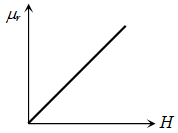
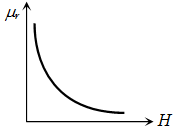
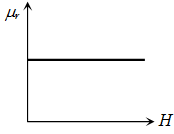
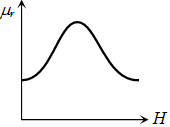
For ferromagnetic material, the relative permeability ( , versus magnetic intensity (H) has the following shape
|
(a)
|
(b)
|
(c)
|
(d)
|
304 questions across 1 question group — pick any mix to generate a Physics paper with step-by-step answer keys.
One sample from each question group in this chapter. Select any group above to see the full set with answer keys.
For ferromagnetic material, the relative permeability (, versus magnetic intensity (H) has the following shape
|
(a)
|
(b)
|
(c)
|
(d)
|
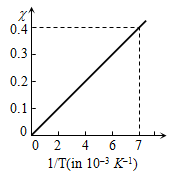
The X – 1/T graph for an alloy of paramagnetic nature is shown in Fig. The curie constant is, then
|
(a) 57 K |
(b) 2.8 |
(c) 570 K |
(d) 17.5 |
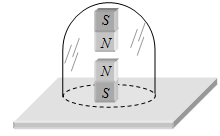
Two identical bar magnets with a length 10 cm and weight 50 gm-weight are arranged freely with their like poles facing in a inverted vertical glass tube. The upper magnet hangs in the air above the lower one so that the distance between the nearest pole of the magnet is 3mm. Pole strength of the poles of each magnet will be
|
(a) 6.64 amp × m |
(b) 2 amp × m |
(c) 10.25 amp × m |
(d) None of these |
Time period for a magnet is T. If it is divided in four equal parts along its axis and perpendicular to its axis as shown then time period for each part will be
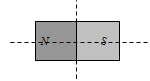
| (a) 4T | (b) T/4 | (c) T/2 | (d) T |
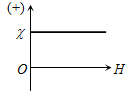
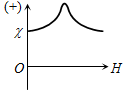
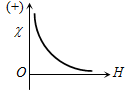
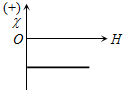
The variation of magnetic susceptibility (x) with magnetising field for a paramagnetic substance is
|
(a)
|
(b)
|
(c)
|
(d)
|
Pick question groups from the list above, set marks and difficulty, and export a branded PDF with step-by-step answer keys. First 3 chapters free — no signup.