Environmental triggers such as light, or gravity will change the directions that plant parts grow in. These
directional, or tropic, movements can be either towards the stimulus or away from it. So, in two different kinds
of phototropic movement, shoots respond by bending towards light while roots respond by bending away from
it. How does this help the plant? Plants show tropism in response to other stimuli as well. The roots of a plant
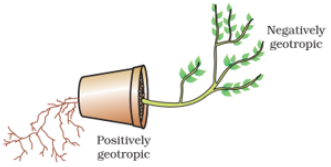
always grow downwards while the shoots usually grow upwards and away from the earth. This upward and
downward growth of shoots and roots, respectively, in response to the pull of earth or gravity, is, obviously,
geotropism. If ‘hydro’ means water and ‘chemo’ refers to chemicals, what would ‘hydrotropism’ and ‘chemotropism’ mean? Can we think of examples of these kinds of directional growth movements? One
example of chemotropism is the growth of pollen tubes towards ovules, about which we will learn more when we examine the reproductive processes of living organisms.
(a) Where does negative phototropism occur in plants?
(b) Phototropism in shoots is attributed due to which plant hormone?
(c) Tendrils exhibit/ twining of tendrils show which type of tropic movement?
OR
If the stem grows towards sunlight and the root grows just opposite to it, then what type of movement of the stem is it?