Questions

2 Marks Questions

🎯

Test yourself on this topic

7 questions · timed · auto-graded

Question 12 Marks
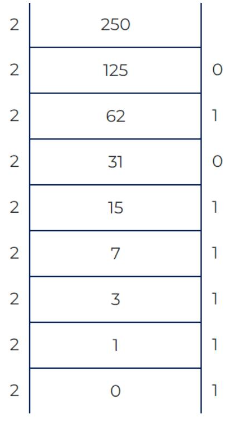
Convert the decimal number to the binary number: 250
Answer
Given decimal number is 250
Image
Put all the reminders together in reverse order.
The required binary number is 11111010
View full question & answer
Question 22 Marks
Differentiate the function with respect to $\mathrm{x}: \log \left\{\mathrm{x}+2+\sqrt{x^{2}+4 x+1}\right\}$
Answer
Let $\mathrm{y}=\log \left\{\mathrm{x}+2+\sqrt{x^{2}+4 x+1}\right\}$
Differentiate both side with respect to x we get,
$\frac{d y}{d x}=\frac{d}{d x} \log \left[\mathrm{x}+2+\sqrt{x^{2}+4 x+1}\right]$
$=\frac{1}{\left[x+2+\sqrt{x^{4}+4 x+1}\right]} \frac{d}{d x}\left[\mathrm{x}+2+\left(x^{2}+4 x+1\right)^{\frac{1}{2}}\right]$ [using chain rule]
$=\frac{1}{\left[x+2+\sqrt{x^{4}+4 x+1}\right]} \times\left[1+0+\frac{1}{2}\left(x^{2}+4 x+1\right)^{-\frac{1}{2}} \frac{d}{d x}\left(\mathrm{x}^{2}+4 \mathrm{x}+1\right)\right]$
$=\frac{1+\frac{2 x+4}{2\left(\sqrt{x^{2}+4 x+1}\right)}}{\left[x+2+\sqrt{x^{4}+4 x+1}\right]}$
$=\frac{\sqrt{x^{2}+4 x+1}+x+2}{\left[x+2+\sqrt{x^{2}+4 x+1}\right] \times \sqrt{x^{2}+4 x+1}}$
$=\frac{1}{\sqrt{x^{2}+4 x+1}}$
So, $\frac{d}{d x} \log \left[\mathrm{x}+2+\sqrt{x^{2}+4 x+1}\right]=\frac{1}{\sqrt{x^{2}+4 x+1}}$
View full question & answer
Question 32 Marks
Find the derivative of the given function: $\frac{a x+b}{c x+d}$
Answer
Let us assume, $\mathrm{f}(\mathrm{x})=\frac{a x+b}{c x+d}$
Let $\mathrm{u}=\mathrm{ax}+\mathrm{b}$ and $\mathrm{v}=\mathrm{cx}+\mathrm{d}$
$\therefore \mathrm{f}(\mathrm{x})=\frac{u}{v}$
So, $\mathrm{f}^{\prime}(\mathrm{x})=\left(\frac{u}{v}\right)^{\prime}$
$\mathrm{f}^{\prime}(\mathrm{x})=\frac{u^{\prime} v-v^{\prime} u}{v^{2}}$
Finding $u$ and $v$
$\mathrm{u}=\mathrm{ax}+\mathrm{b}$
$u^{\prime}=a+0$
= a
$\mathrm{v}=\mathrm{cx}+\mathrm{d}$
$\mathrm{v}^{\prime}=\mathrm{c}+0$
= c
$\mathrm{f}^{\prime}(\mathrm{x})=\left(\frac{u}{v}\right)^{\prime}$
$=\frac{u^{\prime} v-v^{\prime} u}{v^{2}}$
$=\frac{a(c x+d)-c(a x+b)}{(c x+d)^{2}}$
$=\frac{a c x+a d-a c x-c b}{(c x+d)^{2}}$
$=\frac{a d-c b}{(c x+d)^{2}}$
Hence, $\mathrm{f}^{\prime}(\mathrm{x})=\frac{a d-c b}{(c x+d)^{2}}$
View full question & answer
Question 42 Marks
A can do a piece of work in 80 days. He works at it for 10 days and then $B$ alone finishes the remaining work in 42 days. In how much time will $A$ and $B$, working together, finish the work?
Answer
Work done by $A$ in 10 days $=\frac{1}{80} \times 10=\frac{1}{8}$
Remaining work $=\left(1-\frac{1}{8}\right)=\frac{7}{8}$
Now, $\frac{7}{8}$ work is done by B in 42 days
Whole work will be done by B in $\left(42 \times \frac{8}{7}\right)=48$ days
$\therefore$ A's 1 day's work $=\frac{1}{80}$ and B's 1 days' work $=\frac{1}{48}$
$\therefore(\mathrm{A}+\mathrm{B})$ 's 1 days' work $=\frac{1}{80}+\frac{1}{48}=\frac{8}{240}=\frac{1}{30}$
Hence, both will finish the work in 30 days.
View full question & answer
Question 52 Marks
If $A=\{x: x=2 n, n \in Z\}$ and $B=\{x: x=3 n, n \in Z\}$, then find $A \cap B$.
Answer
$A \cap B=\{x: x=2 n, n \in Z\} \cap\{x: x=3 n, n \in Z\}$
$=\{\ldots-6,-4,-2,0,2,4,6 \ldots\} \cap\{\ldots,-9-6,-3,0,3,6,9, \ldots\}$
$=\{\ldots,-6,0,6,12, \ldots\}$
$=\{x: x=6 n, n \in Z\}$
View full question & answer
Question 62 Marks
In a survey of 425 students in a school, it was found that 115 drink apple juice, 160 drink orange juice and 80 drink both apple as well as orange juice. How many drink neither apple juice nor orange juice?
Answer
Let $\mathrm{U}=$ set of all students surveyed;
$A=$ set of all students who drink apple juice and $B=$ set of all students who drink orange juice.
Then, we know that $n(U)=425, n(A)=115, n(B)=160$ and $n(A \cap B)=80$.
$\therefore$ We have, $\mathrm{n}(\mathrm{A} \cup \mathrm{B})=\mathrm{n}(\mathrm{A})+\mathrm{n}(\mathrm{B})-\mathrm{n}(\mathrm{A} \cap \mathrm{B})=(115+160-80)=195$.
Set of students who drink neither apple juice nor orange juice $=\left(A^{\prime} \cap B^{\prime}\right)=(A \cup B)^{\prime}$
$\Rightarrow \mathrm{n}\left\{(\mathrm{A} \cup \mathrm{B})^{\prime}\right\}=\mathrm{n}(\mathrm{U})-\mathrm{n}(\mathrm{A} \cup \mathrm{B})=(425-195)=230$.
Therefore, 230 students drink neither apple juice nor orange juice.
View full question & answer
Question 72 Marks
In an examination the average of 150 students is 25 . The average of passed students is 40 and average of failed students is 15 . Find the number of students who passed the examination.
Answer
Average of 150 students $=25$
$\therefore$ Total of 150 students $=150 \times 25=3750 \quad\ldots(ⅰ)$
Let number of passed students be x
$\therefore$ Average of x students $=40$
$\therefore$ Total of x students $=40 \mathrm{x} \quad\ldots(ⅰⅰ)$
Average of $(150-x)$ students $=15$
$\therefore$ Total of $(150-x)$ students $=(150-x) \times 15 \quad\ldots(ⅰⅰⅰ)$
From ( 0 , (ii) and (iii), we get
$40 x+(150-x) 15=3750$
$\Rightarrow 40 \mathrm{x}+2250-15 \mathrm{x}=3750 \Rightarrow 25 \mathrm{x}=1500 \Rightarrow \mathrm{x}=60$
$\therefore$ Passed students $=60$
View full question & answer
2 Marks Questions - Applied Maths STD 11 Science Questions - Vidyadip