Question types

Model Paper 4 question types

29 questions across 15 question groups — pick any mix to generate a English Core paper with step-by-step answer keys.

29
Questions
15
Question groups
5
Question types
Sample Questions

Model Paper 4 questions

One sample from each question group in this chapter. Select any group above to see the full set with answer keys.

When I decided to go abroad for further studies, I was sure my grandmother would be upset. I would be away for five years, and at her age one could never tell. But my grandmother could. She was not even sentimental. She came to leave me at the railway station but did not talk or show any emotion. Her lips moved in prayer, her mind was lost in prayer. Her fingers were busy telling the beads of her rosary. Silently she kissed my forehead, and when I left I cherished the moist imprint as perhaps the last sign of physical contact between us. But that was not so. After five years I came back home and was met by her at the station. She did not look a day older. She still had no time for words, and while she clasped me in her arms I could hear her reciting her prayers. Even on the first day of my arrival, her happiest moments were with her sparrows whom she fed longer and with frivolous rebukes.
i. What were the frivolous rebukes the grandmother directed towards her sparrows upon the narrator's return?
ii. How did the grandmother's actions demonstrate her love and connection with the narrator despite their long absence?
iii. Pick evidence from the passage that suggests the grandmother had a deep and enduring connection with prayer.
View full solution
Hor was a grim, miserable place. There was no vegetation whatsoever, just dust and rocks, liberally scattered with years of accumulated refuse, which was unfortunate given that the town sat on the shore of Lake Manasarovar, Tibet's most venerated stretch of water. Ancient Hindu and Buddhist cosmology pinpoints Manasarovar as the source of four great Indian rivers: the Indus, the Ganges, the Sutlej and the Brahmaputra. Actually, only the Sutlej flows from the lake, but the headwaters of the others all rise nearby on the flanks of Mount Kailash. We were within striking distance of the great mountain and I was eager to forge ahead.
But I had to wait. Tsetan told me to go and drink some tea in Hor's only cafe which, like all the other buildings in town, was constructed from badly painted concrete and had three broken windows. The good view of the lake through one of them helped to compensate for the draught. I was served by a Chinese youth in military uniform who spread the grease around on my table with a filthy rag before bringing me a glass and a thermos of tea. Half an hour later, Tsetan relieved me from my solitary confinement and we drove past a lot more rocks and rubbish westwards out of town towards Mount Kailash. My experience in Hor came as a stark contrast to accounts I'd read of earlier travellers' first encounters with Lake Manasarovar. Ekai Kawaguchi, a Japanese monk who had arrived there in 1900, was so moved by the sanctity of the lake that he burst into tears. A couple of years later, the hallowed waters had a similar effect on Sven Hedin, a Swede who wasn't prone to sentimental outbursts.
i. What is the significance of Lake Manasarovar in Hindu and Buddhist cosmology?
ii. Explain any one possible inference that can be drawn from the line, "Tsetan told me to go and drink some tea in Hor's only cafe which, like all the other buildings in town, was constructed from badly painted concrete and had three broken windows."
iii. Identify the line from the text that bears evidence to the fact that the writer was eager to move forward towards Mount Kailash.
View full solution
i. What gloomy thought occurred to the narrator? What pleasant surprise was in store for him? Answer in context of We are Not Afraid to Die.
ii. What did the poet realize when he was twelve years? Answer in context of Childhood.
View full solution
Happy moments are short-lived but provide a lifetime memory. They provide a cushion to bear the difficulties which the future has in store for you. Comment in the light of the poem A Photograph by Shirley Toulson.
View full solution
I descend to lave the droughts, atomies, dust-layers of the globe,
And all that in them without me were seeds only, latent, unborn;
And forever, by day and night, I give back life to my own origin,
And make pure and beautify it.
i. What does 'I' do day and night?
ii. What is the origin of 'I'?
iii. What does 'I' do for its origin?
View full solution
............. Yet have I killed
The seed I spent or sown it where
The land is his and none of mine?
We speak like strangers, there's no sign
Of understanding in the air.
This child is built to my design
Yet what he loves I cannot share.
i. What 'land' does the speaker speak of?
ii. Why do they speak like strangers?
iii. Why does the speaker say 'This child' not 'My child'?
View full solution
Before him was our uncle Khosrove, an enormous man with a powerful head of black hair and the largest moustache in the San Joaquin Valley, a man so furious in temper, so irritable, so impatient that he stopped anyone from talking by roaring. It is no harm; pay no attention to it.
That was all, no matter what anybody happened to be talking about. Once it was his own son Arak running eight blocks to the barber's shop where his father was having his moustache trimmed to tell him their house was on fire.
i. What effect does the narrator's use of statements such as "It is no harm; pay no attention to it," have on the reader's perception of Uncle Khosrove's behaviour?
ii. Which aspect of Uncle Khosrove's character in the passage contributes to the family's dismissal of his behaviour?
A. His enormous physical stature
B. His powerful black hair
C. The size of his moustache
D. His furious temper and impatience
iii. Complete the sentence appropriately.
The narrator portrays Uncle Khosrove's imposing physical appearance in great detail because ________.
iv. Who was considered to be a natural descendant of Uncle Khusrove in the plot?
View full solution
And then, as by a miracle, the pigmy chest, which his hands enclosed, gave a short, convulsive heave, another... and another... Andrew turned giddy. The sense of life, springing beneath his fingers after all that unavailing striving, was so exquisite it almost made him faint. He redoubled his efforts feverishly. The child was gasping now, deeper and deeper. A bubble of mucus came from one tiny nostril, a joyful iridescent bubble. The limbs were no longer boneless. The head no longer lay back spinelessly. The blanched skin was slowly turning pink. Then, exquisitely, came the child's cry.
i. Complete the sentence appropriately.
The author's purpose in giving minute details of the signs of life in the child is to ________.
ii. In the given extract, which of the following organs shows the sign of a 'miracle' in the child's body?
a. Limb
b. Skin
c. Nose
d. Eye
iii. Which trait about the doctor could be discerned in the lines, "Andrew turn giddy" and "it almost made him faint"?
iv. Choose any one line from the given extract that shows the sign of life in the baby.
View full solution
It's been said countless times that "breakfast is the most important meal of the day". But not many people seem convinced. Some school-children and office - goers are still leaving home without it and weight- watchers are still giving breakfast a miss. "I am not hungry in the morning" is the commonest explanation. Even if you don't recognize it as hunger, the body does give out signals that it is low on fuel. For instance, studies of school-children (aged 9-11) show that those who skip breakfast have a slower reaction time and more muscle fatigue in school sports. The average scores are lower on written tests, compared to breakfast eaters. To the teacher, such children could look listless, which they maybe because they haven't had the protein that really wakes up the brain. (After an overnight fast, the blood sugar level drops. Strangely it takes protein, not sugar, to build it up again.) Office workers who skip breakfast are usually big consumers of office tea and coffee- a means of staying alert and suppressing hunger. Adult breakfast skippers may have trouble concentrating on work and show lower work output. They are also likelier to be irritable and impatient at work. Clock-watching frequently for the lunch-hour, fatigue, anxiety, forgetfulness, confusion, and indecision-all these have been linked to low blood sugar levels, usually caused by hunger. If any of that sounds familiar, maybe what you need is breakfast.
Some nutrients like protein and calcium are better absorbed if they are taken in small quantities several times a day. A packed lunch and a big dinner cannot make up for nutrition missed in the 'a.m.'
What goes into a good breakfast? Protein for mental alertness and carbohydrates to give the body some get-up and go. Small amounts of fat and sugar are okay but just enough to tempt the appetite.
(i) Complete the sentence by choosing an appropriate option. Adult breakfast skippers may face consequences like ________ on work.
i. Trouble concentrating
ii. High work output
iii. Low concentration
iv. Both trouble in concentrating and low output
(ii) Comment on writer's take as to why people skip breakfast in the morning.
(iii) List the two instances to show how body does give out signals that it is low on fuel.
(Clue: Think about the result of of skipping meal)
(iv) Select the option that conveys the opposite of comfortable', from words used in the given passage.
i. Impatient
ii. Irritable
iii. Indecisive
iv. Anxious
Two nutrients that are better absorbed if taken in small quantities are:
A. Proteins
B. Carbohydrates
C. Calcium
D. Sugar
i. Only A and B
ii. Only A and C
iii. Only A and D
iv. Only B and D
(vi) Office workers are big consumers of tea and coffee. Based on your understanding of paragraph two, list one major reason behind it.
(vii) What happen to the children who do not take breakfast?
(viii) Complete the given sentence with an appropriate inference, with respect to the following:
________ is the nutrient that must be taken only to tempt the appetite.
(ix) Name some nutrients that are better absorbed if they are taken in small quantities several times a day.
(x) When blood sugar level drops, one must have:
i. Proteins
ii. Calcium
iii. Sugars
iv. Vitamins
View full solution
1. Diabetes is a metabolism abnormality that affects the way your body uses blood sugar (glucose), your main source of energy. To understand diabetes, you have to start from the beginning with food. Your body converts a portion of the food you eat and digest into glucose. Glucose is then absorbed into your bloodstream, where it can enter the individual cells of tissue throughout your body to be used as energy. Before your cells will let glucose in, however, they need the help of insulin.
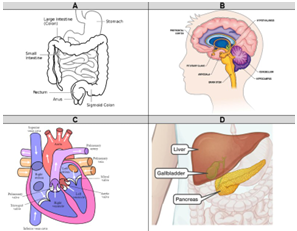
2. Insulin is a hormone produced by your pancreas - a gland located just behind your stomach. Normally, insulin acts as a master key, unlocking the doors of your cells and allowing glucose inside. To simply maintain this process, such as at night when you're asleep, the pancreas releases a low level of insulin on a constant basis. When necessary, such as after a meal, your pancreas increases insulin supply to meet demand.
3. After you eat a meal or a snack, your pancreas releases more insulin to make sure the extra glucose in your bloodstream can enter your cells. If you have more glucose than you need, your body can remove the excess from your blood and store it in your liver and muscles or convert it to fat. Then, when you run low on fuel, your body can release this stored energy back into your bloodstream, where insulin is waiting to usher it into your cells.
4. If you have diabetes, this whole process goes awry. Instead of entering cells throughout your body, excess glucose builds up in your bloodstream and some of it may eventually be excreted in your urine. This can happen when your pancreas doesn't produce enough insulin (Type 1 diabetes), when your cells have become resistant to the effects of insulin (Type 2 diabetes) or, more commonly, when both of these problems occur.
(i) Give one conversion function of our body, based on information in paragraph 1.
(ii) Select the appropriate option to fill in the blanks based on paragraph 1. When ________ is ingested, it enters our bloodstream and goes to all of the tissue cells in our body where it can be used as ________.
(1) Glucose (2) Insulin (3) Fat (4) Energy (5) Metabolism
a. 2,3
b. 1,4
c. 4,5
d. 5,3
(iii) Complete the following analogy correctly with a word/ phrase from paragraph 1. Water: Absorbed in Soil :: ________ : Absorbed in bloodstream,
(Clue: Just like water is absorbed in Soil, similarly ________ is absorbed in bloodstream.)
a. Metabolism
b. Glucose
c. Insulin
d. Energy
(iv) Select the correct option to complete the following sentence: (Paragraph 1)..
Diabetes affects how our body uses our primary source of energy i.e blood sugar due to ________.
a. Lack of insulin and glucose
b. Process of glucose transmission
c. Abnormalities in our metabolism
d. Presence of high-level fats
From Paragraph 2, choose the option that best describes the organ that secretes insulin.
Image
(vi) Fill in the blank by selecting the correct option.
By opening the ________ doors and letting glucose in, insulin functions as a master key.
a. cell
b. pancreas
c. blood stream
d. vein
(vii) Substitute the word 'excess' with ONE WORD similar in meaning, in the following, sentence from paragraph 3.
If you have more glucose than you need, your body can remove the excess from your blood and store it in your liver and muscles or convert it to fat.
(viii) List any 2 organs of our body mentioned in Paragraph 3.
View full solution
It is surprising that sometimes we don't listen to what people say to us. We hear them, but we don't listen to them. I was curious to know how hearing is different from listening. I had thought both were synonyms, but gradually, I realised there is a big difference between the two words.
Hearing is a physical phenomenon. Whenever somebody speaks, the sound waves generated reach you, and you definitely hear whatever is said to you. However, even if you hear something, it doesn't always mean that you actually understand whatever is being said. Paying attention to whatever you hear means you are really listening. Consciously using your mind to understand whatever is being said is listening.
Diving deeper, I found that listening is not only hearing with attention but is much more than that. Listening is hearing with full attention and applying our mind. Most of the time, we listen to someone, but our minds are full of needless chatter and there doesn't seem to be enough space to accommodate what is being spoken.
We come with a lot of prejudices and preconceived notions about the speaker or the subject on which he is talking. We pretend to listen to the speaker, but deep inside, we sit in judgment and are dying to pronounce right or wrong, true or false, yes or no. Sometimes, we even come prepared with a negative mindset of proving the speaker wrong. Even if the speaker says nothing harmful, we are ready to pounce on him with our own version of things.
What we should ideally do is listen first with full awareness. Once we have done that, we can decide whether we want to make a judgment or not. Once we do that, communication will be perfect and our interpersonal relationship will become so much better. Listening well doesn't mean one has to say the right thing at the right moment. In fact, sometimes if words are left unspoken, there is a feeling of tension and negativity. Therefore, it is better to speak out your mind but do so with awareness after listening to the speaker with full concentration.
Let's look at this in another way. When you really listen, you imbibe not only what is being spoken, but you also understand what is not spoken as well. Most of the time we don't really listen even to people who really matter to us. That's how misunderstandings grow among families, husbands and wives, brothers and sisters.
On the basis of your understanding of the above passage, make notes on it using headings and sub-headings. Use recognizable abbreviations (wherever necessary- minimum four) and a format you consider suitable. Also supply an appropriate title to it.
a. Write a summary of the passage in about 80 words.
View full solution
As the Manager of 'Excellent Coaching Centre' run by you, prepare a poster calling the attention of students desirous of attending IIT, CPMT coaching to join your coaching centre. ### Design a poster for your School Fete. You may use slogans. Do not exceed 50 words.
View full solution
You are Navneet, a member of the school Literacy Club, which has organized literacy classes in villages and city slums under the adult education program. Draft a speech in 150-200 words highlighting the importance of educating the illiterates. ### Every year there are floods or droughts in the country. Victims suffer a lot. The government does a lot to help the people, but it is not enough. Society also must do its bit. Write a speech in 150-200 words to be delivered in the school morning assembly describing how the students can also help by collecting clothes, money and medicines from their neighbourhoods. You are Arun/Aruna.
View full solution
You are Sneha F-46, Sec.-9, Rohini, Delhi. You are well qualified in music and dance forms (Classical). You have set up a school for female students. Draft an advertisement to be published in local daily in about 50 words ### You would like to let out a portion of your independent house for office use. Write an advertisement for the classified columns of the local newspaper giving all the necessary details. Write the advertisement in not more than 50 words.
View full solution
"It is cruel to put stray dogs to sleep." Write a debate in 150-200 words either for [ or against the motion. ### Loudspeakers, bands etc create a lot of disturbance at all hours of day and night especially for students and for the sick. Write a debate in favour of or against the motion in 150-200 words. You are Saurabh/Shobha.
View full solution

Generate a Model Paper 4 paper free

Pick question groups from the list above, set marks and difficulty, and export a branded PDF with step-by-step answer keys. First 3 chapters free — no signup.

Download App