Sample QuestionsModel Paper 3 questions
One sample from each question group in this chapter. Select any group above to see the full set with answer keys.
How many even numbers can be formed by using all the digits 2, 3, 4, 5, 6?
If $\frac{3+2 \sin \theta}{1-2 \sin \theta}$ is a real number and $0<\theta<2 \pi$, then $\theta=$
- A
$\frac{\pi}{3}$
- B
$\frac{\pi}{2}$
- ✓
$\pi$
- D
$\frac{\pi}{6}$
Answer: C.
View full solution →If $\alpha$ and $\beta$ are acute angles satisfying $\cos 2 \alpha=\frac{3 \cos 2 \beta-1}{3-\cos 2 \beta}$, then $\alpha$ is
Answer: B.
View full solution →For two sets $A \cup B=A$ if
- A
$A=B$
- B
$A \neq B$
- C
$B \subseteq A$
- D
$A \subseteq B$
View full solution →The solution set for $|3 x-2| \leq \frac{1}{2}$
- A
$\left[\frac{5}{6}, \frac{2}{3}\right]$
- B
$\left[\frac{2}{3}, \frac{2}{3}\right]$
- ✓
$\left[\frac{1}{2}, \frac{5}{6}\right]$
- D
$\left[\frac{5}{6}, \frac{1}{2}\right]$
Answer: C.
View full solution →Assertion $(A):$ If each of the observations $x_1, x_2, \ldots, x_n$ is increased by $a$, where $a$ is a negative or positive number, then the variance remains unchanged.
Reason $(R):$ Adding or subtracting a positive or negative number to $($or from$)$ each observation of a group does not affect the variance.
- ✓
Both $A$ and $R$ are true and $R$ is the correct explanation of $A.$
- B
Both $A$ and $R$ are true but $R$ is not the correct explanation of $A$.
- C
$A$ is true but $R$ is false.
- D
$A$ is false but $R$ is true.
Answer: A.
View full solution →Assertion (A): The expansion of $(1+ x )^{ n }=n_{c_0}+n_{c_1} x+n_{c_2} x^2 \ldots+n_{c_n} x^n$.
Reason (R): If $x=-1$, then the above expansion is zero.
- A
Both A and R are true and R is the correct explanation of A.
- B
Both A and R are true but R is not the correct explanation of A.
- C
A is true but R is false.
- D
A is false but R is true.
View full solution →Find the equation of the perpendicular bisector of the line joining the points $(1, 3)$ and $(3, 1).$
View full solution →Let $A=\{(x: x \in N), B=(x: x=2 n, n \in N)\}, C=\{x: x=2 n-1, n \in N\}$ and, $D=\{x: x$ is a prime natural number$\}.$ Find: $A \cap B$.
View full solution →Find the equation of the circle which touches the lines $4 x-3 y+10=0$ and $4 x-3 y-30=0$ and whose centre lies on the line $2 x + y =0$.
View full solution →Find the equation of the parabola whose: focus is $(2,3)$ and the directrix $x-4 y+3=0$.
View full solution →Find the of derivative of the function from the first principle: $\sin x^2$.
View full solution →Let $A=\{a, e, i, o, u\}, B=\{a, d, e, o, v)$ and $C=\{e, o, t, m]$. Using Venn diagrams, verify that: $A \cap(B \cup C)=$ $(A \cap B) \cup(A \cap C)$
View full solution →Evaluate $\left[\frac{1}{1-4 i}-\frac{2}{1+i}\right]\left[\frac{3-4 i}{5+i}\right]$ to the standard form.
View full solution →If $( a + ib )=\frac{c+i}{c-i}$, where c is real, prove that $a ^2+ b ^2=1$ and $\frac{b}{a}=\frac{2 c}{c^2-1}$.
View full solution →Expand the given expression $\left(x+\frac{1}{x}\right)^6$
View full solution →Using binomial theorem, prove that $\left(2^{3 n }-7 n -1\right)$ is divisible by $49 ,$ where $n \in N$
View full solution →Ashish is writing examination. He is reading question paper during reading time. He reads instructions carefully. While reading instructions, he observed that the question paper consists of $15$ questions divided in to two parts part $I$ containing $8$ questions and part $II$ containing $7$ questions.

$i$. If Ashish is required to attempt $8$ questions in all selecting at least $3$ from each part, then in how many ways can he select these questions $(1)$
$ii$. If Ashish is required to attempt $8$ questions in all selecting $3$ from $I$ part, then in how many ways can he select these questions $(1)$
$iii.$ If Ashish is required to attempt $8$ questions in all selecting $4$ from part $I$ and $4$ from part $II,$ then in how many ways can he select these questions $(2)$
OR
If Ashish is required to attempt $8$ questions in all selecting $6$ from one section and remaining from another section, then in how many ways can he select these questions $(2)$ View full solution →For a group of $200 $ candidates, the mean and the standard deviation of scores were found to be $40$ and $15 ,$ respectively. Later on it was discovered that the scores of $43$ and $35$ were misread as $34$ and $53,$ respectively.
| Student |
English |
Hindi |
S.st |
Science |
Maths |
| Ramu |
$39$ |
$59$ |
$84$ |
$80$ |
$41$ |
| Rajitha |
$79$ |
$92$ |
$68$ |
$38$ |
$75$ |
| Komala |
$41$ |
$60$ |
$38$ |
$71$ |
$82$ |
| Patil |
$77$ |
$77$ |
$87$ |
$75$ |
$42$ |
| Pursi |
$72$ |
$65$ |
$69$ |
$83$ |
$67$ |
| Gayathri |
$46$ |
$96$ |
$53$ |
$71$ |
$39$ |
$i.$ Find the correct variance. $(1)$
$ii$. What is the formula of variance. $(1)$
$iii.$ Find the correct mean. $(2)$
OR
Find the sum of correct scores.$ (2)$ View full solution →Indian track and field athlete Neeraj Chopra, who competes in the Javelin throw, won a gold medal at Tokyo Olympics. He is the first track and field athlete to win a gold medal for India at the Olympics.

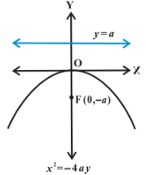
$i$. Name the shape of path followed by a javelin. If equation of such a curve is given by $x^2=-16 y,$ then find the coordinates of foci. $(1)$
$ii.$ Find the equation of directrix and length of latus rectum of parabola $x^2=-16 y. (1)$
$iii.$ Find the equation of parabola with Vertex $(0,0)$, passing through $(5,2)$ and symmetric with respect to $y-$ axis and also find equation of directrix.$ (2)$
OR
Find the equation of the parabola with focus $(2,0)$ and directrix $x=-2$ and also length of latus rectum. $(2)$ View full solution →Prove that: $\tan 20^{\circ} \tan 30^{\circ} \tan 40^{\circ} \tan 80^{\circ}=1$
View full solution →If $\cos x=-\frac{3}{5}$ and $x$ lies in the IIIrd quadrant, find the values of $\cos \frac{x}{2}, \sin \frac{x}{2}$ and $\sin 2 x$.
View full solution →Find the three numbers in $GP,$ whose sum is $52$ and sum of whose product in pairs is $624.$
View full solution →Evaluate : $\lim _{x \rightarrow \sqrt{10}} \frac{\sqrt{7-2 x}-(\sqrt{5}-\sqrt{2})}{x^2-10}$
View full solution →Find the derivative of $x \sin x$ from first principle.
View full solution →