Question 14 Marks
Read the following text carefully and answer the questions that follow:
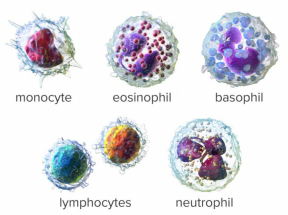
A lymphocyte isa type of white blood cell. Enlarge. Blood cells. Blood contains many types of cells: white blood cells (monocytes, lymphocytes, neutrophils, eosinophils, basophils, and macrophages), red blood cells (erythrocytes), and platelets. Blood circulates through the body in the arteries and veins.
i. Why are the antigens called antibody-generating chemicals? (1)
ii. Which two types of lymphocytes are involved in immunity? (1)
iii. Give the common site of formation of two types of lymphocytes. (2)
OR
What is the site of differentiation of two types of lymphocytes? (2)
A lymphocyte isa type of white blood cell. Enlarge. Blood cells. Blood contains many types of cells: white blood cells (monocytes, lymphocytes, neutrophils, eosinophils, basophils, and macrophages), red blood cells (erythrocytes), and platelets. Blood circulates through the body in the arteries and veins.
i. Why are the antigens called antibody-generating chemicals? (1)
ii. Which two types of lymphocytes are involved in immunity? (1)
iii. Give the common site of formation of two types of lymphocytes. (2)
OR
What is the site of differentiation of two types of lymphocytes? (2)
Answer
View full question & answer→i. The antigens called antibody-generating chemicals because a specific antigen stimulates the production of specific antibody.
ii. B-lymphocytes and T-lymphocytes are involved in immunity.
iii. Haemocytoblasts or stem cells of bone marrow are the common sites of formation of two types of lymphocytes.
OR
B-lymphocytes differentiate in Peyer's patches, tonsils and appendix of mammals and bursa of Fabricius in the birds. Tlymphocytes differentiate in the thymus gland.
ii. B-lymphocytes and T-lymphocytes are involved in immunity.
iii. Haemocytoblasts or stem cells of bone marrow are the common sites of formation of two types of lymphocytes.
OR
B-lymphocytes differentiate in Peyer's patches, tonsils and appendix of mammals and bursa of Fabricius in the birds. Tlymphocytes differentiate in the thymus gland.