Questions · Page 1 of 3

3 Marks Question

🎯

Test yourself on this topic

50 questions · timed · auto-graded

Question 13 Marks
What is DNA fingerprinting? Mention its application.
Answer
DNA Fingerprinting is a technique to find out variations in individuals of a population at DNA level.
Its applications are as follows:
  1. Used in forensic science to identify suspects.
  2. Used to find out history of an organism.
  3. Used to find out paternity and family relations.
View full question & answer
Question 23 Marks
Differentiate between the following:mRNA and tRNA.
Answer
mRNA and tRNA.
mRNA tRNA
It is called messenger RNA and carries the codes for amino acid sequence. It is called transfer RNA as it carries amino acids to the site of protein synthesis.
It is a linear molecule. It has clover leaf shape.
It is synthesised by RNA polymerase II It is synthesised by RNA polymerase III.
View full question & answer
Question 33 Marks
Which property of DNA double helix led Watson and Crick to hypothesise semi-conservative mode of DNA replication? Explain.
Answer
The property of DNA double helix led Watson and Crick are:
  • Two strands running opposite to each other, wherein bases will always pair with their counterpart-A with T and G with C (specific pairing).
  • If H bonds break and bases of one strand lie exposed, unpaired, they will easily pair up with free nucleotides as well. This type of arrangement in DNA molecule led to the hypothesis that DNA replication is semi-conservative. where the two strands separate and act as a template for the synthesis of a new complementary strand.
View full question & answer
Question 43 Marks
How did Hershey and Chase differentiate between DNA and protein in their experiment while proving that DNA is the genetic material?
Answer
Alfred Hershey and Martha Chase (1952) worked with viruses that infect bacteria called bacteriophages. In 1952, they chose a bacteriophage known as T2 for their experimental material. They grew some viruses on a medium that contained radioactive phosphorus (p32) and some others on medium that contained radioactive sulphur (s35). Viruses grown in the presence of radioactive phosphorus contained radioactive DNA but not radioactive protein because DNA contains phosphorus but protem does not Similarly. viruses grown on radioactive sulphur contained radioactive protein but not radio'active DNA because DNA does not contain sulphur. Radioactive phages were allowed to attach to E.coli bacteria. Then, as the infection proceeded, the viral coats were removed from the bacteria by agitating them in a blender. The virus particles were separated from the bacteria by spinning them in a centrifuge., Bacteria which was infected with viruses that had radioactive DNA were radioactive, indicating that DNA was the material that passed from the virus to the bacteria. Bacteria that were infected with viruses that had radioactive proteins were not radioactive. This indicates that proteins did not enter the bacteria from the viruses. DNA is therefore the genetic material that is passed from virus to bacteria.
View full question & answer
Question 53 Marks
Differentiate between the following:Template strand and Coding strand.
Answer
Template strand and Coding strand.
Template strand Coding strand
It is the strand which is transcribed into RNA. It has the same sequence as mRNA.
It is called anti sense strand. It is called sense or non-template strand.
It has 3' → 5' polarity. It has 5' → 3' polarity
View full question & answer
Question 63 Marks
Differentiate between the following:Repetitive DNA and Satellite DNA.
Answer
Repetitive DNA and Satellite DNA.
Repetitive DNA Satelite DNA
It is the non-coding DNA with multiple copies of identical sequences which may lie in tandem or interspersed. It refers to non-coding tandem repeat sequences.
These can be few base pairs to hundreds or thousands of base pairs. These are generally short sequence repeats (up to 60 base pair long).
It appears as light bands. It appears as small dark bands.
View full question & answer
Question 73 Marks
  1. Why does DNA replication occur in small replication forks and not in its entire length?
  2. Why is DNA replication continuous and discontinuous in a replication fork?
  3. Explain the importance of origin of replication' in a replication fork.
Answer
  1. Replication of DNA occurs in small replication forks, because DNA is such a long molecule that the separation of the two strands along its entirelength requires a very high amount of energy.
  2. DNA polymerase can catalyse the polymerization of nucleotides only in 5' → 3' direction.
  1. So on the template strand with 3' → 5' polarity, DNA replication is continuous.
  2. On the template strand with 5' → 3' polarity, DNA synthesis occurs in short stretches as the opening of replication fork continues; later these short stretches are joined by the action of DNA ligases .
  1. Replication of DNA does not initiate randomly, and DNA polymerases on their own cannot initiate replication.
  1. So, there is a specific sequence on DNA, called origin of replication; DNA polymerase bindsto it and continues the process.
View full question & answer
Question 83 Marks
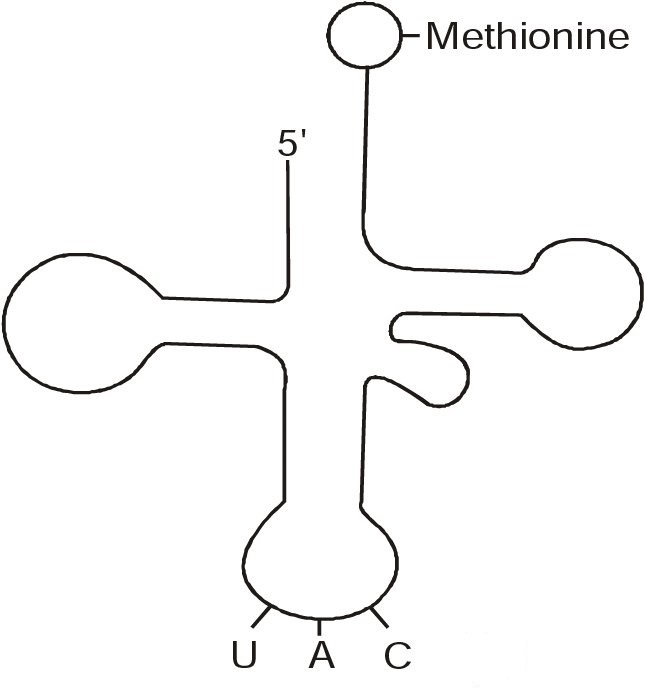
  1. Draw the structure of the initiator tRNA adaptor molecule.
  2. Why is tRNA called an adaptor molecule?
Answer
  1.  
  1. On one hand, it reads the code.
On the other hand, it binds to specific amino acid.
View full question & answer
Question 93 Marks
What are the functions of-
  1. Methylated guanosine cap?
  2. Poly-A 'tail' in a mature RNA?
Answer
Function of Methylated Guanosine Cap:
  1. Attachment of mRNA: it helps in the attachment of mRNA to smaller ribosomal subunit during initiation of translation.
  2. Function of poly A tail: It helps in the Protection of translational region.
View full question & answer
Question 103 Marks
"The codon is a triplet and is read in a contiguous manner without punctuations." Provide the genetic basis for the statement.
Answer
Since there are only four bases which code for twenty amino acids, the code should be made up of three bases, i.e., (4 × 4 × 4) = 64 codons; a number more than the required. If the codon consists of four letters, only (4 × 4), only sixteen codons are possible, which is less than the required. Hence the codon is a triplet. As the ribosome moves on mRNA, continuously without break, the codons are read in a contiguous manner.
View full question & answer
Question 113 Marks
Unambiguous, universal and degenerate are some of the terms used for the genetic code. Explain the salient features of each one of them.
Answer
Unambiguous -One codon codes for one amino acid, e.g. AUG (Methionine).Universal -Codon and its corresponding amino acid are the same in all organisms.
Example:- more-Bacteria to human UUU codes for phenylalanine (phe).
Degenerate - Some amino acids are by more than one codon.
Example:- UUU and UUC code for phenylalanine (phe).
View full question & answer
Question 123 Marks
It is established that RNA is the first genetic material. Explain giving three reasons.
Answer
Processes like metabolism, translation, splicing evolved around RNA, RNA is reactive and catalyses reaction. In some virus it is the hereditary material. It is so unstable and hence would have mutated to lead to evolution.
View full question & answer
Question 133 Marks
Write any three goals of human genome project.
Answer
Three goals of human genome project:
  1. To develop new and improved medicines.
  2. To predict and prevent diseases.
  3. To ensure that the diagnosis is accurate.
View full question & answer
Question 143 Marks
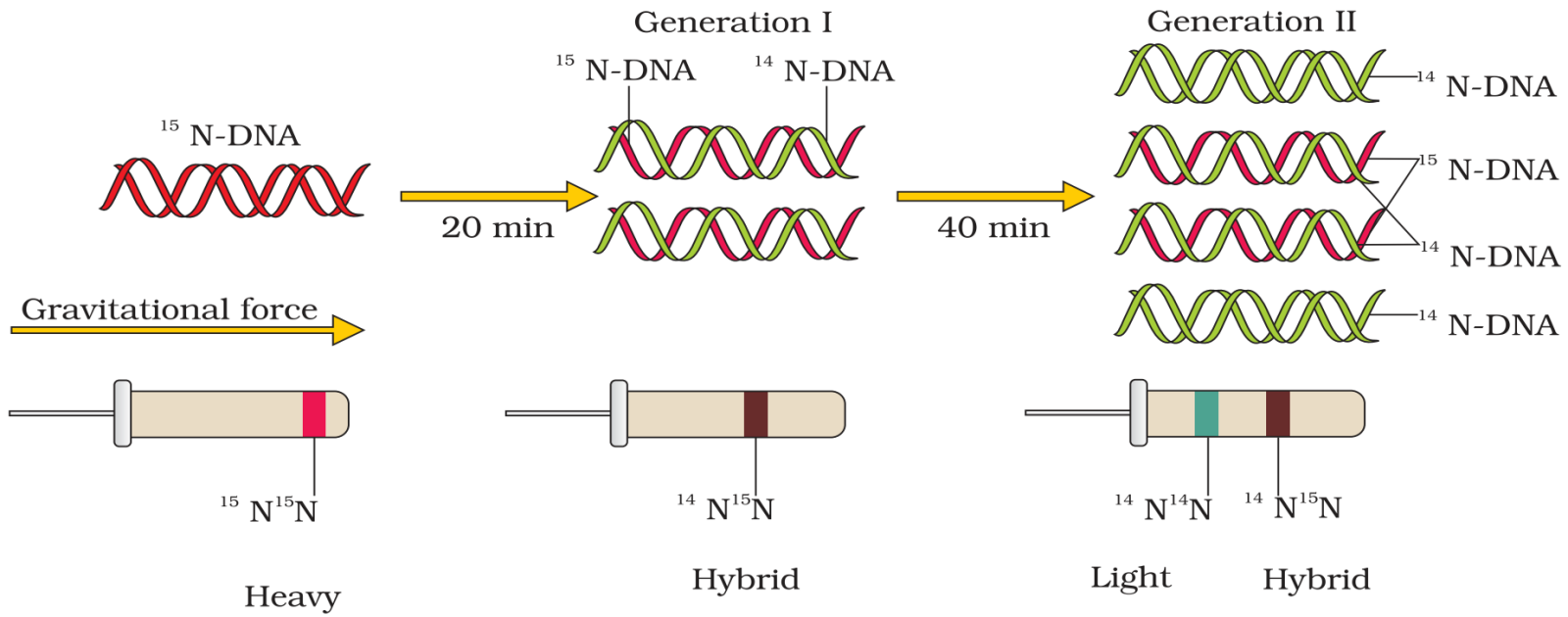
With respect to Messelson and Stahl’s Experiment, answer the following questions:
  1. Identify the method used to distinguish between heavy and light isotopes of nitrogen.
  2. With the help of diagrams, compare the results for the DNA isolated after 20 minutes of experiment with the DNA which was isolated after 40 minutes.
Answer
  1. Centrifugation in a CsCl density gradient.
  2.  
View full question & answer
Question 153 Marks
Discuss the significance of heavy isotope of nitrogen in the Meselson and Stahl’s experiment.
Answer
The heavy isotope of nitrogen was used in Meselson and Stahl’s experiment for various reasons. The heavy DNA molecule (containing $15_N$) could be easily distinguished from the normal DNA by centrifugation in a Cesium chloride (CsCl) density gradient. It could be easily separated from lighter nitrogen $(14_N)$ on the basis of density. Use of lighter and heavier nitrogen made the task of identifying transfer of DNAs through subsequent generation quite easier.
View full question & answer
Question 163 Marks
Given below is a part of the template strand of a structural gene:
TAC CAT TAG GAT
  1. Write its transcribed mRNA strand with its polarity.
  2. Explain the mechanism involved in initiation of transcription of this strand.
Answer
  1. 5’ AUG GUA AUC CUA 3’ (Polarity),
  2. RNA polymerase, blinds at 5 end, in the presence of (initiation factor) $\sigma$ factor, at the promoter site.
View full question & answer
Question 173 Marks
Expand 'BAC' and 'YAC'. Explain how they were used in sequencing of human genomes.
Answer
'BAC'- Bacterial Artificial Chromosome.
"YAC' - Yeast Artificial Chromosome.
  1. They are the commonly used vectors for cloning the DNA fragments in the hosts like bacteria and yeast.
  2. The cloning results into amplification of each fragment of DNA, so that they could be sequenced with ease.
View full question & answer
Question 183 Marks
‘‘A very small sample of tissue or even a drop of blood can help determine paternity’’. Provide a scientific explanation to substantiate the statement.
Answer
The technique help in solving a case of paternity dispute over the custody of a child by two different families is DNA – finger printing. The technique of DNA finger printing was initially developed. He used a satellite DNA as probe that shows very high degree of polymorphism.
Step II: Amplification: Many copies of the extracted DNA are made by Polymerase Chain Reaction (PCR).
  1. Separation of DNA sequence restriction fragments: The separated fragments can be visualized by Staining them with a dye that shows fluorescene under ultra violet radiation.
  2. Southern Blotling: The separated DNA sequence are transferred on to a nitro cellulose or nylon membrane of Sheet placed over the gel.
  3. Hybridization: The nylon membrane is immersed in a bath and radioactive proves are added: These probes target a specific nucleotide sequence that complementary to them.
  4. The Probs/Result: X-ray film and dark bands develop at the probs sites which resemble the barcda.

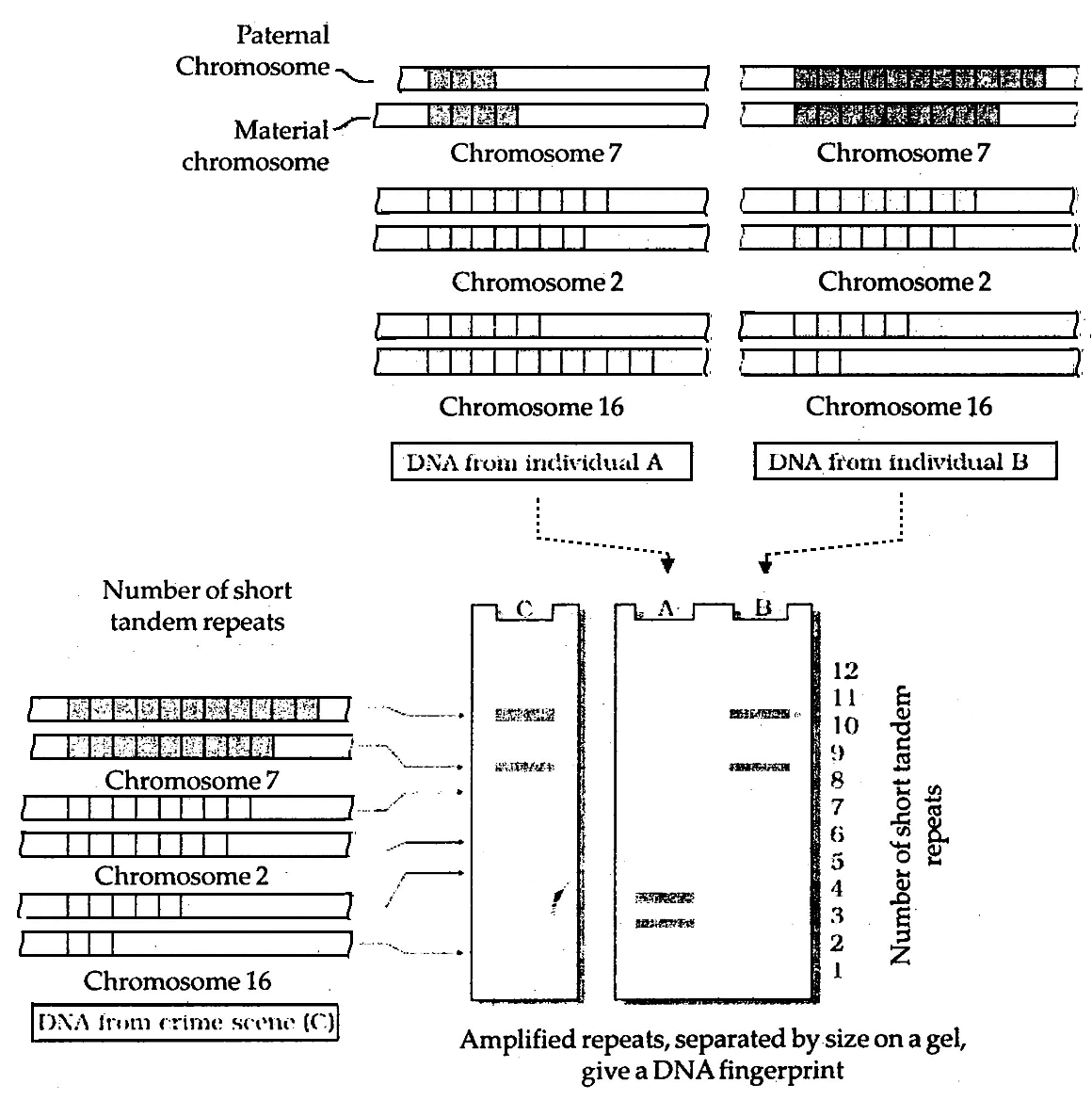
Scheme representation of DNA fingerprinting: Few representative chromosomes have been shown to contain different copy number of VNTR. For the sake of understanding different colour schems have been used to trace the origin of each band in the gel. The two alleles (paternal and maternal) of a chromosome also contan different copy nubers of VNTR. It is clear that the banding pattern of DNA from crime scene.
matches with individual B, and not with A.
View full question & answer
Question 193 Marks
Following the collision of two trains a large number of passengers are killed. A majority of them are beyond recognition. Authorities want to hand over the dead to their relatives. Name a modern scientific method and write the procedure that would help in the identification of kinship.
Answer
DNA fingerprinting (analysis)
  • Isolation and digestion of DNA by restriction endonuclease.
  • Separation of DNA fragments by electrophoresis and transferring them to synthetic membranes/nitrocellulose/nylon.
  • Hybridisation using labelled VNTR probe.
  • Detection of hybridised DNA fragments by autoradiography.
  • Matching banding pattern of DNA/DNA fingerprints/autoradiograms of the passengers killed and that of relatives.
View full question & answer
Question 203 Marks
AtRNA is charged with the amino acid phenylalanine.
  1. At what end of the tRNA is the amino acid attached?
  2. What is the mRNA codon that codes for phenylalanine?
  3. Name the enzyme responsible for this attachment.
Answer
  1. It is attached at the 3' end of RNA.
  2. UUU and UUC.
  3. Aminoacyl-tRNA synthetase.
View full question & answer
Question 213 Marks
Where is an 'operator' located in a prokaryote DNA? How does an operator regulate gene expression at transcriptional level in a prokaryote? Explain.
Answer
The operator region is located adjacent to promoter elements/prior to structural gene. In regulation of gene expression.
  • Switch off- The repressor binds to the operator region, & prevents transcription.
  • Switch on- In the presence of inducer the repressor is inactivated, (by the interaction with the inducer) and operator allows RNA polymerase access to the promoter, & transcription proceeds.
View full question & answer
Question 223 Marks
DNA polymerase and RNA polymerase differ in their requirement while functioning. Explain.
Answer
S. No RNA polymerase DNA polymerase
(i) It cannot carry out proofreading. It carries out proofreading for DNA repairmechanism.
(ii) RNA polymerase does not require RNA primer for synthesis of RNA. DNA polymerase requires RNA primer for synthesis of DNA.
(iii) It uses ribonucleotides for RNA synthesis. It uses deoxyribonucleotides for DNA synthesis.
View full question & answer
Question 233 Marks
A criminal blew himself up in a local market when was chased by cops. His face was beyond recognition. Suggest and describe a modern technique that can help establish his identity.
Answer
DNA finger printing:
Isolation of DNA and digestion of DNA by restriction endonucleases, separation of DNA fragments by (gel) electrophoresis and transferring (blotting) of separated DNA fragments to synthetic membrane or nitrocellulose or nylon, hybridization using VNTR probe and detection of hybridised DNA fragments by autoradiography, matching the banding pattern so obtained with that of relative.
View full question & answer
Question 243 Marks
Explain the process of charging of RNA. Why is it essential in translation?
Answer
Charging of tRNA:
  1. The amino acids are activated in the presence of ATP and linked to their cognate tRNA; this process is called charging of tRNA or amino acylation of tRNA.
  2. This process is necessary as the formation of peptide bond between the amino acids is favoured energetically, when they are brought together.
  3. The activation of amino acids by ATP provides the energy for the formation of peptide bond.
View full question & answer
Question 253 Marks
Give any six features of the human genome.
Answer
Six features of the human genome are as follows:
  • The human genome contains 3164.7 million nucleotides.
  • The average gene in the human genome contains 3000 bases.
  • The total number of genes is estimated to be 30,000.
  • Almost all (about 99.9%) of nucleotides are same in all human beings.
  • Less than 2 percent of the genome codes for protein.
  • Chromosome 1 has the most genes (2968) and chromosome Y has the least (231).
View full question & answer
Question 263 Marks
Now, sequencing of total genomes getting is getting less expensive day by the day. Soon it may be affordable for a common man to get his genome sequenced. What in your opinion could be the advantage and disadvantage of this development?
Answer
Advantages of Affordable Genome Sequencing: It can help in settling disputes which may arise in case of parentage of a child. This can also help in disputes of property inheritance by finding the bonafide beneficiary. Human genome can also help in preparing a database on people with criminal record. It can help in identifying the chances of genetic disorders in a family.
Disadvantages: Genome sequencing can have serious issues of privacy. Some employers may misuse the data to blackmail their employees. Many private matters may leak into public domain; creating embarrassment for the affected person.
View full question & answer
Question 273 Marks
  1. Expand VNTR and describe its role in DNA fingerprinting.
  2. List any two applications of DNA fingerprinting technique.
Answer
  1. VNTR stands for “Variable Number of Tandem Repeats”.
The VNTR belongs to a class of satellite DNA referred to as mini-satellite. A small DNA sequence is arranged tandemly in many copy numbers. The copy number varies from chromosome to chromosome in an individual. The numbers of repeat show very high degree of polymorphism. As a result th size of VNTR varies in size from 0.1 to 20kb. Consequently, after hybridization with VNTR probe, the autoradiogram gives many bands of differing sizes. These bands give characteristic pattern for an individual DNA which is used to identify individuals.
  1. Since DNA from every tissue (such as blood, hair-follicle, skin, bone, saliva, sperm etc.), from an individual show the same degree of polymorphism, they become very useful identification tool in forensic applications to identify criminals. Further, as the polymorphisms are inheritable from parents to children, DNA fingerprinting is the basic of paternity testing, in case of disputes.
View full question & answer
Question 283 Marks
Construct and label a transcription unit from which the RNA segment given below has been transcribed. Write the complete name of the enzyme that transcribed this RNA.
Answer
As per the question, the RNA strand given is having Thymine which is not possible. Hence, the question is wrong. Taking U (Uracil) instead of T (Thymine) in the given strand the possible solution shall be RNA Polymerase is the enzyme which is used during transcription.
View full question & answer
Question 293 Marks
Why both the strands of DNA are not copied during transcription? Explain.
Answer
Both the strands of DNA are not copied during transcription because if both strands act as a template, they would code for RNA with different sequence the two RNA molecules, if produced simultaneously would be complementary to each other, hence would form a double stranded RNA. Transcription is when RNA is made from DNA. During transcription, RNA polymerase makes a copy of a gene from the DNA to mRNA as needed. This process is similar in eukaryotes and prokaryotes. One difference, however, is that eukaryotic RNA polymerase associates with mRNA processing enzymes during transcription so that processing can proceed quickly after the start of transcription.
View full question & answer
Question 303 Marks

Study the mRNA Segment given above which is complete to be translated into a polypeptide chain.
  1. Write the codons ‘a’ and ‘b.'
  2. What do they code for?
  3. How is peptide bond formed between two amino acids in the ribosome?
Answer
  1.  
a - AUG.

b - UAA/UAG/UGA.
  1.  
AUG code for Methionine.

UAA/UAG/UGA - Stop codon/Nonsense codon/Does not code for any amino acid.
  1.  
Charged tRNA are brought closer together on mRNA in the ribosomes, and Ribosomes acts as a catalyst (ribozyme) forming peptide bond.
View full question & answer
Question 313 Marks
What are 5' end and 3' end of a polynucleotide chain?
Answer
The Polynucleotide Chain One end of the chain ends with a phosphate linked to the 5' carbon of the sugar and is called the 5' end. The other end of the chain ends with an hydroxyl group linked to the 3' carbon of the sugar and is called the 3' end.
View full question & answer
Question 323 Marks
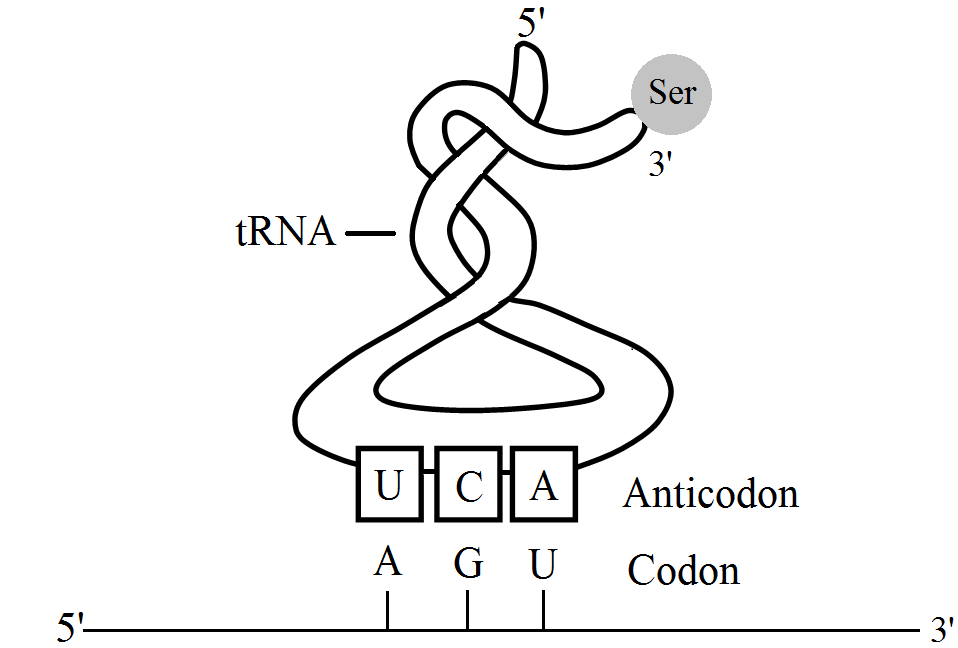
  1. Why is RNA called an 'adapter'?
  2. Draw and label a secondary structure of RNA. How does the actual structure of RNA look like?
Answer
  1. Since 'RNA on one hand binds to a specific amino acid and on the other hand reads the codon of the amino acid bound to it through its anticodon, it is called an 'adapter'.
  2.  


It actually looks like an inverted L.
View full question & answer
Question 333 Marks
Identify giving reasons, the salient features of genetic code by studying the following nucleotide sequence of mRNA strand and the polypeptide translated from it.
AUG UUU UCU UUU UUU UCU UAG
Met - Phe - Ser - Phe - Phe - Ser
Answer
Properties of genetic code:
  1. AUG is the initiation codon and codes for methionine; methionine is the first amino acid in the given polypeptide.
  2. Genetic code is unambiguous and specific, i.e., each codon codes only for one particular amino acid.
e.g AUG - Methionine, GUG - Valine, etc.
  1. Genetic code is degenerate, i.e. some amino acids are coded by more than one codon.
​​​​​​​e.g. UUU and UUC code for phenylalanine
  1. Each codon is a triplet, i.e. made of three nucleotides e.g AUG, UUU, etc.
  2. UAG does not code for any amino acid; it is a termination codon.
View full question & answer
Question 343 Marks
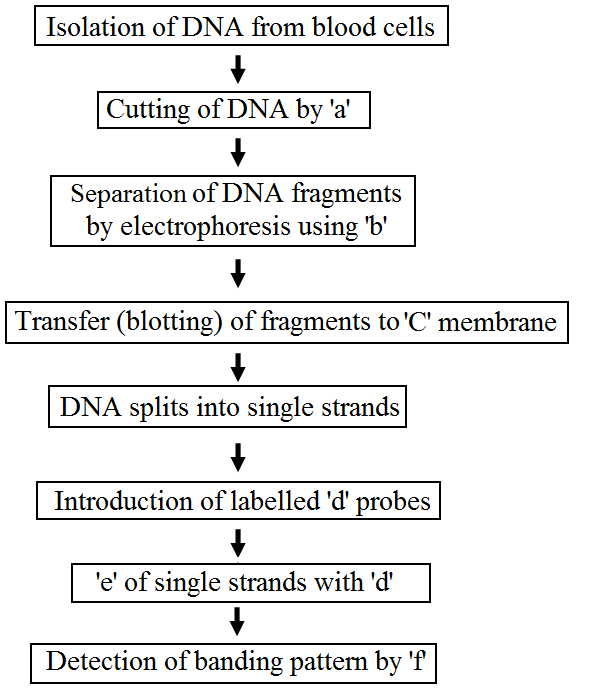
The following is the flowchart highlighting the steps in DNA fingerprinting technique. Identify A, B, C, D, E and F.
Answer
A- Restriction endonuclease.
B- Agarose.
C- Nylon/ Nitrocellulose.
D- VNTR.
E- Hybridisation.
F- Autoradiography.
View full question & answer
Question 353 Marks
A number of passengers were severely burnt beyond recognition during a train accident. Name and describe a modern technique that can help hand over the dead to their relatives.
OR
Following the collision of two trains a large number of passengers are killed. A majority of them are beyond recognition. Authorities want to hand over the dead to their relatives. Name a modern scientific method and write the procedure that would help in the identification of kinship.
Answer
The technique that can help in the identification of victims is DNA fingerprinting which distinguishes between individuals of same species by using their DNA as sample. The chemical structure of DNA is same in everyone (99.9%) except the order of base pairs, i.e. only 0.1"of DNA makes every individual unique. DNA fingerprinting exploits the highly variable repeating sequences, i.e. VNTRs for profiling. These VNTRs are highly conserved among members of the same species.
The DNA polymorphism in simple-sequence DNA and VNTRs is revealed during DNA fingerprinting in establishing kinship since it is very remote possibility to have two individuals with same repeats of satellite DNA throughout the genome except they share a biological relationship. This is because a child gets half DNA from father and half from the mother. Restriction enzymes of genome produce the restriction fragments length polymorphisms, or RFLPs depending on the location of restriction sites which are then sorted by gel electrophoresis followed by southern blotting. The DNA sample from killed passengers and of the sample from possible relatives are compared for sequence homology using radioactive probes and kinship is established.
The presence of similarities between the victims and their relatives determines their association on the basis of which dead bodies can be identified and handed over to their families.
View full question & answer
Question 363 Marks
A tRNA is charged with amino acid phenylalanine:
  1. At what end of the tRNA is the amino acid attached?
  2. What is the mRNA codon that codes for phenylalanine?
  3. Name the enzyme responsible for this attachment.
Answer
  1. At the 3' end.
  2. UUU or UUC.
  3. Aminoacyl tRNA synthetase.
View full question & answer
Question 373 Marks
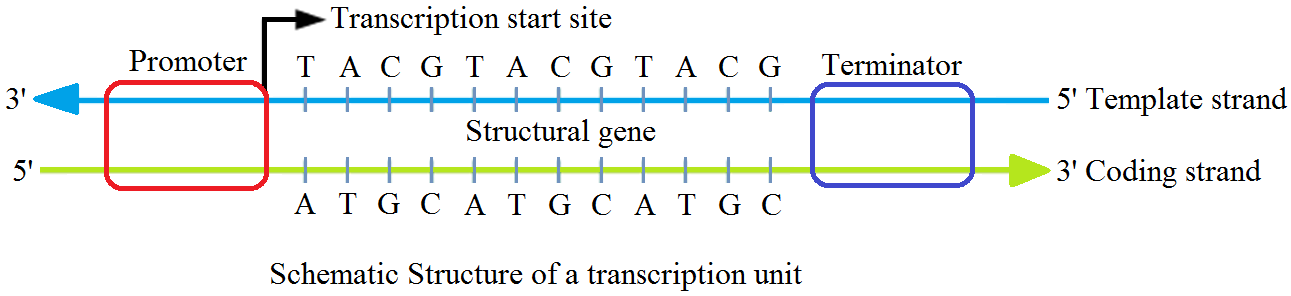
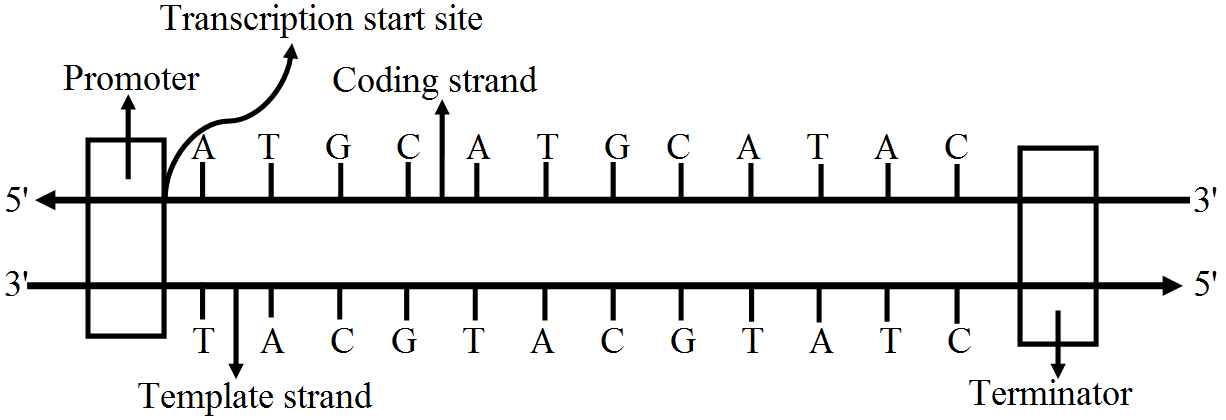
  1. Construct a complete transcription unit with promoter and terminator on the basis of the hypothetical coding strand given below.
  1. Write the RNA strand transcribed from the above transcription unit along with its polarity.
Answer
  1.  
  1. The RNA transcribed is 5' AUGCAUGCAUAG 3'.
View full question & answer
Question 383 Marks
State any two structural differences and one functional difference between DNA and rRNA.
Answer
S. No
DNA
rRNA
Structural:
(i)
It is a double-stranded structure.
It is a single-stranded structure.
(ii)
It contains nitrogen bases, A, T, G, C.
It contains nitrogen base, A, U, G, C.
(iii)
It has deoxyribose sugar.
It has ribose sugar.
Functional:
 
It determines sequence of amino acid in a polypeptide by transcription and passes information from one generation to another.
It is the site of translation.
View full question & answer
Question 393 Marks
Monocistronic structural genes in eukaryotes have interrupted coding sequences. Explain. How are they different in prokaryotes?
Answer
  1. In eukaryotes, the hnRNA (primary transcript of mRNA) has coding sequences, called exons as well as non-coding sequences, called introns, i.e. the information is split.
  2. It undergoes a process, called splicing, in which the introns are removed and the exons are joined together in a particular manner, to form the functional mRNA.
  • In prokaryotes, the mRNA is polycistronic, i.e. codes for more than one polypeptide.
  1. The information is continuous and no splicing is required.
View full question & answer
Question 403 Marks
AtRNA is charged with the amino acid methionine.
  1. Name the process involved in attachment.
  2. Point out the mRNA codon and anticodon on tRNA for this amino acid.
  3. Name the enzyme responsible for this attachment.
Answer
  1. Aminoacylation of RNA.
  2. mRNA codon-AUG, RNA anticodon-UAC.
  3. Enzyme-aminoacyl RNA synthetase.
View full question & answer
Question 413 Marks
What background information did Watson and Crick have made available for developing a model of DNA? What was their contribution?
Answer
Wastson and Crick had the following informations which helped them to develop a model of DNA,
  1. Chargaffs’ Law suggesting A = T, and C = G.
  2. Wilkins and Rosalind Franklin’s work on DNA crystal’s X-ray diffraction studies about DNA’s physical structure.
  3. Watson and crick proposed:
  • How complementary bases may pair.
  • Semi conservative replication and.
  • Mutation through tautomerism.
View full question & answer
Question 423 Marks
The base sequence in one of the strands of DNA is TAGCATGAT
  1. Give the base sequence of its complementary strand.
  2. How are these base pairs held together in a DNA molecule?
  3. Explain the base complementarity rules. Name the scientist who framed this rule.
Answer
  1. ATCGTACTA.
  2. Through Hydrogen bonds, between A and T and C and G on the two strands.
  3. A= T and C$\equiv$ G, Watson and Crick/Chargaff.
View full question & answer
Question 433 Marks
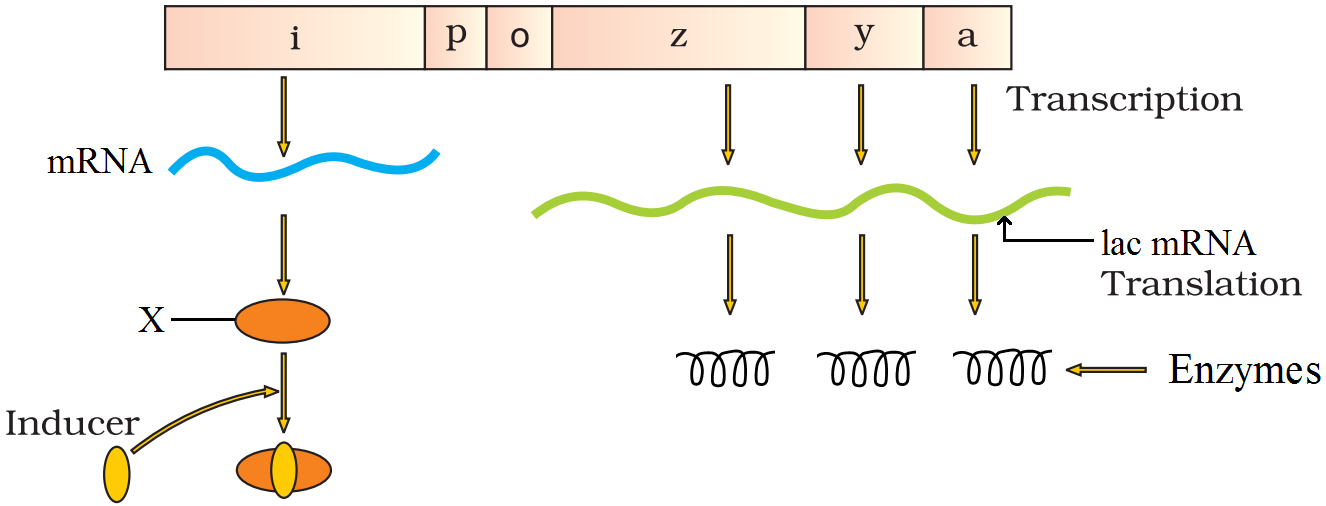
Study the figure given below and answer the following questions.
  1. Name the molecule 'X' synthesised by i gene. How does this molecule get inactivated?
  2. Which one of the structural genes codes for B-galactosidase?
  3. When will the transcription of this gene stop?
Answer
  1. Molecule 'X' is a repressor protein. When an inducer combines with it, it is inactivated.
  2. 'z' gene.
  3. Transcription of gene stops.
  1. Substrate (lactose) is not available.
  2. Energy source (glucose) is available to the cells.
View full question & answer
Question 443 Marks
Define transformation in Griffith's experiment. Discuss how it helps in the identification of DNA as the genetic material.
Answer
During the course of Griffith’s experiment, bacteria changed its physical form. This was termed as transformation. In this experiment, the DNA of the S strain bacteria survived heating of bacteria. When a mice was injected with mixture of killed S strain and R strain, the mice died of pneumonia. This showed that DNA had the capability of surviving adverse circumstances and manifesting itself on return of favourable conditions. Stability and survival are key considerations for a material to be classified as genetic material. Thus, transformation in Griffith’s experiment helped in identification on DNA as genetic material.
View full question & answer
Question 453 Marks
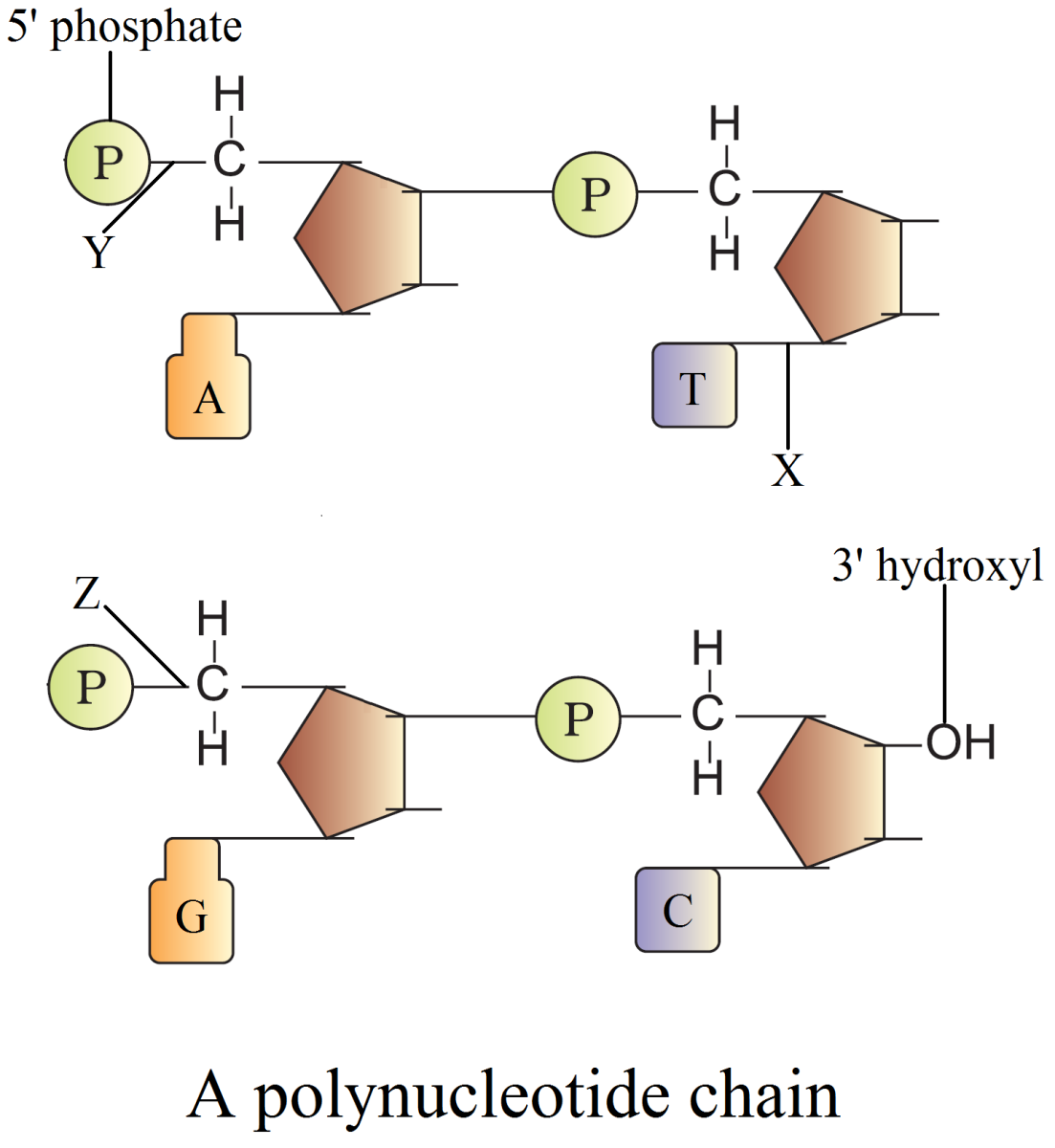
Study the diagram given below.

Name the linkage X, Y, Z and the respective molecules formed by them.
Answer
X: N-glycosidic linkage.
Y : Phosphoester linkage.
Z: 3'-5' phosphodiester linkage.
X forms nucleoside.
Y forms nucleotide.
Z forms polynucleotide.
View full question & answer
Question 463 Marks
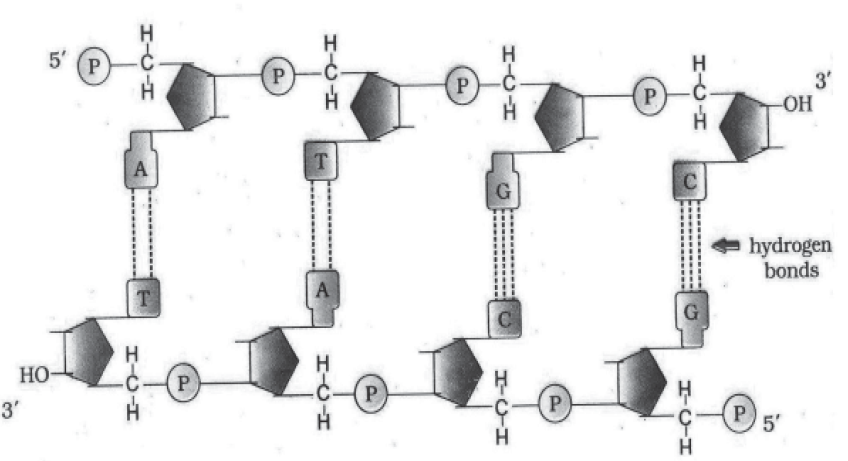
  1. A DNA segment has a total of 1000 nucleotides, out of which 240 of them are adenine containing nucleotides. How many pyrimidine bases this DNA segment possesses?
  2. Draw a diagrammatic sketch of a portion of DNA segment to support your answer.
Answer
  1. Pyrimidine = 500,
  1. Calculation
A = T, A = 240 hence T = 240
A + T = 240 + 240 = 480
so G+C= 1000 - 480 = 520
G = C, so C $=\frac{520}{2}=260$
so pyrimidines = C + T = 260 + 240 = 500
  1. Purine A and G always pair with T and C respectively​​.
  2. $\frac{A}{G}=\frac{T}{C}=1$​​​​​ (Chargaff frule)​​​​​​.
  1.  
View full question & answer
Question 473 Marks
  1. What are the transcriptional products of RNApolymerase III?
  2. Differentiate between 'Capping' and 'Tailing'.
  3. Expand hnRNA.
Answer
  1. RNA polymerase III transcribes tRNA, 5S rRNA and snRNAs, (small nuclear RNAs).
  2.  
S. No.
Capping
Tailing
1.
It is the process of addition of methyl guanosine triphosphate to the 5' end of hnRNA after splicing.
It is the process of addition of adenylate residues to the 3' end of hnRNA after splicing.
  1. Heterogenous nuclear ribonucleic acid (hnRNA).
View full question & answer
Question 483 Marks
During a fire in an auditorium, a large number of assembled guests got burnt beyond recognition. Suggest and describe a modern technique that can help hand over the dead to their relatives.
Answer
DNA finger printing
Isolation of DNA and digestion of DNA by restriction endonucleases, separation of DNA fragments by (gel) electrophoresis and transferring (blotting) of separated DNA fragments to synthetic membrane or nitrocellulose or nylon, hybridization using VNTR probe and detection of hybridised DNA fragments by autoradiography, matching the banding pattern so obtained with that of relative.
View full question & answer
Question 493 Marks
  1. List the two methodologies which were involved in human genome project. Mention how they were used.
  2. Expand ‘YAC’ and mention what was it used for.
Answer
  1. Expressed Sequence Tags, Identifying all the genes that are expressed as RNA.
Sequence Annotation, sequencing the whole set of genome coding or non-coding sequences and later assigning different region with functions.
  1. Yeast Artificial Chromosome used as cloning vectors. (cloning/amplification)
View full question & answer
Question 503 Marks
ATGGAGTACTTCGTGTGA is the coding strand of DNA in a transcription unit.
  1. Write the mRNA transcribed from this DNA segment.
  2. How many amino acids does it code for? Why?
Answer
  1. AUG GAG UAC UUC GUG UGA
  2. It will code for five amino acids.
The last codon, UGA is a termination codon. that does not code for any amino acid.
View full question & answer