Question types

3. Chemical kinetics question types

862 questions across 1 question group — pick any mix to generate a Chemistry paper with step-by-step answer keys.

862
Questions
1
Question groups
5
Question types
Sample Questions

3. Chemical kinetics questions

One sample from each question group in this chapter. Select any group above to see the full set with answer keys.

Activation energy of any chemical reaction can be calculated if one knows the value of
  • A
    probability of collision
  • B
    orientation of reactant molecules during collision
  • rate constant at two different temperatures
  • D
    rate constant at standard temperature

Answer: C.

View full solution
The rate of a reaction quadruples when temperature changes from $27^{\circ} \mathrm{C}$ to $57^{\circ} \mathrm{C}$. Calculate the energy of activation.

Given $\mathrm{R}=8.314 \mathrm{~J} \mathrm{~K}^{-1} \mathrm{~mol}^{-1}, \log 4=0.6021$

  • A
     $380.4 \mathrm{~kJ} / \mathrm{mol}$
  • B
    $3.80 \mathrm{~kJ} / \mathrm{mol}$
  • C
    $3804 \mathrm{~kJ} / \mathrm{mol}$
  • $38.04 \mathrm{~kJ} / \mathrm{mol}$

Answer: D.

View full solution
For a certain reaction, the rate $=k[A]^2[B]$, when the initial concentration of $A$ is tripled keeping concentration of $B$ constant, the initial rate would
  • A
    Increase by a factor of three
  • B
    Decrease by a factor of nine
  • C
    Increase by a factor of six
  • Increase by a factor of nine

Answer: D.

View full solution
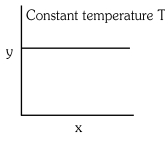
The given graph is a representation of kinetics of a reaction.

$[Image]$

The $y$ and $x$ axes for zero and first order reactions, respectively are
  • A
    zero order $(y=$ concentration and $x=$ time), first order $(y=$ rate constant and $x=$ concentration)
  • zero order ( $y=$ rate and $x=$ concentration), first order $\left(y=t_{1 / 2}\right.$ and $x=$ concenration)
  • C
    zero order ( $y=$ rate and $x=$ concentration), first order $\left(y=\right.$ rate and $\left.x= t _{1,2}\right)$
  • D
    zero order ( $y=$ concentration and $x=$ time), first order $\left(y=t_{1 / 2}\right.$ and $x=$ concentration)

Answer: B.

View full solution

Generate a 3. Chemical kinetics paper free

Pick question groups from the list above, set marks and difficulty, and export a branded PDF with step-by-step answer keys. First 3 chapters free — no signup.

Download App