Question types

Probability question types

796 questions across 6 question groups — pick any mix to generate a Maths paper with step-by-step answer keys.

796
Questions
6
Question groups
5
Question types
Sample Questions

Probability questions

One sample from each question group in this chapter. Select any group above to see the full set with answer keys.

If A and B are two independent events with $\text{P(A)}=\frac{1}{3}$ and $\text{P(B)}=\frac{1}{4},$ then P(B'|A) is equal to:
  1. $\frac{1}{4}$
  2. $\frac{1}{3}$
  3. $\frac{3}{4}$
  4. $1$
View full solution
A bag contains 12 balls out of which x are white. If one ball is drawn at random, what is the probability it will be a white ball?
  1. $\frac{\text{x}}{2}$
  2. $\frac{\text{x}}{12}$
  3. $\frac{\text{x}}{10}$
  4. $\frac{12}{\text{x}}$
View full solution
Choose the correct answer from the given four options.
A and B are events such that P(A) = 0.4, P(B) = 0.3 and $\text{P}(\text{A}\cup\text{B})=0.5,$ Then $\text{P}(\text{B}'\cap\text{A})$ equals:
  1. $\frac{2}{3}$
  2. $\frac{1}{2}$
  3. $\frac{3}{10}$
  4. $\frac{1}{5}$
View full solution
A person writes 4 letters and addresses 4 envelopes. If the letters are placed in the envelopes at random, then the probability that all letters are not placed in the right envelopes, is
  1. $\frac{1}{4}$
  2. $\frac{11}{14}$
  3. $\frac{15}{24}$
  4. $\frac{23}{24}$
View full solution
Two dice are thrown. If it is known that the sun of the numbers on the dice was less than 6, than the probability of gettinga sum 3, is
  1. $\frac{1}{18}$
  2. $\frac{5}{18}$
  3. $\frac{1}{5}$
  4. $\frac{2}{5}$
View full solution
Q 61 Marks1 Mark
Two cards are drawn at random and one-by-one without replacement from a well-shuffled pack of 52 playing cards. Find the probability that one card is red and the other is black.
View full solution
Q 71 Marks1 Mark
Compute $\text{P}(\text{A}|\text{B})\ \text{if}\ \text{P}(\text{B})=0.5\ \text{and}\ \text{P}(\text{A}\cap\text{B})=0.32$ 
View full solution
Q 81 Marks1 Mark
If $\text{P}(\text{A})=\frac{3}{5}\text{and}\ \text{P}(\text{B})=\frac{1}{5}$, find $\text{P}(\text{A}\cap\text{B})$ if A and B are independent events.
View full solution
Q 91 Marks1 Mark
Evaluate $\text{P}(\text{A}\cap\text{B})\ \text{if}\ 2\text{P}(\text{A})=\text{P}(\text{B})=\frac{5}{13}\ \text{and}\ \text{P}(\text{A}|\text{B})=\frac{2}{5}.$
View full solution
Q 101 Marks1 Mark
The probability distribution of random variable X is given below:

$\text{X}$
$0$
$1$
$2$
$3$
$\text{P}(\text{X})$
$\text{k}$
$\frac{\text{k}}{2}$
$\frac{\text{k}}{4}$
$\frac{\text{k}}{8}$

 Find $\text{P}(\text{X}\leq2)+\text{P}(\text{X}>2)$

View full solution
Q 112 Marks2 Marks
A die, whose faces are marked 1, 2, 3 in red and 4, 5, 6 in green, is tossed. Let A be the event ‘‘number obtained is even’’ and B be the event ‘‘number obtained is red’’. Find if A and B are independent events.
View full solution
Q 122 Marks2 Marks
$\text{If P(A) = 0·4, P(B) = p, P(A}\cup \text{B) = 0·6}$ and A and B are given to be independent events, find the value of ‘p’.
View full solution
Q 142 Marks2 Marks
A black and a red die are rolled together. Find the conditional probability of obtaining the sum 8, given that the red die resulted in a number less than 4.
View full solution
Q 152 Marks2 Marks
A die marked 1, 2, 3 in red and 4, 5, 6 in green is tossed. Let A be the event “number is even” and B be the event “number is marked red”. Find whether the events A and B are independent or not.
View full solution
Q 173 Marks3 Marks
An urn contains 4 red and 7 blue balls. Two balls are drawn at random with replacement. Find the probability of getting:
  1. 2 red balls.
  2. 2 blue balls.
  3. One red and one blue ball.
View full solution
Q 183 Marks3 Marks
There are two bags I and II. Bag I contains 3 white and 4 red balls and Bag II contains 5 white and 6 red balls. One ball is drawn at random from one of the bags and is found to be red. Find the probability that it was drawn from bag II.
View full solution
Q 193 Marks3 Marks
Find the mean μ variance σ2 for the following probability distribution:
X 0 1 2 3
P(X) $\frac{1}{6}$ $\frac{1}{2}$ $\frac{3}{10}$ $\frac{1}{30}$
View full solution
Q 203 Marks3 Marks
Two dice are thrown together. What is the probability that the sum of the numbers on the two dice is neither 9 nor 11?
View full solution
Q 214 Marks4 Marks
In a game, a man wins ₹ 5 for getting a number greater than 4 and loses ₹ 1 otherwise, when a fair die is thrown. The man decided to throw a die three but to quit as and when he gets a number greater than 4. Find the expected value of the amount he wins/loses.
View full solution
Q 224 Marks4 Marks
Of the students in a school, it is known that 30% have 100% attendanceand 70% students are irregular. Previous year results report that 70% of all students who have 100% attendance attain A grade and 10% irregular students attain A grade in their annual examination. At the end of the year, one student is chosen at random from the school and he was found to have an A grade. What is the probability that the student has 100% attendance? Is regularity required only in school? Justify your answer.
View full solution
Q 234 Marks4 Marks
There are 4 cards numbered 1, 3, 5 and 7, one number on one card. Two cards are drawn at random without replacement. Let X denote the sum of the numbers on the two drawn cards. Find the mean and variance of X.
View full solution
Q 244 Marks4 Marks
Two schools A and B want to award their selected students on the values of sincerity, truthfulness and helpfulness. The school A wants to award ₹ x each, ₹  y each and ₹ z each for the three respective values to 3, 2 and 1 students respectively with a total award money of ₹ 1,600. School B wants to spend ₹ 2,300 to award its 4, 1 and 3 students on the respective values (by giving the same award money to the three values as before). If the total amount of award for one prize on each value is ₹ 900, using matrices, find the award money for each value. Apart from these three values, suggest one more value which should be considered for award.

View full solution
Q 254 Marks4 Marks
Two numbers are selected at random (without replacement) from the first six positive integers. Let X denote the larger of the two numbers obtained. Find the probability distribution of the random variable X, and hence find the mean of the distribution.
View full solution
In a family there are four children. All of them have to work in their family business to earn their livelihood at the age of 18.

Based on the above information, answer the following questions.

  1. Probability that all children are girls, if it is given that elder child is a boy, is:
  1. $\frac{3}{8}$

  2. $\frac{1}{8}$

  3. $\frac{5}{8}$

  4. None of these.

  1. Probability that all children are boys, if two elder children are boys, is:
  1. $\frac{1}{4}$

  2. $\frac{3}{4}$

  3. $\frac{1}{2}$

  4. None of these.

  1. Find the probability that two middle children are boys, if it is given that eldest child is a girl.
  1. $0$

  2. $\frac{3}{4}$

  3. $\frac{1}{4}$

  4. None of these.

  1. Find the probability that all children are boys, if it is given that at most one of the children is a girl.
  1. $0$

  2. $\frac{1}{5}$

  3. $\frac{2}{5}$

  4. $\frac{4}{5}$

  1. Find the probability that all children are boys, if it is given that at least three of the children are boys.
  1. $\frac{1}{5}$

  2. $\frac{2}{5}$

  3. $\frac{3}{5}$

  4. $\frac{4}{5}$

View full solution
Suman was doing a project on a school survey, on the average number of hours spent on study by students selected at random. At the end of survey, Suman prepared the following report related to the data. Let X denotes the average number of hours spent on study by students. The probability that X can take the values x, has the following form, where k is some unknown constant.

$\text{P(X}=\text{x})\begin{cases}0.2,\text{if x}= 0\\\text{kx},\text{if}\text{ x}=1\text{ or }2\\\text{k}(6-\text{x}),\text{if}\text{ x}=3\text{ or }4\\0,\text{odherwise}\end{cases}$

Based on the above information, answer the following questions.
  1. Find the value of k.
  1. 0.1
  2. 0.2
  3. 0.3
  4. 0.05
  1. What is the probability that the average study time of students is not more than 1 hour?
  1. 0.4
  2. 0.3
  3. 0.5
  4. 0.1
  1. What is the probability that the average study time of students is at least 3 hours?
  1. 0.5
  2. 0.9
  3. 0.8
  4. 0.1
  1. What is the probability that the average study time of students is exactly 2 hours?
  1. 0.4
  2. 0.5
  3. 0.7
  4. 0.2
  1. What is the probability that the average study time of students is at least 1 hour?
  1. 0.2
  2. 0.4
  3. 0.8
  4. 0.6 
View full solution
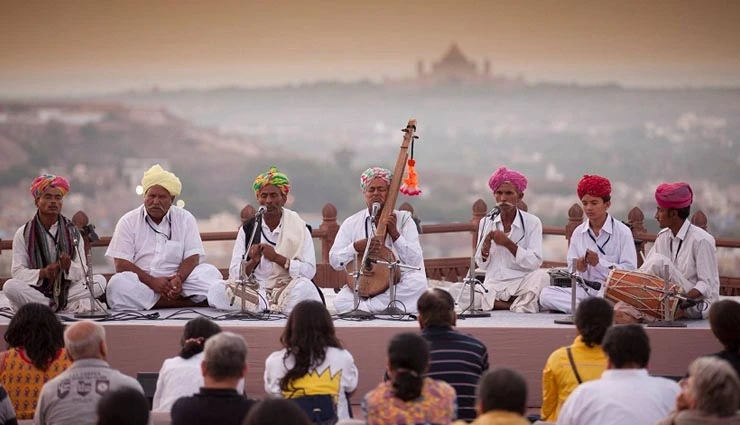
 One day, a sangeet mahotsav is to be organised in an open area of Rajasthan. ln recent years, it has rained only 6 days each year. Also, it is given that when it actually rains, the weatherman correctly forecasts rain 80% of the time. When it doesn't rain, he incorrectly forecasts rain 20% of the time.

If leap year is considered, then answer the following questions.

  1. The probability that it rains on chosen day is:
  1. $\frac{1}{366}$

  2. $\frac{1}{73}$

  3. $\frac{1}{60}$

  4. $\frac{1}{61}$

  1. The probability that it does not rain on chosen day is:
  1. $\frac{1}{366}$

  2. $\frac{5}{366}$

  3. $\frac{360}{366}$

  4. None of these.

  1. The probability that the weatherman predicts correctly is:
  1. $\frac{5}{6}$

  2. $\frac{7}{8}$

  3. $\frac{4}{5}$

  4. $\frac{1}{5}$

  1. The probability that it will rain on the chosen day, if weatherman predict rain for that day, is:
  1. 0.0625
  2. 0.0725
  3. 0.0825
  4. 0.0925
  1. The probability that it will not rain on the chosen day, if weatherman predict rain for that day, is:
  1. 0.94
  2. 0.84
  3. 0.74
  4. 0.64 
View full solution
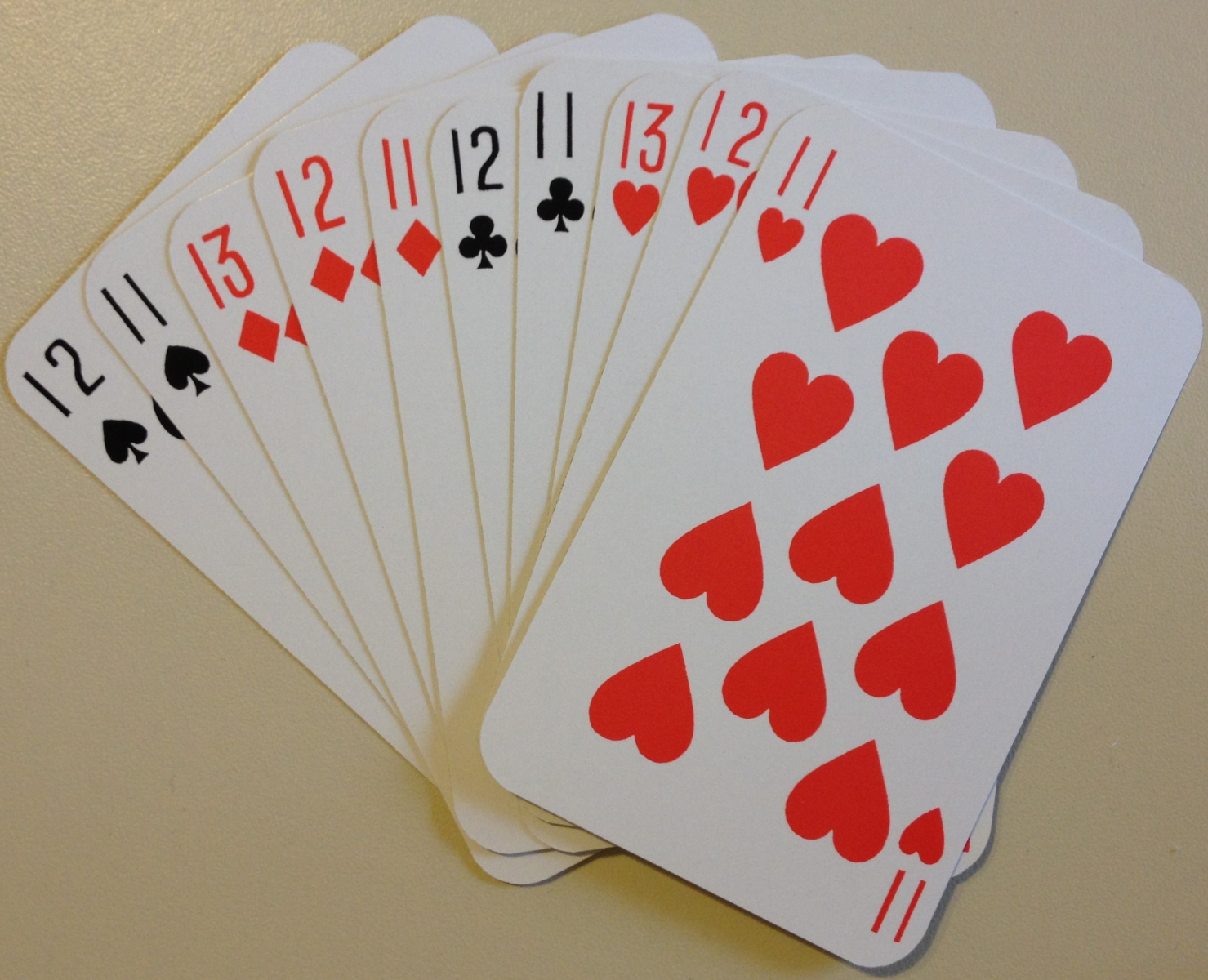
 A card is lost from a pack of 52 cards. From the remaining cards two cards are drawn at random.

Based on the above information, answer the following questions.
  1. The probability of drawing two diamonds, given that a card of diamond is missing, is:
  1. $\frac{21}{425}$

  2. $\frac{22}{425}$

  3. $\frac{23}{425}$

  4. $\frac{1}{425}$

  1. The probability of drawing two diamonds, given that a card of heart is missing, is:
  1. $\frac{26}{425}$

  2. $\frac{22}{425}$

  3. $\frac{19}{425}$

  4.  $\frac{23}{425}$

  1. Let A be the event of drawing two diamonds from remaining 51 cards and E1, E2, E3 and E4 be the events that lost card is of diamond, club, spade and heart respectively, then the approximate value of $\displaystyle\sum_{\text{i}=1}^{4}\text{P(A|E}_\text{i})$ is:
  1. 0.17
  2. 0.24
  3. 0.25
  4. 0.18
  1. AU of a sudden, missing card is found and, then two cards are drawn simultaneously without replacement. Probability that both drawn cards are king is:
  1. $\frac{1}{52}$

  2. $\frac{1}{221}$

  3. $\frac{1}{121}$

  4. $\frac{2}{221}$

  1. If two cards are drawn from a well shuffled pack of 52 cards, one by one with replacement, then probability of getting not a king in 1st and 2nd draw is:
  1. $\frac{144}{169}$

  2. $\frac{12}{169}$

  3. $\frac{64}{169}$

  4. None of these 

View full solution
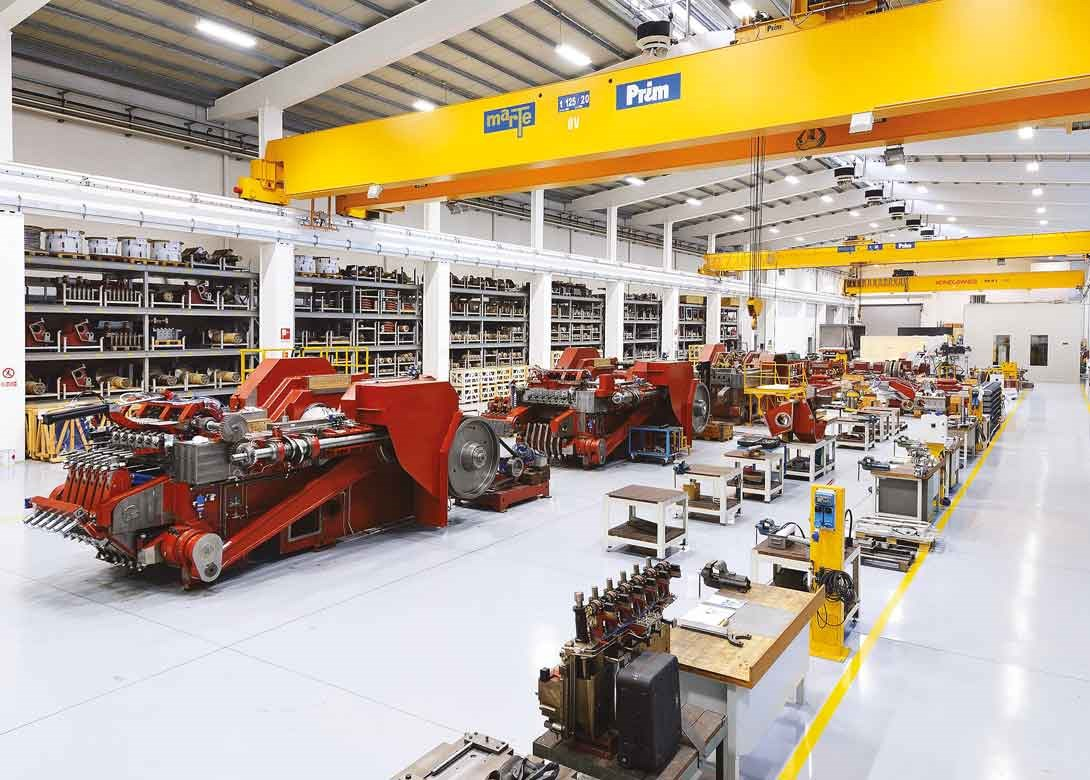
A factory has three machines A, B and C to manufacture bolts. Machine A manufacture 30%, machine B manufacture 20% and machine C manufacture 50% of the bolts respectively. Out of their respective outputs 5%, 2% and 4% are defective. A bolt is drawn at random from total production and it is found to be defective.

Based on the above information, answer the following questions.
  1. Probability that defective bolt drawn is manufactured by machine A, is:
  1. $\frac{4}{13}$

  2. $\frac{5}{13}$

  3. $\frac{6}{13}$

  4. $\frac{9}{13}$
  1. Probability that defective bolt drawn is manufactured by machine B, is:
  1. 0.3
  2. 0.1
  3. 0.2
  4. 0.4
  1. Probability that defective bolt drawn is manufactured by machine C, is:
  1. $\frac{16}{39}$

  2. $\frac{17}{39}$

  3. $\frac{20}{39}$

  4. $\frac{15}{39}$

  1. Probability that defective bolt is not manufactured by machine B, is:
  1. $\frac{35}{39}$

  2. $\frac{61}{39}$

  3. $\frac{41}{39}$

  4. None of these.

  1. Probability that defective bolt is not manufactured by machine C, is:
  1. 0.03
  2. 0.09
  3. 0.5
  4. 0.9 
View full solution

Generate a Probability paper free

Pick question groups from the list above, set marks and difficulty, and export a branded PDF with step-by-step answer keys. First 3 chapters free — no signup.

Download App