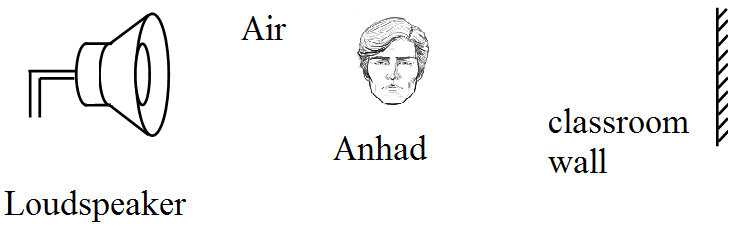
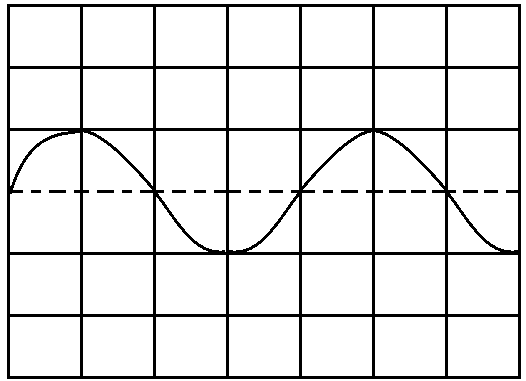
The sound waves travel fastest:
- AIn solids.
- BIn liquids.
- CIn gases.
- DIn vacuum.
464 questions across 8 question groups — pick any mix to generate a Science paper with step-by-step answer keys.
M.C.Q. [1 M]
162 Q→02Fill in the blank
13 Q→03true or false
4 Q→04One word answer.
113 Q→05Que-Ans (Each of 2 Mark )
117 Q→06Que-Ans (Each of 3 Mark )
32 Q→07Que-Ans (Each of 4 Mark )
18 Q→08Case study ( 4 Marks )
5 Q→One sample from each question group in this chapter. Select any group above to see the full set with answer keys.
A person is listening to a tone of 500Hz sitting at a distance of 450m from the source of the sound. What is the time interval between successive compressions from the source?
Calculate the wavelength of a sound wave whose frequency is 220Hz and speed is 440m/s in a given medium.
How are the wavelength and frequency of a sound wave related to its speed?
gets reflected at the surface of a solid or liquid and follows the same laws of reflection. The directions in which the sound is incident and is reflected make equal angles with the normal to the reflecting surface at the point of incidence, and the three are in the same plane. If we clap near a suitable reflecting object such as a tall building or a mountain, we will hear the same sound again a little later. This sound which we hear is called an echo. The sensation of sound persists in our brain for about 0.1 s. To hear a distinct echo the time interval between the original sound and the reflected one must be at least 0.1s. Hence, for hearingdistinct echoes, the minimum distance of theobstacle from the source of sound must be 17.2 m. Thisdistance will change with the temperature ofair. Another phenomenon of reflection of sound is reverberation.A sound created in a big hall will persist byrepeated reflection from the walls until it isreduced to a value where it is no longeraudible. The repeated reflection that resultsin this persistence of sound is called reverberation. Excessive reverberation is highly undesirable.
(i) Which of the following is true related to reflection of sound?
(a) Directions in which the sound is incident and is reflected make equal angles with the normal to the reflecting surface at the point of incidence.
(b) Incident wave reflected wave and normal lies in same plane
(c) Both a and b are true.
(d) None of these
(ii)For hearing distinct echoes, the minimum distance of the obstacle from the source of sound must be
(a) 10m
(b) 20m
(c) 17.2m
(d) None of these
(iii) Excessive reverberation is
(a) Desirable phenomenon
(b) Undesirable phenomenon
(c) Does not exist
(d) None of these
(iv) A person makes sound near a obstacle and heard the echo after 1 s. What is the distance of the obstacle from the person if the speed of the sound, v is taken as 346 m/s?
(v) State law of reflection of sound.
The loudness or softness of a sound isdetermined basically by its amplitude. Theamplitude of the sound wave depends uponthe force with which an object is made tovibrate. If we strike a table lightly, we hear asoft sound because we produce a sound waveof less energy (amplitude).
The quality or timber of sound is thatcharacteristic which enables us to distinguishone sound from another having the same pitchand loudness. The sound which is morepleasant is said to be of a rich quality. A sound of single frequency is called a tone. The sound which is produced due to a mixture of several frequencies is called a note and is pleasant to listen to. Noise is unpleasant to the ear! Music is pleasant to hear and is of rich quality.
(i) Pitch of sound is higher when
(a) Vibration of source of sound is higher
(b) Vibration of source of sound is Lower
(c) Independent of vibration of source of sound
(d) None of these
(ii) Loudness and softness of sound depends upon
(a) Frequency of sound
(b) Amplitude of sound
(c) Wavelength of sound
(d) None of these
(iii) Sound of single frequency is called
(a) Note
(b) Tone
(c) Noise
(d) None of these
(iv)If we strike a table lightly, we hear asoft sound. If we hit the tablehard we hear a louder sound up to large distance. Why?
(v) Determine which of the following has higher pitch railway horn or guitar?
(i) Sound waves are
(a) Transverse waves
(b) Longitudinal wave
(c) Both a and b
(d) None of these
(ii) Light is
(a) Transverse waves
(b) Longitudinal wave
(c) Both a and b
(d) None of these
(iii) In case of Longitudinal waves
(a) The particles do not move fromone place to another but they simply oscillateback and forth about their position of rest
(b) The particles move fromone place to another
(c) The particles move up and down.
(d) None of these
(iv) When stone is dropped in water; waves are generated of which types?
(v) Differentiate between longitudinal wave and transverse waves.
(i) Sound waves are
(a) Mechanical waves
(b) Electromagnetic wave
(c) Transverse waves
(d) None of these
(ii) Sound travel in medium with
(a) Compression and rare fraction
(b) Crest and trough
(c) Both can be possible
(d) None of these
(iii) Compression is the region of
(a) High pressure
(b) Low pressure
(c) Medium pressure
(d) None of these
(iv) What is sound and how is it produced?
(v) Why sound wave is called as longitudinal wave?
Pick question groups from the list above, set marks and difficulty, and export a branded PDF with step-by-step answer keys. First 3 chapters free — no signup.