Questions

[2 Mark Question Answer]

🎯

Test yourself on this topic

39 questions · timed · auto-graded

Question 12 Marks
Define the term Principal focus.
Answer
The principal focus of a spherical mirror may be defined as a point on its principal axis where a beam of light parallel to the principal axis converges to or appears to diverge from after reflection from the spherical mirror.
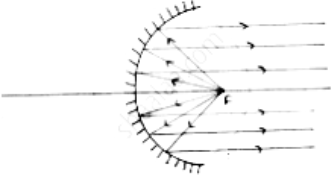
View full question & answer
Question 22 Marks
An object is brought towards a concave mirror. How does the position and size of the image change?
Answer
When an object is brought towards the concave mirror, the position of the image moves away from the mirror, and the size increases and it remains inverted but at object position between F and P, the image is virtual, magnified, and erect.
View full question & answer
Question 32 Marks
What do you mean by the magnification produced by mirrors?
Answer
Linear magnification is defined as the ratio of the height of the image to the height of the object. It is taken to be positive for an image to be virtual and erect and negative when the image is real and inverted.
Magnification = height of image / height of object.
View full question & answer
Question 42 Marks
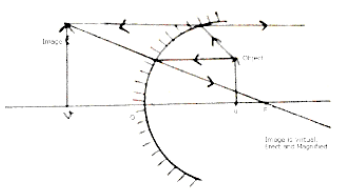
For what position of an object, a concave mirror forms an enlarged virtual image?
Answer
A concave mirror forms an enlarged virtual image when the object is kept between focus, F and pole, P
Image
View full question & answer
Question 52 Marks
For what position of an object, a concave mirror forms a real image equal in size to the object?
Answer
A concave mirror forms a real image equal in size to the object when the object is kept at centre of curvature, C
Image
View full question & answer
Question 62 Marks
Name two common sources of light.
Answer
Two sources of light are
(a). Natural, for e.g. Sun
(b). Artificial, for e.g. Light bulb.
View full question & answer
Question 72 Marks
State two main characteristics of the image formed by a plane mirror.
Answer
Two characteristics of the image formed by a plane mirror are
(a). The image is erect and virtual
(b). Image and object are of the same size.
View full question & answer
Question 82 Marks
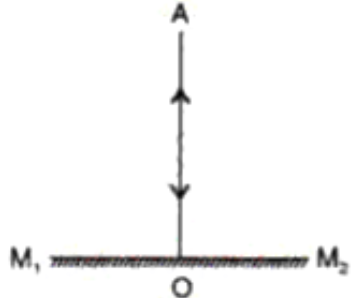
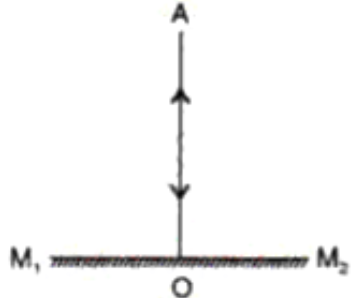
The reflection of a ray of light (OA) normally incident on a plane mirror is shown below
Image
What are the angles of incidence and reflection?
Answer
Image
The angle of incidence = angle of reflection = 0° because the image is perpendicular to the surface of the plane mirror.
View full question & answer
Question 92 Marks
State the laws of reflection.
Answer
Laws of reflection:
  1. The incident ray, the reflected ray, and the normal ray at the point of incidence lie in the same plane.
  2. The angle of incidence i is equal to the angle of reflection r i.e. ∠i = ∠r.
View full question & answer
Question 102 Marks
State the laws of reflection.
Answer
Reflection obeys the following two laws
(a). The incident ray, the reflected ray, and the normal at the point of incidence, all lie in the same plane.
(b). The angle of incidence and the angle of reflection are always equal.
View full question & answer
Question 112 Marks
Give two common observations illustrating that light travels in a straight-line path.
Answer
Two observations that prove that light travels in a straight line are:-
(a). Sunlight coming through a hole in a dark room, we can easily see that light travels in a straight line
(b). The light coming from laser light, used for presentation, can also be seen to travel in a straight line.
View full question & answer
Question 122 Marks
An object 5 cm in height is placed at a distance of 30 m in front of a concave mirror of focal length 40 cm. By scale, drawing finds the nature, size, position, and magnification of the image.
Answer
Height of object = 5 cm.
Distance of object = 30 cm.
Focal length of mirror = 40 cm.
Image
Image is virtual, erect, and magnified.
View full question & answer
Question 132 Marks
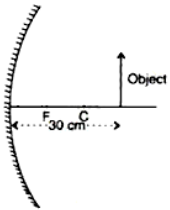
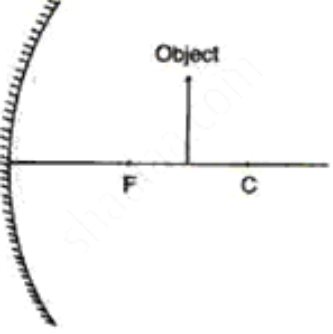
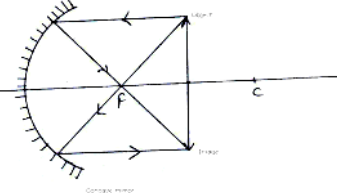
An object is placed in front of a concave mirror as shown in the following figure. By scale drawing, find the nature of the image. Given f = 10 cm, v = 30 cm.
Image
Answer
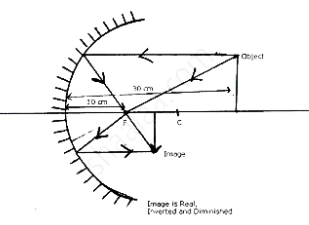
Focal length o f concave mirror= 10 cm. Object distance = 30 cm.
Image
The image is real, inverted, and diminished.
View full question & answer
Question 142 Marks
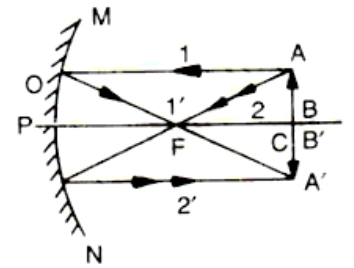
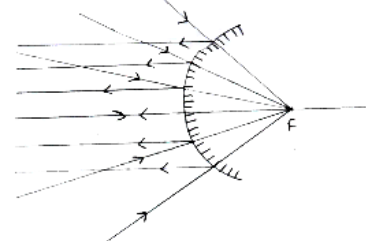
Draw a ray diagram to show that a convex mirror has a wider field of view.
Answer
In the case of a convex mirror, all rays incident parallel to the principal axis appears to diverge from a Focal point. So it has a wider field of view as it converges all rays to a single point.
Image
View full question & answer
Question 152 Marks
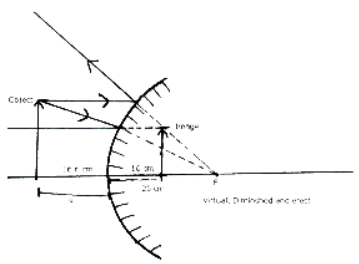
An object is placed in front of a convex mirror of focal length 25 cm. By scale, a drawing shows the formation of image and states the nature of image.
Given that v = 10 cm.
Answer
Image
The image formed is virtual, Diminished, and erect.
View full question & answer
Question 162 Marks
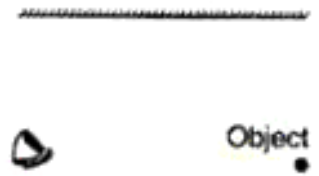
By geometrical construction, find the position of the image in the following figure.
Image
Answer
The position of the image is exactly below the position of the object as in the figure.
Image
View full question & answer
Question 172 Marks
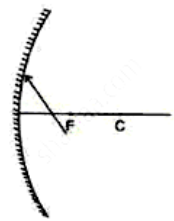
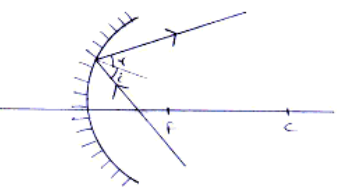
Complete the path of incident ray in the following case.
Image
Answer
Completed path of the incident ray in the following case is:
Image
View full question & answer
Question 182 Marks
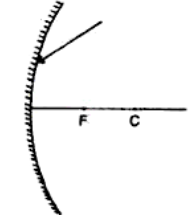
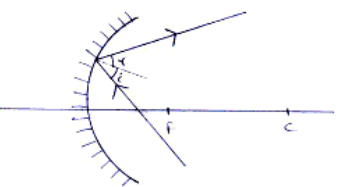
Complete the path of incident ray in the following case.
Image
Answer
Completed path of the incident ray in the following case is:
Image
View full question & answer
Question 192 Marks
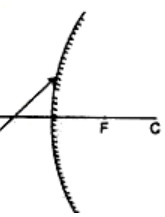
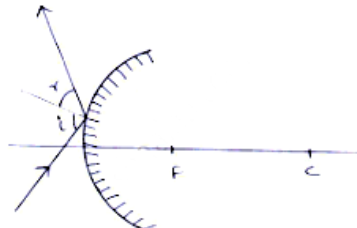
Complete the path of incident ray in the following case.
Image
Answer
Completed path of the incident ray in the following case is:
Image
View full question & answer
Question 202 Marks
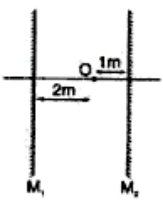
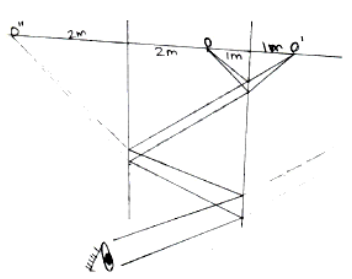
Locate the image termed when the object is placed between two planes as shown in the following figure.
Image
Answer
When two mirrors are held parallel to each other than, infinite numbers of images are formed and the first two images are shown in this figure.
Image
View full question & answer
Question 212 Marks
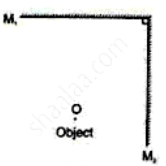
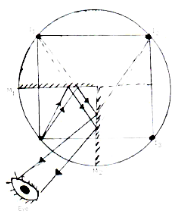
Locate the image termed when the object is placed between two planes as shown in the following figure.
Image
Answer
When two mirrors are held perpendicular then the number of images is 3 according to rule Number of images = 360/X - 1 if 360/X is even Number of images is 360/90 -1 = 4-1 = 3 images.
Image
View full question & answer
Question 222 Marks
Define the term Normal.
Answer
Normal to the surface of a mirror at any point is the straight line at the right angle to the tangent drawn at that point.
View full question & answer
Question 232 Marks
Define the term Focus of a concave mirror.
Answer
The focus of a concave mirror is a point on the principal axis of the mirror, where all the rays travelling parallel to the principal axis and close to it after reflection from the mirror converge to that point.
View full question & answer
Question 242 Marks
Define the term Principle focus.
Answer
Principal focus of a spherical mirror is a point on the principal axis of the mirror, where all the rays travelling parallel to the principal axis and close to it after reflection from the mirror, converge to or appear to diverge from.
View full question & answer
Question 252 Marks
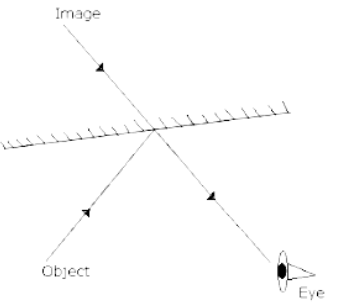
Complete the ray diagram to show the image observed by the eye after reflection in the following figure.
Image
Answer
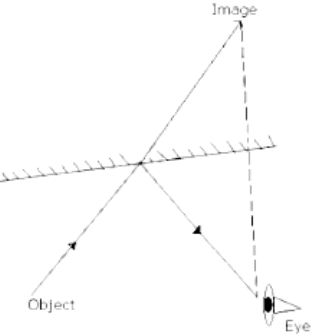
The image observed by the eye after reflection from a plane mirror can be completed as follows:
Image
View full question & answer
Question 262 Marks
Complete the ray diagram to show the image observed by the eye after reflection in the following figure.
Image
Answer
The image observed by the eye after reflection from a plane mirror can be completed as follows:
Image
View full question & answer
Question 272 Marks
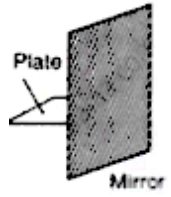
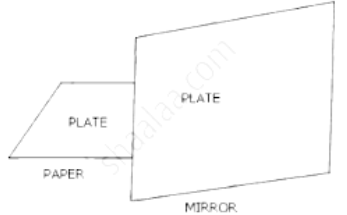
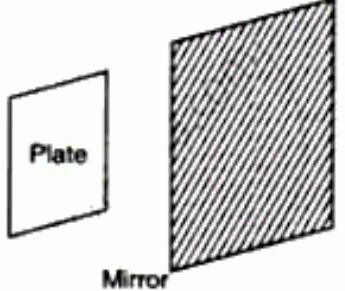
The word PLATE written on a paper is held in front of a plane mirror. Write down the letters as seen in the following case.
The paper is held perpendicular to the mirror.
Image
Answer
When the Paper is held perpendicular to the mirror.
Image
View full question & answer
Question 282 Marks
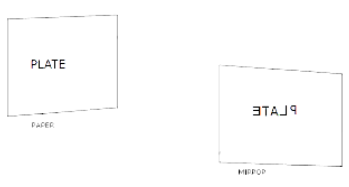
The word PLATE written on a paper is held in front of a plane mirror. Write down the letters as seen in the following case.
The paper is held parallel to the mirror.
Image
Answer
When the paper is help parallel to the mirror.
Image
View full question & answer
Question 292 Marks
What are the characteristics of the image formed by a plane mirror?
Answer
The image formed by a plane mirror is erect and virtual. It is a laterally inverted image. The image formed is of the same size as that of the object. Also, the image and the object are equidistant from the mirror.
View full question & answer
Question 302 Marks
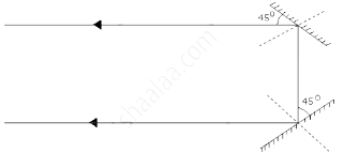
You are provided with two plane mirrors. Draw a ray diagram to show how the ray of light can be turned through an angle of 180°.
Answer
Two planes when putting in this way then they will turn the incident ray by 180°.
Image
View full question & answer
Question 312 Marks
You can see the reflection of your clearly on a polished table-top is not polished. Explain.
Answer
We can see the reflection of our face on a polished tabletop because a regular reflection occurs in case of a polished surface while on an unpolished tabletop irregular reflection occurs which makes the image of our face unclear.
View full question & answer
Question 322 Marks
Give two uses of convex mirror.
Answer
Two uses of convex mirror are:
(a) It is used as a rear view mirror in automobile to see the traffic behind.
(b) It is used as reflector for street light bulbs.
View full question & answer
Question 332 Marks
State the laws of reflection.
Answer
Reflection obeys the following two laws
(a). The incident ray, the reflected ray, and the normal at the point of incidence, all lie in the same plane.
(b). The angle of incidence and the angle of reflection are always equal.
View full question & answer
Question 342 Marks
Define linear magnification produced by a mirror?
Answer
Linear magnification is defined as the ratio of the height of the image to the height of the object. It is taken to be positive for an image to be virtual and erect and negative when the image is real and inverted.
Magnification = height of image / height of object.
View full question & answer
Question 352 Marks
What is a mirror formula?
Answer
Mirror formula is the relation between the focal length f of the mirror, the distance u of the object from the pole of the mirror, and the distance v of the image from the pole.
Mirror formula is
1/v +1/u = 1/f.
View full question & answer
Question 362 Marks
Write the sign convection used in optics.
Answer
(i) The distance from the pole in the direction of incident ray is taken positive.
(ii) The distance from the pole in the direction opposite to the incident ray is taken negative.
View full question & answer
Question 372 Marks
State three characteristics of the image formed by a concave mirror.
Answer

(i) When position of object is at infinity, concave mirror forms a point and Real image at Focus point.
(ii) When position of object is beyond C, concave mirror forms a Diminished, Real and inverted image between F and C.
(iii)When position of object is at C, concave mirror forms a Magnified, Real and inverted image at C.
View full question & answer
Question 382 Marks
Give three distinctions between sound and light waves.
Answer

Three distinctions between light and sound waves are
(a). Light waves can travel through a vacuum while sound waves cannot.
(b). Light waves are transverse waves while sound waves are longitudinal waves.
(c). The velocity of light in air is $3 \times 10^8 $m/s while the speed of light in air is just about $330 m/s.$
View full question & answer
Question 392 Marks
State three characteristics of light.
Answer
Three characteristics of light are:-
(a). Light waves can travel through a vacuum.
(b). Light waves are transverse waves.
(c). The velocity of light in a vacuum is $3 \times 10^8 m / s$.
View full question & answer
[2 Mark Question Answer] - PHYSICS STD 9 Questions - Vidyadip