______________ is used in nonstick cookware.
- APVC
- ✓Teflon
- CPolystyrene
- DPolypropylene
Answer: B.
View full solution →394 questions across 13 question groups — pick any mix to generate a Science paper with step-by-step answer keys.
M.C.Q
19 Q→02Answer the following questions:[1 M]
87 Q→03Give scientific reasons: [2 M]
6 Q→04Answer the following questions: [2 M]
109 Q→05Answer the following questions: [3 M]
37 Q→06Answer the following questions: [5 M]
34 Q→07Write True or False
12 Q→08Name the Following
18 Q→09Do As Directed.
30 Q→10Fill in the blanks.
25 Q→11Define :
7 Q→12Distinguish Between :
6 Q→13Match the following.
4 Q→One sample from each question group in this chapter. Select any group above to see the full set with answer keys.
Answer: B.
View full solution →Answer: C.
View full solution →Answer: B.
View full solution →Answer: C.
View full solution →Answer: D.
View full solution →| Group A | Group B |
| a. $C _2 H _6$ | 1. Unsaturated hydrocarbon |
| b. $C _2 H _2$ | 2. Molecular formula of an alcohol |
| c. $CH _4 O$ | 3. Saturated hydrocarbon |
| d. $C _3 H _6$ | 4. Triple bond |
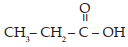 is propanone.
| Column $A$ | Column $B$ | ||
| $(1)$ | $CH_3COOH + CH_3 - CH_2- OH \xrightarrow[\text { Catalyst }]{\text { Acid }} CH_3-COO-CH_2-CH_3+H_2O$ | $(a)$ | Addition Reaction |
| $(2)$ | $CH _2= CH _2+ H _2 \xrightarrow{ Ni } CH _3- CH _3$ | $(b)$ | Substitution reaction |
| $(3)$ | $CH _4+ Cl _2 \xrightarrow{\text { Sunlight }} CH _3 Cl + HCl$ | $(c)$ | Neutralisation reaction |
| $(4)$ | $CH_3COOH + NaOH \rightarrow CH_{3 }COONa + H_2O$ | $(d)$ | Esterification reaction |
| Column $A$ | Column $B$ | ||
| Name of Polymer | Constituent monomer | ||
| $(1)$ | Polyethylene | $(a)$ | $CF_2 =_{ }CF_2$ |
| $(2)$ | Polystyrene | $(b)$ | $CH_3-CH=CH_2$ |
| $(3)$ | Polyvinyl chloride $(PVC)$ | $(c)$ | $CH_2=CH-C=N$ |
| $(4)$ | Polyacrylo nitrile | $(d)$ | $Cl-CH=CH_2$ |
| $(5)$ | Teflon | $(e)$ | $CH_2=CH_2$ |
| $(6)$ | Polypropylene | $(f)$ | $C_6H_5-CH=CH_2$ |
| Column $A$ Name of the Compound | Column $B$ Structural Formula | ||
| $(1)$ | Ethyl alcohol | $(a)$ | $CH_3-CH_2-CH_2-CH_3$ |
| $(2)$ | Acetone | $(b)$ | $CH_3-CH_2-CH_2-OH$ |
| $(3)$ | Propionic acid | $(c)$ | 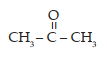 |
| $(4)$ | Ethyne | $(d)$ | 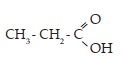 |
| $(5)$ | Propanol | $(e)$ | $CH_3-CH_2OH$ |
| $(6)$ | Butane | $(f)$ | $HC=CH$ |
| Column $A$ | Column $B$ | ||
| $(1)$ | Benzene | $(a)$ | $CH_3COOH$ |
| $(2)$ | Sodium ethoxide | $(b)$ | $C_6H_{12}$ |
| $(3)$ | Acetic acid | $(c)$ | $C_6H_6$ |
| $(4)$ | Cyclohexane | $(d)$ | $CH_3CH_2ONa$ |
Pick question groups from the list above, set marks and difficulty, and export a branded PDF with step-by-step answer keys. First 3 chapters free — no signup.