- It was accompanied by change in colour.
- It was accompanied by a change in temperature.
- It was accompanied by a change in energy.
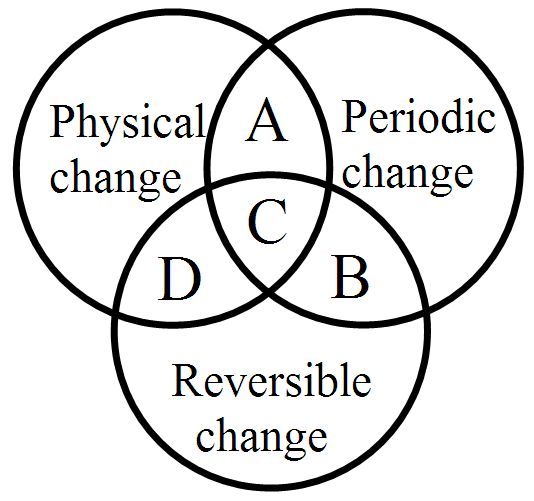
- APeriodic change.
- BNon$-$periodic change.
- CPhysical change.
- ✓Chemical change.

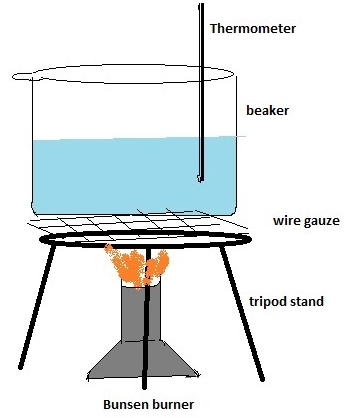
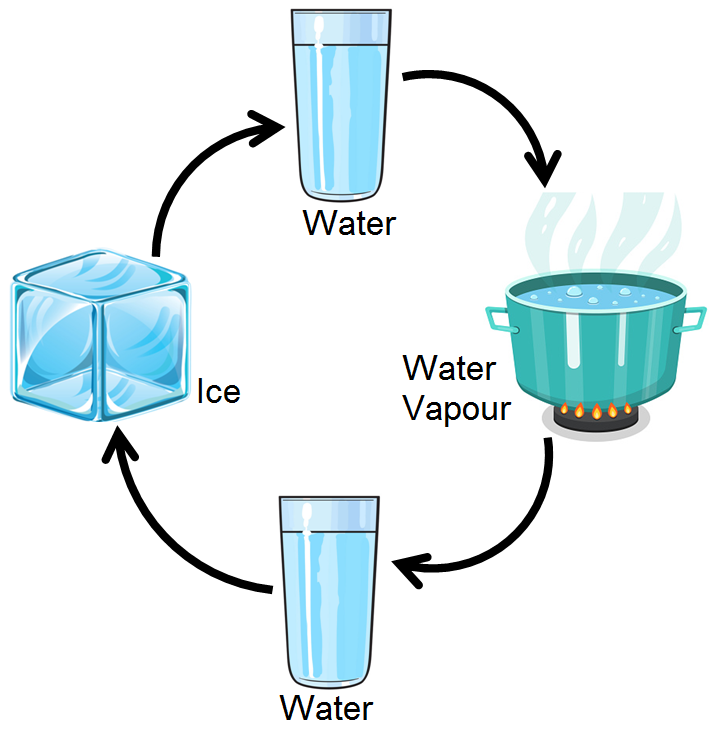
When the water vapours strike the cooler walls of container, they condense and form water droplets on the inner surfaces of metal tray and the beaker. This process is called condensation.
Chalk powder has same molecules as chalk and no new product is formed on breaking chalk into chalk powder.
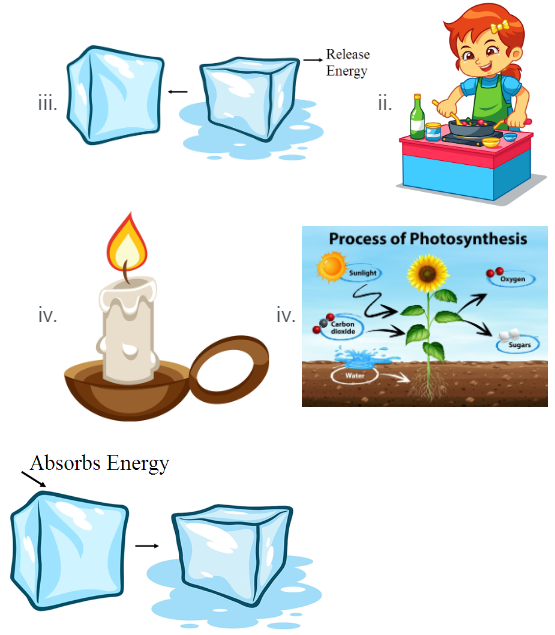
Cutting of wood is a physical change while all other are chemical change. All results in formation of a new product.
It is a chemical change so it is irreversible change.

Occurrence of season is a physical and periodic change. As seasons repeat themselves every year.


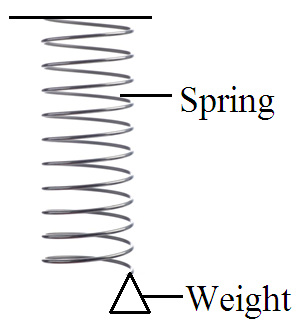
When weight is removed, the spring comes to its original shape. It is man-made and a reversible change.


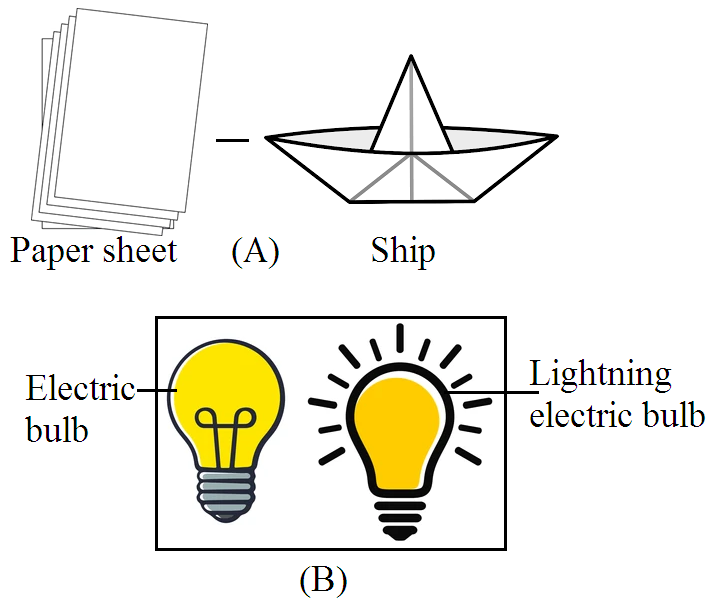
Both are reversible. We can get back paper sheet from the ship shaped toy of paper and the lightening bulb can also be changed to its original position by switching off the current.
|
S.No.
|
Column$-I$
|
|
Column$-II$
|
|
$A.$
|
Crushing of an ice cube.
|
$(p)$
|
periodic change.
|
|
$B.$
|
Making of curd.
|
$(q)$
|
Slow change.
|
|
$C.$
|
Germination of seed into plant.
|
$(r)$
|
Physical change.
|
|
$D.$
|
Formation of day and night.
|
$(s)$
|
Chemical change.
|
The cooking of rice requires heat. Once rice is cooked, we cannot get back the original raw rice. So, it is an irreversible, endothermic change.

Butter changes its state when it gains or loses heat.


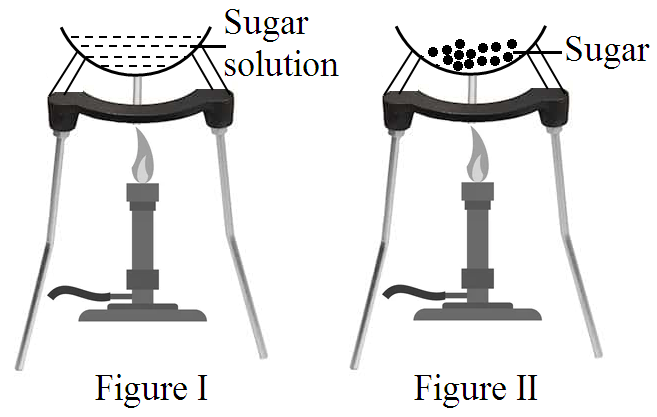
In figure $I,$ evaporation of water from sugar solution is a physical change because there is only change in state of matter from liquid (sugar solution) to solid state (crystals of sugar). In figure $II,$ when sugar is heated, it turns black due to the formation of a new substance and it cannot be reversed. Therefore, it is a chemical change.

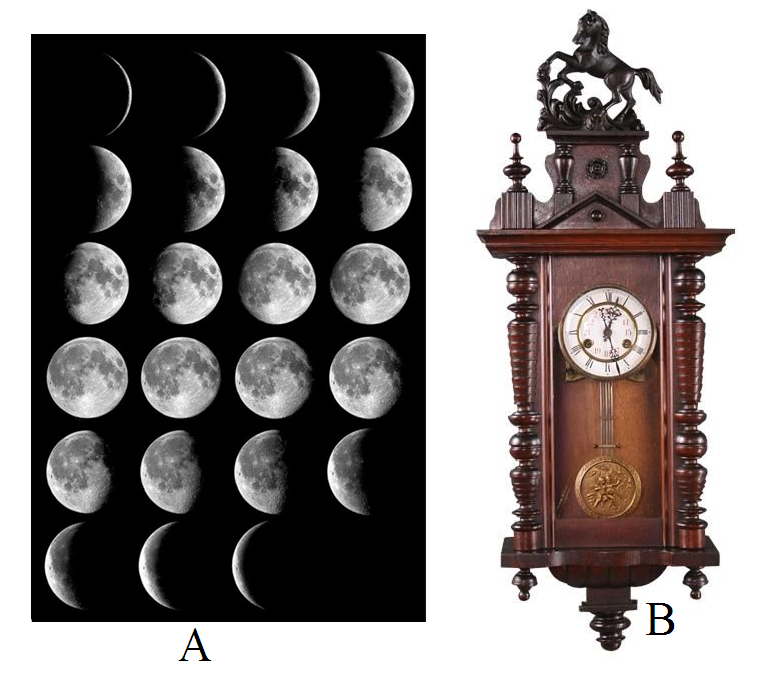
Both change in phases of moon and movement of needle of clock are periodic changes.