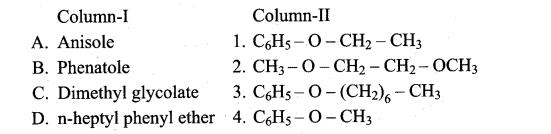
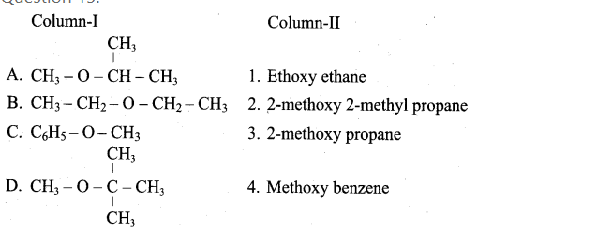
- A$\left( CH _3\right)_3 CCH = CH _2$
- ✓$\left( CH _3\right)_2 C = C \left( CH _3\right)_2$
- C$CH _2= C \left( CH _3\right) CH _2- CH _2- CH _3$
- D$CH _2= C \left( CH _3\right)- CH _2- CH _2- CH _3$
Answer: B.
View full solution →442 questions across 7 question groups — pick any mix to generate a Chemistry paper with step-by-step answer keys.
Choose the most appropriate answer from the given alternatives and write the option code and the corresponding answer.
181 Q→02Fill In The Blanks.
75 Q→03Assertion And Reason.
20 Q→04[ 2 Marks Questions ]
84 Q→05Match The Following.
17 Q→06[ 3 Marks Questions ]
39 Q→07[ 5 Marks Questions ]
26 Q→One sample from each question group in this chapter. Select any group above to see the full set with answer keys.
Answer: B.
View full solution →Answer: C.
View full solution →Answer: A.
View full solution →
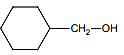
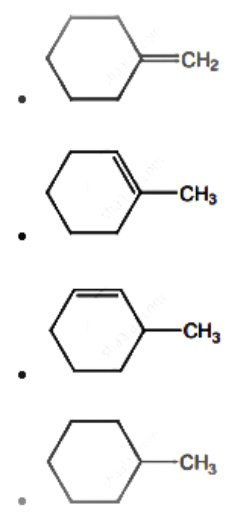
on treatment with Con. $H _2 SO _4$ predominately gives
Answer: C.
View full solution →Butan-2-ol, Butan-1-ol, 2-methyl propane-2-ol
Propan-1-ol, propan-1, 2, 3-triol, propan-1, 3-diol, propan-2-ol

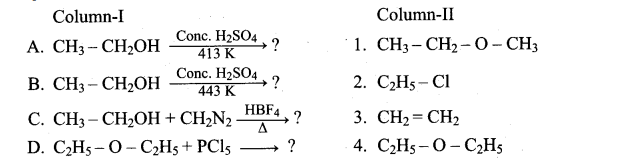
| Code. | A | B | C | D |
| (a) | 4 | 3 | 1 | 2 |
| (b) | 1 | 2 | 3 | 4 |
| (c) | 3 | 4 | 2 | 1 |
| (d) | 2 | 1 | 4 | 3 |

| Code. | A | B | C | D |
| (a) | 4 | 1 | 2 | 3 |
| (b) | 1 | 2 | 3 | 4 |
| (c) | 2 | 3 | 4 | 1 |
| (d) | 3 | 4 | 1 | 2 |

| Code. | A | B | C | D |
| (a) | 3 | 1 | 4 | 2 |
| (b) | 1 | 2 | 3 | 4 |
| (c) | 4 | 3 | 2 | 1 |
| (d) | 2 | 4 | 1 | 3 |

| Code. | A | B | C | D |
| (a) | 4 | 1 | 2 | 3 |
| (b) | 1 | 2 | 3 | 4 |
| (c) | 3 | 4 | 1 | 2 |
| (d) | 2 | 3 | 4 | 1 |
| Column-I | Column-II |
| A. Dow's process | 1. Salicylaldehyde |
| B. Schotten-Baumann reaction | 2. Phenol |
| C. Kolbe's reaction | 3. Phenyl benzoate |
| D. Reimer Tiemann Reaction | 4. Salicylic acid |
| Code. | A | B | C | D |
| (a) | 2 | 3 | 4 | 1 |
| (b) | 4 | 2 | 1 | 3 |
| (c) | 1 | 4 | 3 | 2 |
| (d) | 3 | 1 | 2 | 4 |
Pick question groups from the list above, set marks and difficulty, and export a branded PDF with step-by-step answer keys. First 3 chapters free — no signup.