MCQ
A $50$ ohm galvanometer gets full scale deflection when a current of $0.01\ A$ passes through the coil.  When it is converted to a $10\ A$ ammeter, the shunt resistance is
  • A
    $0.01\Omega$
  • $0.05\Omega$
  • C
    $2000\Omega$
  • D
    $5000\Omega$

Answer

Correct option: B.
$0.05\Omega$
$0.05\Omega$

Need a full question paper?

Generate a complete, print-ready paper with questions like this in minutes — across 16+ boards, with answer keys.
Start Generating Free

Similar questions

The chemical equivalent of silver is 108. If the current in a silver voltameter is 2 Amp., the time required to deposit 27 grams of silver will be(a) 8.57 hrs(b) 6.70 hrs(c) 3.35 hrs(d) 12.50 hrs
       
The earth's magnetic field at a certain place has a horizontal component $0.3$ Gauss and the total strength $0.5$ Gauss. The angle of dip is
An electron with kinetic energy $5\ eV$ is incident on a hydrogen atom in its ground state. The collision$:$
Newton's law of cooling is a special case of:
Two wires of same size whose resistivities$\rho_1$ are $\rho_2$ and are joined in series. The equivalent resistivity of the combination will be:
Work function of a metal is 2.1 eV. Which of the waves of the following wavelengths will be able to emit photoelectrons from its surface(a) 4000 Å, 7500 Å(b) 5500 Å, 6000 Å (c) 4000 Å, 6000 Å(d) None of these
       

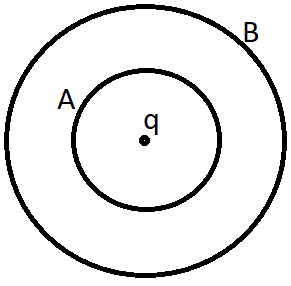
If A and B are two equipotential surfaces around a positive point charge q, what will happen if we place another point charge +Q between A and B?
Image
Assertion :   Magnetic flux can produce induced e.m.f.
Reason     : Faraday established induced e.m.f. experimentally.(a) If both assertion and reason are true and the reason is the correct explanation of the assertion.(b) If both assertion and reason are true but reason is not the correct explanation of the assertion.(c) If assertion is true but reason is false.(d) If assertion is false but reason is true.


Two light beams superimposed each other constructively this results in$:$
The molar heat capacity of oxygen gas at STP is nearly 2.5R. As the temperature is increased, it gradually increases and approaches 3.5R. The most appropriate reason for this behaviour is that at high temperatures:
  1. Oxygen does not behave as an ideal gas.
  2. Oxygen molecules dissociate in atoms.
  3. The molecules collide more frequently.
  4. Molecular vibrations gradually become effective.