MCQ
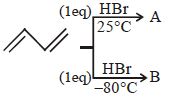
$A$ and $B$ are
  • A
    Chain isomer
  • Position isomer
  • C
    Identical
  • D
    Geometrical isomers

Answer

Correct option: B.
Position isomer
b

Need a full question paper?

Generate a complete, print-ready paper with questions like this in minutes — across 16+ boards, with answer keys.

Start Generating Free

Similar questions

The wavelength of electrons accelerated from rest through a potential difference of $40\, \mathrm{kV}$ is $\mathrm{X}\, \times$ $10^{-12} \,\mathrm{~m}$. The value of $\mathrm{x}$ is $......$. (Nearest integer)

Given : Mass of electrons $=9.1 \times 10^{-31}\, \mathrm{~kg}$

Charge on an electron $=1.6 \times 10^{-19}\, \mathrm{C}$

Planck's constant $=6.63 \times 10^{-34\,} \mathrm{Js}$

If for a certain reaction $\Delta_{r} H$ is $30 \;kJ \;mol ^{-1}$ at $450 \;K ,$ the value of $\Delta_{r} S \left(\right.$ in $\left. J K ^{-1} mol ^{-1}\right)$ for which the same reaction will be spontaneous at the same temperature is
In which of the following compounds transition metal is in oxidation state zero
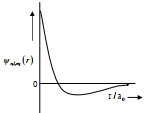
The wave function $\psi_{n / m m}$ is a mathematical function whose value depends upon spherical polar coordinates $(r, \theta, \phi)$ of the electron and characterized by the quantum numbers $n, l$ and $m_l$. Here $r$ is distance from nucleus, $\theta$ is colatitude and $\phi$ is azimuth. In the mathematical functions given in the Table, $\mathrm{Z}$ is atomic number and $a_0$ is Bohr radius.

$column 1$ $column 2$ $column 3$
$(I)$ $1$s orbital $(i)$ $\psi_{n, l, m_l} \propto\left(\frac{Z}{a_0}\right)^{\frac{3}{2}} e^{-\left(\frac{Z r}{a_0}\right)}$ $image$
($II$) $2 \mathrm{~s}$ orbital $(ii)$ One radial node $(Q)$ Probability density at nucleus $\propto \frac{1}{a_0^3}$
$(III)$ $2 p_z$ orbital $(iii)$ $\psi_{n, l m_l} \propto\left(\frac{Z}{a_0}\right)^{\frac{5}{2}} r e^{-\left(\frac{Z r}{2 a_0}\right)} \cos \theta$ $(R)$ Probability density is maximum at nucleus
$(IV)$ $3 \mathrm{~d}_{\mathrm{z}}^2$ orbital $(iv)$ $x y$-plane is a nodal plane $(S)$ Energy needed to excite electron from $n=2$ state to $n=4$ state is $\frac{27}{32}$ times the energy needed to excite electron from $n=2$ state to $n=6$ state

($1$) For the given orbital in Column $1$, the only $CORRECT$ combination for any hydrogen-like species is

$[A] (IV) (iv) (R)$   $[B] (II) (ii) (P)$    $[C] (III) (iii) (P)$    $[D] (I) (ii) (S)$

($2$)  For $\mathrm{He}^{+}$ion, the only INCORRECT combination is

$[A] (II) (ii) (Q)$ $[B] (I) (i) (S)$ $[C] (I) (i) (R)$ $[D] (I) (iii) (R)$

($3$) For hydrogen atom, the only $CORRECT$ combination is

$[A] (I) (iv) (R)$   $[B] (I) (i) (P)$    $[C] (II) (i) (Q)$   $[D] (I) (i) (S)$

Give the answer quetion ($1$) ($2$) and ($3$)
Reduction involves
The chemical equivalent of copper and zinc are $32$ and $108$ respectively. When copper and silver voltameter are connected in series and electric current is passed through for sometimes, $1.6\, g$ of copper is deposited. Then, the mass of silver deposited will be .......... $\mathrm{g}$
The incorrect statement $(s)$ regarding $\overset{\bullet }{\mathop{C}}\,{{X}_{3}}$ species is
Which of the following order is correct ?
Which of the following complexes is strongest reducing agent
For the gaseous phase reaction $2NO$ $\rightleftharpoons$ ${N_2} + {O_2}\,\,\,\,\Delta H^\circ = + \;43.5\,\,kcal\,mo{l^{ - 1}}$ Which statement is correct