MCQ
A camera objective has an aperture diameter $d.$ If the aperture is reduced to diameter $d/2,$ the exposure time under identical conditions of light should be made
  • A
    $\sqrt 2 fold$
  • B
    $2 fold$
  • C
    $2\sqrt 2 fold$
  • $4 fold$

Answer

Correct option: D.
$4 fold$
d
(d) Time of exposure $ \propto \frac{1}{{{{(Aperture)}^2}}}$

Need a full question paper?

Generate a complete, print-ready paper with questions like this in minutes — across 16+ boards, with answer keys.
Start Generating Free

Similar questions

A horizontal straight conductor kept in north-south direction falls under gravity, then
A plane mirror makes an angle of $30^\circ $ with horizontal. If a vertical ray strikes the mirror, find the angle between mirror and reflected ray.....$^o$
In hydrogen atom which quantity is integral multiple of $\frac{h}{{2\pi }}$
If the focal length of objective and eye lens are $1.2\, cm$ and $3\, cm$ respectively and the object is put $1.25 \,cm$ away from the objective lens and the final image is formed at infinity. The magnifying power of the microscope is
A capacitor of $4\, \mu F$ is connected to a $15\, V$ supply through $1$ mega ohm  resistance. The time taken by the capacitor to charge upto $63.2\%$ of its final charge will be......$s$
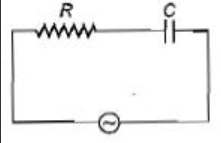
A $50 Hz, 20 V AC$ source is connected across $R$ series circuit as shown in Figure If the voltage across $R$ is $12V$ then voltage across capacitor is.
Image
A heavy nucleus at rest breaks into two fragments which fly off with velocities in the ratio $8:1$. the ratio of de-broglie wavelengths of fragments are:
Two sources give interference pattern which is observed on a screen, D distance apart from the sources. The fringe width is 2w. If the distance D is now doubled, the fringe width will
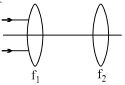
Parallel beam of light is incident on a system of two convex lenses of focal lengths $f_1 = 20\, cm$ and $f_2 = 10\, cm$. What should be the distance between the two lenses so that rays after refraction from both the lenses pass undeviated :........$cm$
As the electron in Bohr orbit of Hydrogen atom passes from state n = 2 to n = 1, the kinetic energy K and potential energy U change as