MCQ
A coil and a bulb are connected in series with a $12 \,volt$ direct current source. A soft iron core is now inserted in the coil. Then
  • The intensity of the bulb remains the same
  • B
    The intensity of the bulb decreases
  • C
    The intensity of the bulb increases
  • D
    Nothing can be said

Answer

Correct option: A.
The intensity of the bulb remains the same
a
(a)

Intensity of bulb remains the same because source is $D C$, so steady state current will be independent of the inductance of the inductor for $D C$ circuit,

$i_{\text {stoady }}=\frac{E_{\text {source }}}{R_{\text {bubb }}}$

Need a full question paper?

Generate a complete, print-ready paper with questions like this in minutes — across 16+ boards, with answer keys.

Start Generating Free

Similar questions

The minimum number of condensers each of capacitance of $2μ\text{F},$ in order to obtain resultant capacitance of $5μ\text{F},$ will be:
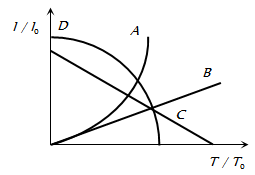
The ratio of thermionic currents ($l / l_0$) for a metal when the temperature is slowly increased $T_0$ to T as shown in figure. (l and $\mathrm{l}_0$ are currents at T and respectively). Then which one is correct?

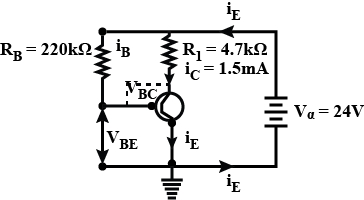
A common emitter amplifier circuit is shown in the figure below. For the transistor used in the circuit the current amplification factor, ${\beta _{dc}} = 100$. Other parameters are mentioned in the figure.
Conductivity of semiconductors due to increase in temperature :
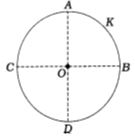
A thin conducting ring of radius $R$ is given a charge $+Q.$ The electric field at the centre $O$ of the ring due to the charge on the part $AKB$ of the ring is $E.$ The electric field at the centre due to the charge on the part $ACDB$ of the ring is 
Let $n_r$ and $n_b$ be the number of photons emitted by a red bulb and a blue bulb, respectively, of equal power in a given time:
Electric lines of force about negative point charge are
Minimum deviation is observed with a prism having angle of prism $A,$ angle of deviation $\delta $, angle of incidence $i$ and angle of emergence $e$. We then have generally
How will you relate velocity of cathode rays to $c$, if $‘c'$ denotes the velocity of light?
An $EM$ wave radiates outwards from a dipole antenna, with $E_0$ as the amplitude of its electric field vector. The electric field $E_0$ which transports significant energy from the source falls off as: