Question
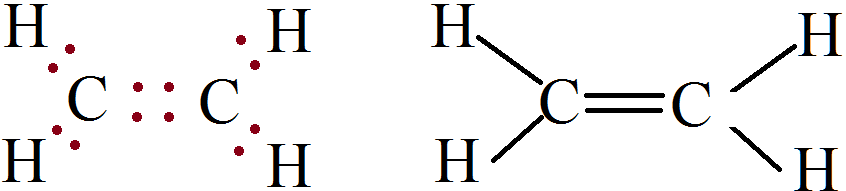
A compound ‘X’ is C2H4. Draw its electron dot structure. Will it dissolve in water or not? Will it conduct electricity in aqueous solution? Will it have high melting or low melting point?

Answer

Compound X is Ethene (C2H4).

Electron dot structure of Ethene:

  • Sparingly soluble in water but highly soluble in organic solvents.
  • It does not conduct electricity.
  • The boiling point is -102°C, and melting point is -169°C

Need a full question paper?

Generate a complete, print-ready paper with questions like this in minutes — across 16+ boards, with answer keys.

Start Generating Free

Similar questions

What is meant by ‘heteroatom’? Give examples. Write the names and formulae of two organic compounds containing different heteroatoms.
Write names and formulae of hydrocarbons containing a single and a double bond (one example for each). Give one characteristic chemical property of each.
Write the balanced chemical equation for the following reaction and identify the type of reaction.
Nitrogen gas is treated with hydrogen gas in the presence of a catalyst at 773K to form ammonia gas.
Which gas is produced when dilute hydrochloric acid is added to a reactive metal? Write the chemical reaction when iron reacts with dilute H2SO4.
Which gas is liberated when dilute hydrochloric acid reacts with sodium carbonate? How will you test for the presence of this gas?
Consider the following organic compounds:
HCHO, C2H5OH, C2H6, CH3COOH, C2H5Cl
Choose two compounds which can react in the presence of conc. H2SO4 to form an ester. Give the name and formula of the ester formed.
Write the IUPAC name of:

  1. $\text{CH}_3\text{COCH}_2\text{CH}_3$

  2. $\text{CH}_3-\text{CH}-\text{CH}_3\\ \ \ \ \ \ \ \ \ \ \ |\\ \ \ \ \ \ \ \ \ \text{OH}$

  3. $\text{HCOOH}$

  4. $\text{CH}_3\text{COOCH}_3$

Explain the given reaction with the example:

Saponification reaction.

When a solution is added to vanilla extract, then the characteristic smell of vanilla cannot be detected. State whether the given solution is an acid or a base.
Name the functional groups present in the following compounds:
  1. CH3CHO
  2. CH3CH2COOH
  3. CH3COCH3
  4. CH3CH2CH2OH