Question
A monkey climbs up a slippery pole for 3 seconds and subsequently slips for 3 seconds. Its velocity at time t is given by v(t) = 2t(3 - t); 0 < t < 3 and v(t) = -(t - 3)(6 - t) for 3 < t < 6s in m/s. It repeats this cycle till it reaches the height of 20m.
At what time is its average velocity maximum?
Answer

Given velocity
$\text{v}(\text{t})=2\text{t}(3-\text{t})=6\text{t}-2\text{t}^2$
From Eq. (i) $\text{v}=6\text{t}-2\text{t}^2$
$\Rightarrow\frac{\text{ds}}{\text{dt}}=6\text{t}-2\text{t}^2$
$\Rightarrow\text{ds}=(6\text{t}-2\text{t}^2)\text{dt}$
where, s is displacement
$\therefore$ Distance travelled in time interval 0 to 3s,
$\text{s}=\int^3_0(6\text{t}-2\text{t}^2)\text{dt}$
$=\Big[\frac{6\text{t}^2}{2}-\frac{2\text{t}^3}{3}\Big]^3_0=\Big[3\text{t}^2-\frac{2}{3}\text{t}^3\Big]^3_0$
$=3\times9-\frac{2}{3}\times3\times3\times3$
$=27-18=9\text{m}$
$\text{Average velocity}=\frac{\text{Distance travelled}}{\text{Time}}$
$=\frac{9}{3}=3\text{m/s}$
Given, $\text{x}=6\text{t}-2\text{t}^2$
$\Rightarrow3=6\text{t}-2\text{t}^2\Rightarrow2\text{t}^2-6\text{t}-3=0$
$\Rightarrow\text{t}=\frac{6\pm\sqrt{6^2-4\times2\times3}}{2\times2}=\frac{6\pm\sqrt{36-24}}{4}$
$=\frac{6\pm\sqrt{12}}{4}=\frac{3\pm2\sqrt{3}}{2}$
Considering positive sign only
$\text{t}=\frac{3+2\sqrt{3}}{2}=\frac{3+2\times1.732}{2}=\frac{9}{4}\text{s}$

Need a full question paper?

Generate a complete, print-ready paper with questions like this in minutes — across 16+ boards, with answer keys.

Start Generating Free

Similar questions

Write Maxwell's law of equipartition of energy.
Assuming that the critical velocity $v _{ C }$ of a viscous liquid flowing through a capillary tube depends only upon the radius $r$ of the tube, density $\rho$ and the coefficient of viscosity $\eta$ of the liquid, find the expression for critical velocity.
Does it matter if one uses gauge instead of absolute pressures in applying Bernoulli’s equation? Explain.
The changes in a function y and the independent dy variable x are related as $\frac{\text{dy}}{\text{dx}}=\text{x}^2.$ Find y as a function of x.
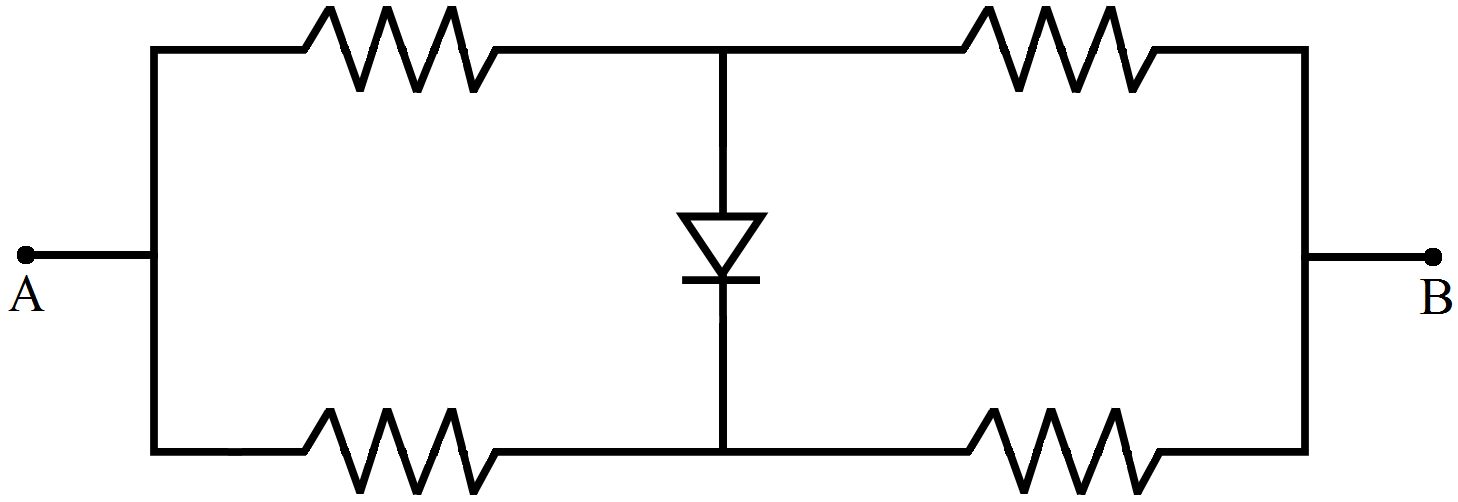
Each of the resistances shown in figure. has a value of $20\Omega.$ Find the equivalent resistance between A and B. Does it depend on whether the point A or B is at higher potential?

Calculate the temperature whose value is the same on the Celsius and Fahrenheit scale?
If a balloon is filled will CO2 gas, then how can it behave as a lens for sound waves? If it was filled with hydrogen gas, then what will happen?
Explain why (or how):
The shape of a pulse gets distorted during propagation in a dispersive medium.
Calculate the heat of combustion of coal, when 10 gm of coal, on burning raises the temperature of 2kg of water from 20°C to 55°C.
A Kundt's tube apparatus has a steel rod of length 1.0m clamped at the centre. It is vibrated in its fundamental mode at a frequency of 2600Hz. The lycopodium powder dispersed in the tube collects into heaps separated by 6.5cm. Calculate the speed of sound in steel and in air.