Question
A parallel-plate capacitor has plate area 25.0cm2 and a separation of 2.00mm between the plates. The capacitor is connected to a battery of 12.0V:
  1. Find the charge on the capacitor.
  2. The plate separation is decreased to 1.00mm. Find the extra charge given by the battery to the positive plate.
Answer


Plate area A = 25cm2 = 2.5 × 10⁻³m

Separation d = 2mm = 2 × 10⁻³m

Potential v = 12v

  1. We know

$\text{C}=\frac{\in_0\text{A}}{\text{d}}$

$=\frac{8.85\times10^{-12}\times2.5\times10^{-3}}{2\times10^{-3}}$

$=11.06\times10^{-12}\text{F}$

$\text{C}=\frac{\text{q}}{\text{v}}$

$\Rightarrow11.06\times10^{-12}=\frac{\text{q}}{12}$

$\Rightarrow\text{q}_1=1.32\times10^{-10}\text{C}.$

  1. Then d = decreased to 1mm

$\therefore\ \text{d}=1\text{mm}=1\times10^{-3}\text{m}$

$\text{C}=\frac{\in_0\text{A}}{\text{d}}=\frac{\text{q}}{\text{v}}$

$=\frac{8.85\times10^{-12}\times2.5\times10^{-3}}{1\times10^{-3}}=\frac{2}{12}$

$\Rightarrow\text{q}_2=8.85\times2.5\times12\times10^{-12}$

$\Rightarrow\text{q}_2=2.65\times10^{-10}\text{C}.$

$\therefore$ The extra charge given to plate = (2.65 - 1.32) × 10-10 = 1.33 × 10⁻¹⁰C.

Need a full question paper?

Generate a complete, print-ready paper with questions like this in minutes — across 16+ boards, with answer keys.

Start Generating Free

Similar questions

Jupiter has a mass 318 times that of the earth, and its radius is 11.2 times the earth's radius. Estimate the escape velocity of a body from Jupiter's surface given that the escape velocity from the earth's surface is 11.2km s-1.
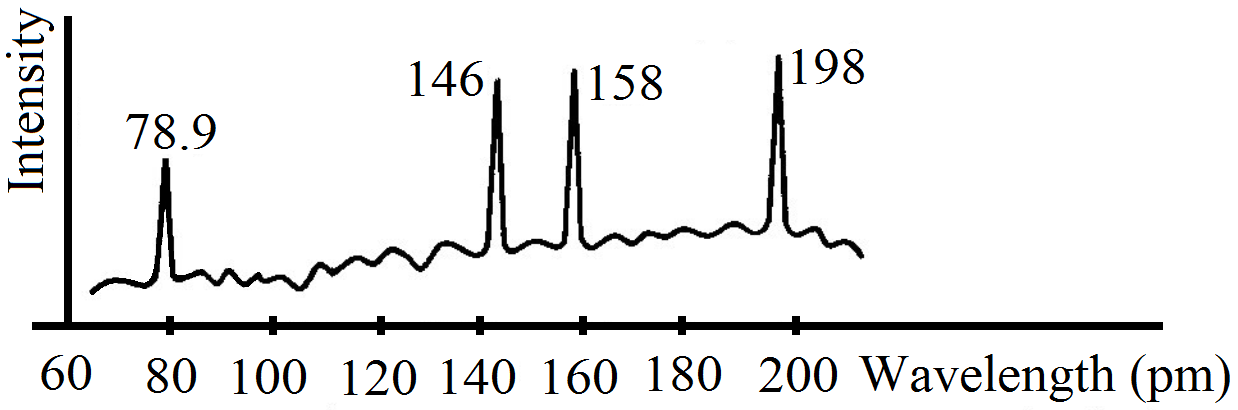
Continuous X-rays are made to strike a tissue paper soaked with polluted water. The incoming X-rays excite the atoms of the sample by knocking out the electrons from the inner shells. Characteristic X-rays are analysed and the intensity is plotted against the wavelength. Assuming that only $\text{K}_\alpha$ intensities are detected, list the elements present in the sample from the plot. Use Moseley's equation v - (25 × 1014Hz)(Z - 1)2.

Define elastic and inelastic collisions. Write their basic characteristics. A bullet is fired into a block of wood. If it gets totally embedded in it and the system moves together as one entity, then state what happens to the initial kinetic energy and linear momentum of the bullet?
A person normally weighing 50 kg stands on a mass less platform which oscillates up and down harmonically at a frequency of $2.0 s^{-1}$ and an amplitude 5.0 cm . A weighing machine on the platform gives the persons weight against time.
i. Will there be any change in weight of the body, during the oscillation? Figure In extensible string.
ii. If answer to part (a) is yes, what will be the maximum and minimum reading in the machine and at which position?
A bullet of mass m moving at a speed v hits a ball of mass M kept at rest. A small part having mass m' breaks from the ball and sticks to the bullet. The remaining ball is found to move at a speed v1 in the direction of the bullet. Find the velocity of the bullet after the collision.
A ball of mass m is dropped onto a floor from a certain height. The collision is perfectly elastic and the ball rebounds to the same height and again falls. Find the average force exerted by the ball on the floor during a long time interval.
Explain the angle of friction and angle of repose.
A bullet of mass 20g moving horizontally at a speed of 300m/s is fired into a wooden block of mass 500g suspended by a long string. The bullet crosses the block and emerges on the other side. If the centre of mass of the block rises through a height of 20.0cm, find the speed of the bullet as it emerges from the block.
  1. Find the radius of the circular orbit of a satellite moving with an angular speed equal to the angular speed of earth's rotation.
  2. If the satellite is directly above the north pole at some instant, find the time it takes to come over the equatorial plane. Mass of the earth = 6 × 1024kg.
The displacement x (in cm) of an oscillating particle varies with time t (in seconds) according to the equation. $\text{x}=2\cos(0.5\pi\text{t}+\frac{\pi}{3})$ Find 
  1. Amplitude of oscillation.
  2. The time period of oscillation.
  3. The maximum velocity of the particle.
  4. The maximum acceleration of the particle.